International Women’s Day in Design
Female Architect Speaks on Performance-Driven Design and Building Science
Elina Cardet, AIA, IIDA, NCARB
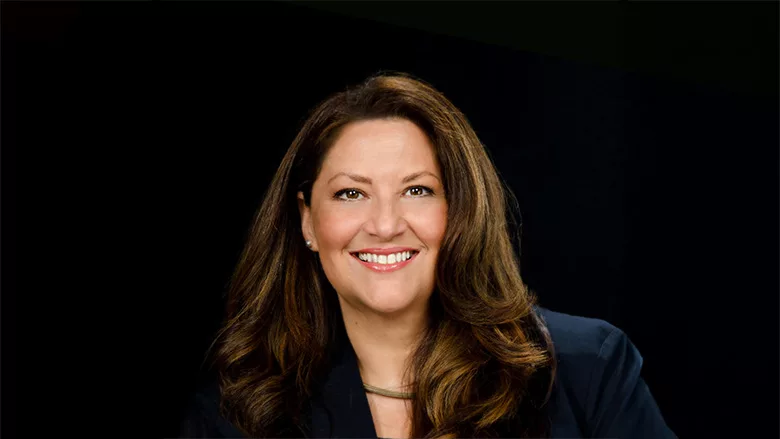

Elina Cardet
Arcadis
What initially inspired you to pursue a career in architecture, and who or what influenced you most along the way?
The moment I realized that precision could be poetic—that logic and imagination could coexist. That realization began in eighth grade, long before I had the language to describe it, in a descriptive geometry class where I learned to draft with a compass and pencil. I was captivated by the clarity of those exercises and by the quiet creativity of constructing space through geometry. My geometry teacher and first mentor, Georgina Muns, encouraged me to consider architecture. Until then, I imagined a future either in science or the arts. Geometry revealed a third path—one where both could overlap. That early mentorship mattered; it gave me permission to imagine myself in the profession.
My father, an engineer, reinforced that trajectory by introducing me to one of his architect clients, Thom Marvel, who guided me on internships that summer, portfolio development, and higher-education pathways in the U.S. At 13, I was drawn not only to form, but to how buildings worked and how they shaped human experience. That curiosity—about systems, structure, performance, and ultimately human experience—has stayed with me throughout my career. What began as an exploration of geometry has become a lifelong commitment to building projects that respond humanely and contribute meaningfully to a more sustainable built environment.
How do you see diversity and inclusion influencing better design outcomes in architecture today?
I see diversity and inclusion not as abstract ideals, but as essential design tools. Architecture is fundamentally about people, and when design teams reflect a broader range of lived experiences, cultures, and ways of thinking, the work becomes more thoughtful, resilient, and relevant.
In performance-driven architecture, diverse teams with different points of view and areas of expertise tend to surface critical questions earlier. They challenge assumptions about comfort, durability, climate response, and use over time. Inclusion ensures those insights are not only present, but actively shaping decisions and leading to innovation. The result is better architecture: buildings that perform more reliably, respond more sensitively to users, and deliver greater long-term value for clients and communities alike.
Have you had mentors or advocates who played a key role in your career growth, and how important is mentorship for women entering the field now?
I’ve been very fortunate to learn from mentors who valued curiosity as a discipline—who encouraged me to ask deeper questions and trust my own thinking: Bilge Friedlander, Paola Iaccuci. I am grateful to these impactful mentors who helped me develop confidence through competence and engage technical complexity: Kathryn Dean, Jerri Smith, Joan Blumenfeld. And how to expand and redefine our roles within the AEC industry: Janine James, Jan Tribbey, Kimberly Sheppard, Susan Soenhlen and Kim Heartwell.
Mentorship remains especially important for women today. This matters because the data tells a clear story: while women comprise nearly half of architecture graduates and licensure candidates, they continue to be underrepresented in AIA membership and senior leadership roles—particularly during mid-career transitions such as starting a family. Mentorship, sponsorship, and advocacy help bridge that gap by ensuring women maintain access to complex projects, technical leadership pathways, and decision-making spaces where their voices shape outcomes.
Imagine for a moment if each of us mentored eight emerging women in the AEC industry—and those eight mentored another eight they encountered along their path. In just a few years, this exponential “power of eight” could transform our industry by raising expectations for hundreds of thousands of women and ensuring continued access to complex projects, technical leadership pathways, and the rooms where meaningful decisions are made.
How do you balance creativity with the technical, regulatory, and business demands of architecture?
I don’t see creativity and technical rigor as opposing forces. I see them as partners in curiosity.
Performance criteria—codes, climate data, enclosure systems, energy modeling, and regulatory requirements—provide a framework that sharpens creativity rather than constraining it. Some of the most elegant design solutions emerge when those parameters are clearly understood and integrated early.
I’m also deeply influenced by neuroscience and research on emotional responses to space and the built environment. Buildings must perform technically, but they must also feel right. Comfort, coherence, and sensory experience are not luxuries—they are part of human performance and well-being. When technical excellence and emotional intelligence work together, architecture becomes resilient, beautiful, and deeply meaningful.
What changes have you seen for women in architecture over the course of your career, and where do you think progress is still needed?
There has been progress. Women are increasingly visible as design leaders, project executives, and firm principals, and younger generations are entering the profession witnessing more women in leadership positions.
At the same time, real gaps remain—particularly in senior technical and design leadership, as well as long-term retention. The profession still loses too many women during mid-career transitions, and improvements are needed in how we support women’s evolving life responsibilities.
Progress going forward will depend less on recruiting women into the profession and more on retaining, advancing, and trusting them with influence throughout their careers.
How do you see the conversation on sustainability going in our industry?
The sustainability conversation has matured from aspiration to accountability. Today, it’s about measurable outcomes—carbon reduction, energy performance, material health, durability, resilience over time, and risk reduction.
What excites me most is how sustainability is now intersecting with human experience. Research continues to show that environments supporting comfort, daylight, and biophilia directly influence health, creativity, and productivity. This is especially evident in workplace, healthcare, and educational environments emerging from the post-pandemic era.
True sustainability is not just about reducing harm; it’s about creating buildings that actively support people and ecosystems. Innovative building enclosures play a critical role in making this possible.
What advice would you give to young women or girls who are considering a career in architecture or the broader AEC industry?
Let curiosity be your compass. Learn deeply—not only about form and aesthetics, but about how buildings actually work: how materials perform, how climate influences design, how systems interact over time, and how emerging technologies can be utilized.
Trust your voice, especially in complex environments. Preparation builds confidence, and asking thoughtful questions is a form of leadership. Do not be afraid to ask questions. You don’t need to know everything—but you do need to engage with clarity and intention.
Seek mentors who challenge you to grow, not just to be comfortable. Architecture and design need women who lead with rigor, courage, empathy, and imagination.
During International Women’s Month, what does recognition like this mean to you, and how can the industry continue to better support and elevate women’s voices year-round?
Recognition during Women’s History Month is meaningful beyond increased visibility, as it affirms that design excellence, leadership, and mentorship matter—and that how we lead with clarity is just as important as what we deliver.
Supporting women year-round is how lasting change takes shape. It requires consistent action: equitable access to leadership opportunities, flexible career pathways that don’t penalize life transitions, and work cultures that value diverse voices as essential—not optional—to innovation.
I remain deeply optimistic about the future. As more women continue to lead with confidence, technical depth, and emotional intelligence, we will shape healthier, more resilient, and more sustainable cities. That future is already being built—thoughtfully, collaboratively, and with purpose.

















Looking for a reprint of this article?
From high-res PDFs to custom plaques, order your copy today!

.webp?height=740&t=1767036885&width=auto "Header - BE 1170x658 (002).png")

.webp?height=740&t=1755781744&width=auto "KEE(2).png")