BE University

Building Enclosure University and Continuing Education courses are an easy and convenient way for architects, designers, engineers and building managers who specify in wall assemblies, roofing system materials, and high energy-efficient building system methods and products, to stay on top of the latest industry information. Courses are offered almost every month, allowing you to earn continuing education credits from the convenience of your own office.
Hear from experts in the field and participate in a live Q&A session with attendee-submitted questions. Each event is also archived for one year, so if you miss an educational session live, you can play back the scheduled broadcast anytime you like!
Live And Upcoming
-
July 14, 2026 02:00 pm EDTComparing Environmental Product Declarations (EPDs) for Structural Materials
Credits: 1 AIA LU/HSW; 0.1 ICC CEU
This presentation will explain what an EPD is, how it is developed using product category rules, and how it shows environmental impacts of typical construction products. We will then look at how various industries d…
See Full DescriptionCredits: 1 AIA LU/HSW; 0.1 ICC CEU
This presentation will explain what an EPD is, how it is developed using product category rules, and how it shows environmental impacts of typical construction products. We will then look at how various industries develop EPDs, what different types of EPDs are available, and how these can be used in the life cycle assessment of a building project.
Learning Objectives:
- Participants will learn what an Environmental Product Declarations (EPD) is, and how EPDs are developed.
- Participants will be able to explain how an EPD is used for a life cycle assessment (LCA) of a building.
- Participants will learn why it can be difficult making a direct comparison of environmental impacts between products and systems, and how this can effectively be done for a structure.
- Participants will be able to explain the different types of EPDs, and where they can get more information on EPDs and LCAs.
Sponsored by:

-
July 21, 2026 02:00 pm EDTDesigning for Quiet
Credit: Credit 1 AIA LU/HSW pending; 1 IIBEC CEH; 0.1 ICC CEU
When vacant commercial buildings are adapted for multifamily residential or mixed-use occupancy, acoustic performance frequently becomes a critical design risk. Wall assemblies, structural…
See Full DescriptionCredit: Credit 1 AIA LU/HSW pending; 1 IIBEC CEH; 0.1 ICC CEU
When vacant commercial buildings are adapted for multifamily residential or mixed-use occupancy, acoustic performance frequently becomes a critical design risk. Wall assemblies, structural systems, and mechanical infrastructure originally intended for office environments often allow excessive sound transmission that can negatively impact occupant health, comfort, and residential livability.
This course examines the most common acoustic challenges encountered in commercial-to-residential adaptive reuse projects and pairs each challenge with practical, design-based solutions. With an emphasis on sound transmission through walls and the limitations of Sound Transmission Class (STC) ratings, the course explores how flanking paths, structure-borne noise, HVAC systems, and detailing influence real-world acoustic performance. Participants will learn how early, architect-led design strategies and interdisciplinary coordination can improve field sound isolation outcomes, reduce post-occupancy noise complaints, and support occupant health, safety, and welfare.
Learning objectives:
- Master acoustic design in adaptive reuse by identifying sound transmission paths, applying mitigation strategies, and optimizing STC ratings.
- Evaluate building assemblies and systems through interdisciplinary coordination to ensure occupant health and comfort in commercial-to-residential conversions.
- Recognize that STC is only part of the equation when adapting exiting structures for new uses.
- Cover when and where the performance to cost ratio shifts occur in sound-rated wall design.
Sponsored by:
-
July 30, 2026 02:00 pm EDTPushing the Envelope - Going Beyond Conceptual Design
Credits: 1 AIA LU/HSW; 1 IIBEC CEH; 0.1 ICC CEU
Over the past several years, the building envelope concept has been well promoted and established as a means for energy efficiency and building performance. With the vast product offerings available …
See Full DescriptionCredits: 1 AIA LU/HSW; 1 IIBEC CEH; 0.1 ICC CEU
Over the past several years, the building envelope concept has been well promoted and established as a means for energy efficiency and building performance. With the vast product offerings available today comes confusion and misinformation. Building designers are often left guessing about product compatibility and proper design, leading to the potential of costly failures. The focus of this presentation is to dive deeper, beyond the concept, and into proper building envelope design. The presentation aims to educated attendees on proper product selection and performance characteristics, codes and testing, and proper tie-in detailing to ensure a continuous air seal.
Learning Objectives:
- Cover what is at stake with improper building envelope design and discuss the ideal building types that benefit the most from building envelope systems. In addition, we will be discussing the codes requiring proper building envelope design and what is being required.
- Recognize how to select and properly install functional air/vapor barriers for roof, wall and below grade applications.
- Cover how to use a holistic approach for examining and selecting exterior continuous insulation options for rainscreen wall assemblies. We will analyze popular exterior continuous insulation options with an emphasis on selecting material that functions well during all weather conditions.
- Identify several common material and system tests required to meet building energy and safety codes.
- Discover how to properly detail and tie-in common building materials to create and maintain a continuous air seal. We will look at some of the common and often difficult conditions that can exist.
Sponsored by:

On Demand
-
-
-
-
-
-
-
-
 May 5, 2026 02:00 pm EDTRoof Design Enhancements to Optimize Roof System Performance
 -
 April 30, 2026 02:00 pm EDTWhere Energy Efficiency Meets Life Safety: Polyiso CI and the Critical Role of NFPA 285
 -
 April 28, 2026 02:00 pm EDTRoof Design Considerations That Prevent Installation Failures and Change Orders
 -
-
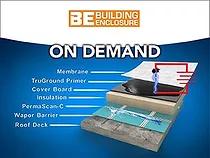 January 27, 2026 02:00 pm ESTLessons Learned from Electronic Leak Detection Testing and Continuous Monitoring
 -
 December 17, 2025 11:00 am EST Future-Ready Design: Navigating the LEED v5 Rating System
 -
 December 16, 2025 02:00 pm ESTWhen Green Turns to Blue: Integrating Roof Stormwater Management Solutions
 -
 December 9, 2025 01:00 pm ESTKey Factors for Enclosure Resilience: Heat, UV, Water, and Air Performance.
 -
 December 3, 2025 02:00 pm ESTProfitable by Design: Estimating Fees for AE Success
 -
-
 November 13, 2025 02:00 pm ESTPolyiso CI: The Optimal Air & Water-Resistive Barrier Solution
 -
-
 October 16, 2025 11:00 am EDTDevelopment and Adoption of Air Leakage in Building Codes
 -
-
-
-
-
-
-
 July 29, 2025 02:00 pm EDT Sealed and Delivered: The Role of Water-Resistive Barriers
 -
-
-
-
 June 12, 2025 02:00 pm EDTBenchmarking: The Secret Weapon of High-Performing Engineering Firms
 -
 May 28, 2025 02:00 pm EDTAdvanced Design Against Adverse Conditions in a Commercial Roofing System
 -
-
-
-
-
 March 20, 2025 01:00 pm EDTThe Critical Aspect of Air and Water-Resistant Barriers Within the Building Envelope
 -
 March 20, 2025 11:00 am EDTPitfalls and Challenges of NFPA 285 Engineering Analysis
 -
 March 18, 2025 02:00 pm EDTGoing Seamless: The What, Where & Why of Liquid Applied Roofing
 -
-
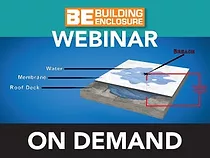 February 25, 2025 02:00 pm ESTElectronic Leak Detection for Roofing, Waterproofing and the Building Envelope
 -
 February 12, 2025 02:00 pm ESTModified Bitumen Roof Assemblies: Where Old Meets New
 -
 December 18, 2024 02:00 pm ESTEmerging Trends in High-Performance Enclosure Optimization
 -
 December 10, 2024 02:00 pm ESTBuilding Science and Life Safety in Wood Framed Construction
 -
-
December 4, 2024 11:00 am ESTBenefits of Today’s High-Performance Exterior Insulation and Finish Systems (EIFS) with Drainage
-
-
 December 3, 2024 11:00 am ESTThe Evolving Landscape of Commercial Energy Efficiency
 -
-
 October 29, 2024 02:00 pm EDTWood Nailer Alternatives: Sustainable Solutions to Enhance Roof Perimeter Security and Strength
 -
 October 24, 2024 02:00 pm EDTPolyiso CI: The Next Generation Air & Water Barrier Solution
 -
 October 21, 2024 02:00 pm EDTWhy Instant-Setting Cold Fluid-Applied Waterproofing Systems is the Sensible Choice
 -
-
 September 11, 2024 01:00 pm EDTManaging Resilience & Risk in the Building Enclosure
 -
-
 August 6, 2024 02:00 pm EDTRoles and Responsibilities for Success with CFS Framing
 -
-
-
-
 May 28, 2024 02:00 pm EDTThrough-Wall Flashings and Transition Membranes: Selection & Installation
 -
-
-
-
-
-
-
-
-
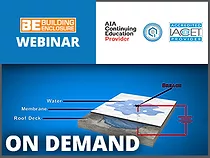 February 21, 2024 02:00 pm ESTElectronic Leak Detection for Roofing, Waterproofing and the Building Envelope
 -
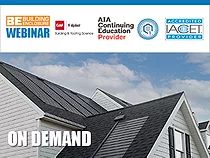 August 22, 2023 02:00 pm EDTSolar Roofing: Protect and Power Buildings in One Project
 -