The Role of Prefabricated Building Systems in Sustainable Building Enclosure Design and Building Science
Prefabrication offers a reliable pathway to improve enclosure performance by increasing quality, consistency, and integration of key building science principles
Over the next five years, prefabricated building systems are expected to grow from a $91.25B market to $130B worldwide.[1] While this substantial growth is often attributed to prefabrication schedule and quality advantages, it is also driven by its ability to deliver meaningful sustainability benefits. Compared to traditional site-built construction, prefabrication improves material efficiency, reduces environmental impacts, optimizes construction logistics, provides safer and more efficient labor practices, and enhances long-term building performance.
As the construction industry shifts toward high-performance, low-carbon structures, the building enclosure has become a critical focus. Prefabrication offers a reliable pathway to improve enclosure performance by increasing quality, consistency, and integration of key building science principles.
From a technical perspective, prefabricated enclosure systems enable tighter control over air, moisture, and thermal barriers while also supporting measurable reductions in embodied carbon through optimized material use and verified Environmental Product Declarations (EPDs). These advantages align directly with sustainability frameworks such as LEED® and other emerging carbon-focused design requirements.
Material Efficiency and Waste Reduction
Prefabrication significantly improves material efficiency by replacing variable field practices with controlled, repeatable manufacturing processes. Factory production minimizes over-ordering, reduces waste, and ensures consistent quality throughout the fabrication process. Scrap materials are more efficiently captured and recycled within manufacturing processes, reducing landfill contributions and lowering environmental impacts.
Reduced Environmental Impact
Reduced Jobsite Disruption: Prefabrication minimizes the environmental and logistical impacts associated with on-site construction. Benefits include less job-site disruption, improved schedules, smaller crews working more efficiently and safely, reduced noise, improved dust control, and fewer site deliveries, which collectively lessen air pollution and traffic disruption. Additionally, shorter on-site durations reduce equipment run-time, fuel consumption, and labor congestion.
Scheduling benefits: In many cases, building enclosures are completed earlier in the construction process, allowing interior trades to begin sooner, improving the overall project efficiency and quality. Waste generation is also minimized with more materials recycled at the manufacturing stage rather than disposed of as on-site waste.
Safer and More Efficient Labor Practices
Prefabrication shifts a substantial portion of construction activity to controlled manufacturing environments, improving both safety and efficiency. This transition reduces exposure to high-risk conditions such as working at heights, inclement weather, and congested job sites.
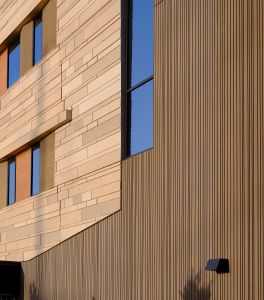
By shifting construction from unpredictable jobsite conditions to controlled manufacturing environments, prefabrication enables repeatable, high-performance assemblies with consistent workmanship quality that integrate well with building science principles. Manufacturing settings support better ergonomics, standardized safety protocols, and improved workflow organization. Additionally, fewer workers are required on-site, reducing congestion and enhancing overall jobsite safety and coordination. These improvements contribute to lower incident rates and support broader environmental, social, and governance (ESG) objectives.
Lower Embodied Carbon Through Optimization
The building enclosure is a significant contributor to the overall embodied carbon impact of a project, particularly in material-intensive systems such as concrete, steel, and masonry. Prefabricated building systems can help reduce this impact through material optimization, manufacturing efficiency, and waste reduction.
Standardized and repeatable assemblies allow designers and manufacturers to optimize structural performance while minimizing material use. Controlled production environments support precise batching, efficient material utilization, reduced rework, and lower rates of rejected product. These efficiencies contribute directly to lower embodied carbon compared to less controlled construction processes.
For prefabricated systems such as precast concrete, manufacturing under facility-controlled conditions can improve quality consistency, curing efficiency, and strength development. This may enable more optimized mix-designs and reduce material consumption while maintaining required structural and architectural performance.
Prefabrication also supports improved environmental transparency. Because products are manufactured using documented materials, processes, and quality controls, prefabricated building systems are well-suited for the development of verified EPDs, including product-specific, facility-specific, and industry-wide EPDs. These tools provide project teams with reliable environmental data to support informed material selection and whole-building life cycle assessment.
When combined with life cycle thinking, prefabricated building systems can contribute to lower environmental impacts across the construction process by reducing waste, improving resource efficiency, and supporting data-driven sustainability decisions.
Enhanced Operational Performance
Enhanced operational performance is one of the most often underappreciated advantages of prefabricated building systems. While much of industry conversation focuses on embodied carbon and construction efficiency, the long-term operational benefits are where prefabrication can quietly deliver the most value.
Prefabrication improves operational performance by increasing consistency and precision. Improved consistency in air and water barriers, insulation placement, and dimensional tolerances allows for more accurate modeling of thermal performance, supporting compliance with energy codes and enabling more precise sizing of mechanical systems. Properly executed control layers result in reduced air leakage and improved thermal performance over the life of the building, ultimately reducing its environment impact.
LEED® Benefits
Prefabricated building systems offer a powerful pathway to achieving LEED certification. By shifting construction from the jobsite to a controlled manufacturing environment, prefabrication improves material efficiency, enhances building performance, and simplifies sustainability documentation. These advantages directly support achieving LEED credits across several key categories, including Materials & Resources, Energy & Atmosphere, Indoor Environmental Quality, and Sustainable Sites (see Table 1).
Table 1: LEED credit advantages of prefabrication.
Materials & Resources |
Energy & Atmosphere |
Indoor Environmental Quality and Sustainability Sites |
|
|
|
Sustainability in Action
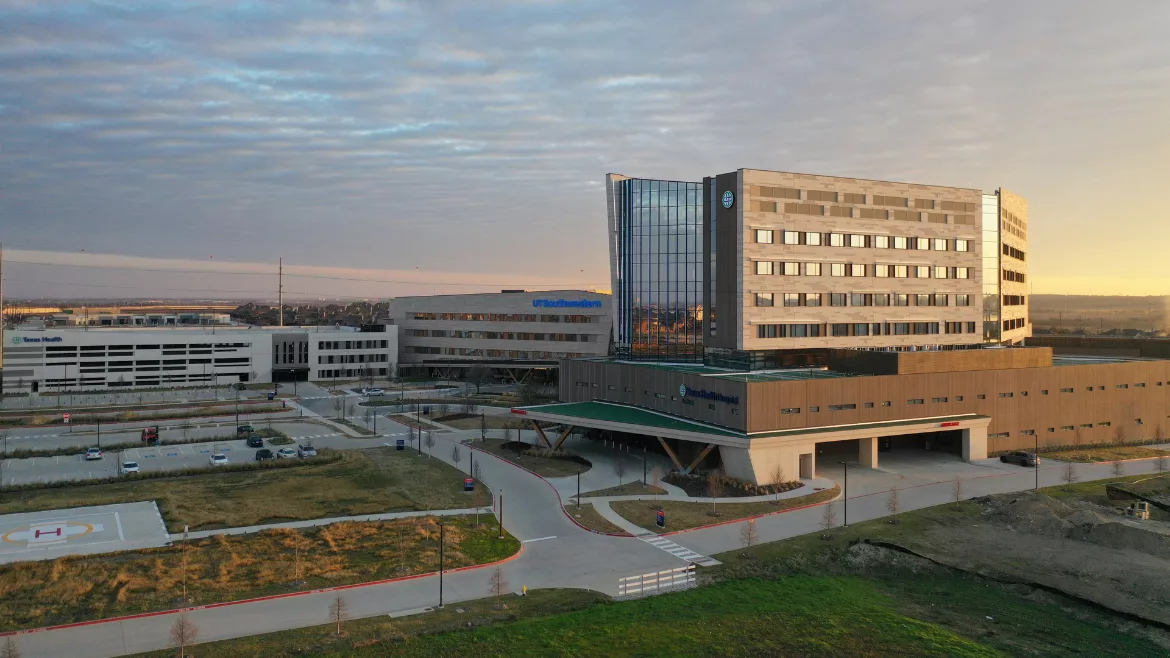
The Texas Health Frisco campus in Frisco, TX, brings these principles together in practice. Through early design-assist collaboration, the team delivered an integrated prefabricated facade system with built-in insulation, improving constructability, tightening the thermal envelope, and reducing on-site labor exposure.
Because the facility operates around the clock, enclosure performance carries real operational weight. The system was designed to limit heat gain and cooling demand in the North Texas climate, a direct outcome of the insulation continuity and precision that controlled manufacturing makes possible.
A life-cycle analysis found the campus performs 2 percent better than the industry average for total embodied carbon. That result reflects material optimization, reduced waste, and verified environmental data working together. When the enclosure is designed and fabricated with both embodied and operational carbon in mind from the start, the building tends to perform better on both counts.
The Bottom Line
As project teams face increasing pressure to lower carbon impact, improve constructability, reduce project schedules and meet green building standards, prefabrication provides a scalable and proven solution across all major building systems.
Prefabricated building systems are not simply a more efficient way to build; they are a more accountable way to build. As the industry moves toward tighter enclosure standards and measurable carbon outcomes, prefabrication provides the process discipline to consistently deliver on those commitments. Building enclosure professionals who integrate prefabrication thinking early in design will find it easier to hit performance targets and meet the expectations of an industry that is raising the sustainability bar across the board.
References
[1] Modor Intelligence – Modular construction market size & share analysis – growth trends and forecasts (2026-2031)
Looking for a reprint of this article?
From high-res PDFs to custom plaques, order your copy today!

.webp?height=740&t=1767036885&width=auto "Header - BE 1170x658 (002).png")

.webp?height=740&t=1755781744&width=auto "KEE(2).png")

.webp?height=200&t=1766503602&width=200 "HVAC(1).png")