


Drained and Back-Ventilated Rainscreens vs Pressurized-Equalized Rainscreens
Rainscreens are an integral part of modern building envelopes. These marvels of engineering science improve performance by reducing moisture and enhancing durability and energy efficiency. But not all rainscreens are created equal.

You may have heard the catch-all term “pressure-equalized rainscreen” used as a standard generic description for all rainscreens. Unfortunately, it isn’t that easy. Performance depends on design intent, exposure conditions and system execution—not labels. With this in mind, there are two general types of rainscreens that differ in execution, risk and durability: drained, back-ventilated rainscreens and pressure-equalized rainscreens. In this blog post, we examine both, highlighting the key differences and the pros and cons of each.
Before we zoom in on the differences between the two types of rainscreens, let’s zoom out for a second and review why rainscreens are so important. As mentioned earlier, rainscreens reduce moisture and enhance durability and energy efficiency. But how do they do this?
A rainscreen cavity serves as a crucial differentiator, creating a ventilated drainage gap between the outer cladding and the building’s weather-resistive barrier (WRB). This design achieves several things, including:
- Manages bulk water
- Controls air pressure differentials
- Supports drying and moisture resilience
- Reduces hydrostatic pressure
- Prevents rot, mold and corrosion, and protects the building’s inner structure
Now that we’ve established the purpose of the rainscreen, let’s peel back the layers and take a closer look at the different types.
What Is a Drained and Back-Ventilated Rainscreen?
First, let’s cover the drained and back-ventilated rainscreens. These systems are intended to allow bulk water in (especially if they are open joint systems); they must therefore allow for the water to drain and dry out. Additionally, instead of full pressure neutralization, there is pressure moderation.
The benefits of drained and back-ventilated rainscreens include:
- Robust moisture management in real-world conditions
- Greater tolerance for construction variability
- Effective across a wide range of climates and building types
Our StoVentec® rainscreen systems, specifically designed as drained, back-ventilated rainscreens for high-performance wall assemblies, provide the necessary channels for air movement and water drainage behind the cladding. They incorporate insulation, an air/moisture barrier and a framework to create a complete, energy-efficient and weather-resistant facade system. Plus, you get a range of options from thin masonry veneer cladding, versatile fiber cement, traditional textured finishes, and even brilliant back-painted glass cladding that allows for full-color HD digitally printed glass for a truly one-of-a-kind building facade.
What Is a Pressure-Equalized Rainscreen?
The theory behind the pressure-equalized rainscreen is to balance air pressure in the cavity behind the cladding with the outside wind pressure. A pressure-equalized rainscreen is designed so that wind pressure outside the cladding is equalized with the pressure inside the cavity. This prevents the wind from “pushing” water through joints and cracks. Minimizing pressure differences prevents water from being drawn into the cladding, allowing gravity and drainage to manage it effectively, even in high-wind conditions such as hurricanes.
The benefits of the pressure-equalized rainscreen include:
- Can reduce wind-driven rain intrusion when properly designed and executed
- May support thermal performance goals in tightly controlled assemblies
- Potential for long-term durability when airtightness and compartmentalization are maintained over time
Because of these dependencies, true pressure-equalized performance can be difficult to achieve consistently across typical construction environments.
At-a-Glance Performance Tradeoffs
The following comparison reflects general performance tendencies based on design intent and execution complexity. It is not a design guide or a guarantee of performance.
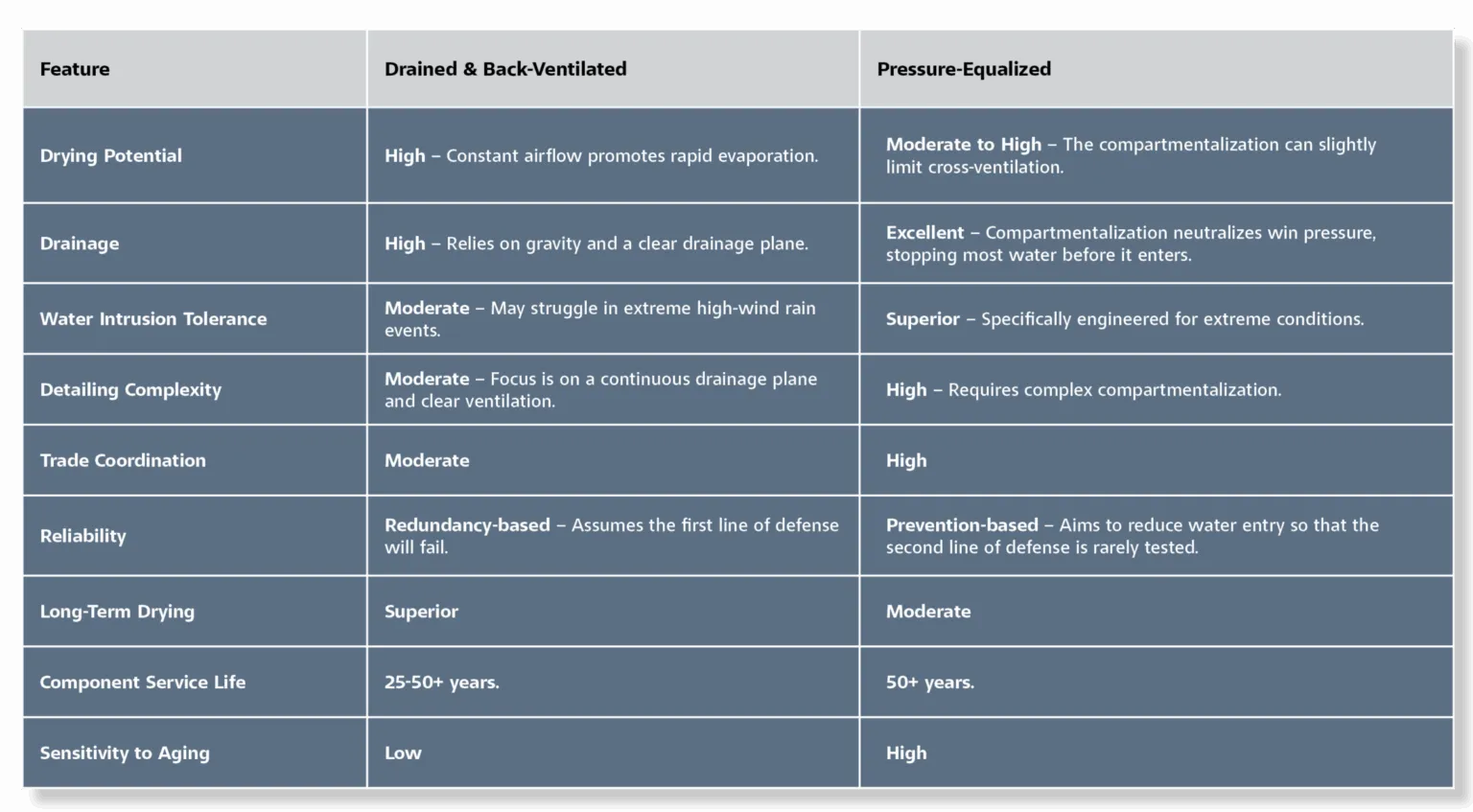
Image: Sto Corp.
Climate, Height and Exposure Considerations
Choosing the right rainscreen for your project depends on several variables. Climate, height and exposure are three critical factors.
Scenarios where drained and back-ventilated systems are typically preferred:
- Mixed-humid, coastal or variable climates
- Retrofit and recladding projects
- Projects prioritizing durability and drying capacity
Scenarios where pressure-equalized design principles may be appropriate, typically limited to projects with stringent quality control and long-term maintenance strategies.
- Tall buildings with extreme wind exposure
- Highly controlled construction environments
Regardless of the rainscreen system your project requires, Sto can provide project-specific recommendations. We also provide engineering guidance for the installation of our tested rainscreen assemblies to ensure long-term performance.
Why System Design Matters More Than Terminology
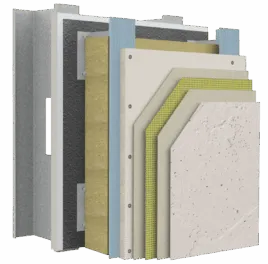
Image: Sto Corp.
To fully realize the benefits of any rainscreen system, it must be part of a systemized assembly. Material-only approaches create a piecemeal solution that inevitably results in gaps between incompatible products. in most real-world applications, durability, drying capacity and tolerance for construction variability are more reliable predictors for long-term performance than theoretical pressure neutralization.
Sto designs for how buildings are built, exposed and maintained as a systemized approach, reducing risks and improving durability. Our integrated components are designed to work together under real-world conditions. And our tested assemblies reduce uncertainty.
Critical Factors for Maximum Rainscreen Performance:
- Continuity of the air and water-resistive barrier
- Proper cavity design
- Compatible materials and detailing
Sto’s integrated approach includes proven technology such as StoGuard AWRBs and StoVentec rainscreen systems. Plus, we offer continuous insulation and noncombustible options. And our comprehensive, systematized approach means one manufacturer, coordinated responsibility and reduced risk
Selecting the Right Rainscreen for Performance Longevity

Photo: Sto Corp./Bell Bank
As you’ve seen, rainscreens are not all the same. Both drained and back-ventilated rainscreens and pressure-equalized systems have value when properly applied. To effectively select the right rainscreen for your application, evaluate project conditions, not trends or shorthand terminology.
Sto is a trusted building science authority focused on real-world performance. We invite you to consult Sto’s team for project-specific rainscreen guidance. To learn more or request a project-specific consultation, explore our Wall Selector, or contact us online or call 800-221-2397.
Resources
See the possibilities by downloading the StoVentec Lookbook
Learn more about rainscreens at the Sto Blog
See real world examples and case studies in our Project Gallery
Looking for a reprint of this article?
From high-res PDFs to custom plaques, order your copy today!

.webp?height=740&t=1767036885&width=auto "Header - BE 1170x658 (002).png")

.webp?height=740&t=1755781744&width=auto "KEE(2).png")