The Role of Structural Steel Fabrication and Erection in Historic Renovations
Bridging Past and Present
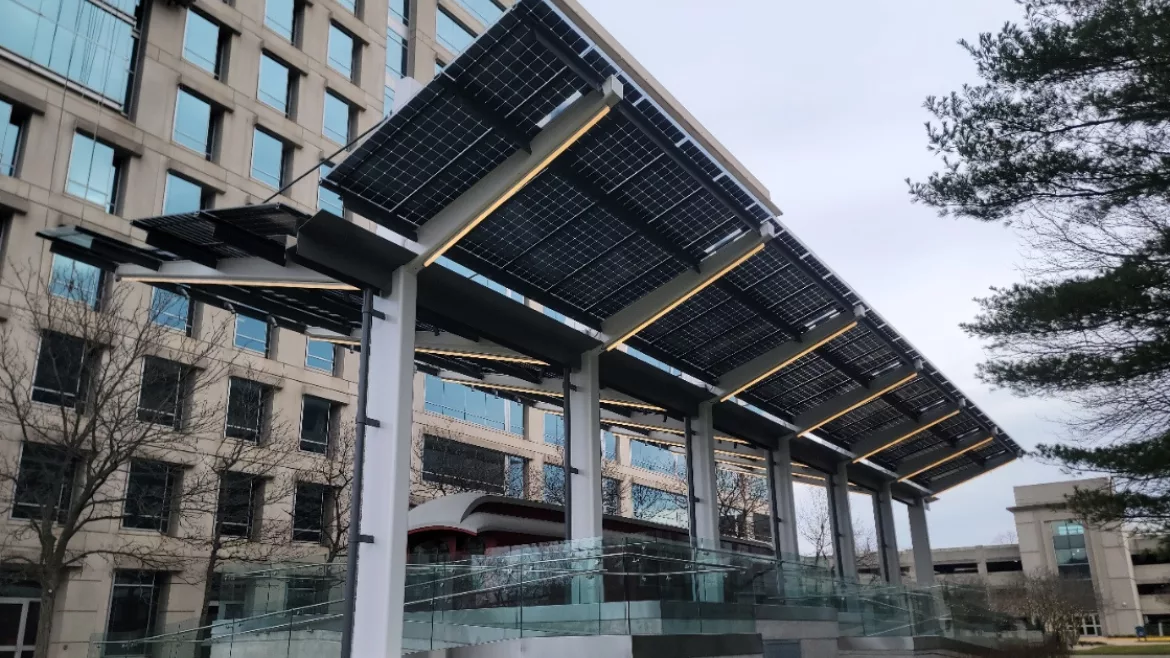
Image courtesy of Extreme Steel Inc. (ESI)
Historic buildings serve as tangible reminders of past craftsmanship, regionally sourced materials, and architectural styles that have long since fallen out of favor. Preserving them is both a technical and cultural obligation.
Still, for century-old structures to remain functional, safe and code-compliant, they often need more than cosmetic repair. Many require reinforcement, adaptation and in some cases a complete transformation. Structural steel may not be the first material that comes to mind when picturing gingerbread façades or timber-framed lofts, yet it is increasingly the material that allows those architectural treasures to survive and even thrive in modern use.
Rebuilding from the Inside Out
Walk into a landmark theater, a masonry mill or a Beaux-Arts courthouse and the first threat to longevity is usually invisible. Floor joists no longer meet live-load requirements, foundations are shallow or decades of moisture have corroded embedded iron. Nevertheless, when a building is protected under local or federal preservation guidelines, the exterior must remain largely unaltered.
High-strength, lightweight steel solves that paradox. New beams can thread through attics, plate girders can tuck inside masonry walls and moment frames can rise inside stair cores, each upgrade boosting capacity without disrupting ornamentation. As most components are prefabricated off-site to millimeter tolerances and delivered just-in-time, installers minimize vibration, dust and staging area, critical advantages inside fragile interiors with historic plaster, stained glass or museum collections nearby.
The Structural Engineer of Record: Balancing Design and Responsibility
Central to every steel-enabled retrofit is the Structural Engineer of Record (SER). This licensed professional accepts legal responsibility for structural adequacy from schematic design through final inspection, guiding load paths, connection details and construction sequencing.
Early in a project, the SER analyzes the existing fabric, sometimes using ground-penetrating radar, sometimes digging exploratory pits, to understand what can be kept and what must be reinforced. They translate those findings into drawings that weave new steel into old materials while satisfying the International Building Code (IBC), ASCE 7 load criteria and Chapter 11 of the International Existing Building Code (IEBC) for historic structures.
Coordination does not end at the drawing board. The SER reviews every shop drawing, verifies that weld sizes and bolt grades align with brittle nineteenth-century brick and answers field request for information (RFIs) when surprises emerge, an undocumented steel lintel, a hidden vault, a void behind an ashlar façade. Site visits may lead to tweaks on the fly but the SER’s signature anchors each decision, assuring owners, preservation boards and insurers that structural safety and heritage value remain in balance.
Steel as a Bridge Between Old and New
Few materials match steel’s ability to conform to irregular geometry. Three-dimensional laser scans of uneven walls convert seamlessly into BIM models, allowing fabricators to design knife plates, seats and shims that hug out-of-plumb conditions before a single torch is lit.
In many historic mill-to-innovation hub conversions, structural steel is brought in through existing openings such as freight doors or window bays and then assembled or spliced in place. This method avoids the need to remove or alter character-defining façades while still enabling substantial structural upgrades. The approach aligns with National Park Service Preservation Brief 41, which recommends internal steel reinforcement, such as moment frames or bracing, to preserve exterior integrity and protect significant architectural features.
For envelope specialists, steel becomes a hidden backbone that carries new rainscreens, high-performance glazing or photovoltaic canopies. Its slender profiles support heavier loads without thickening wall assemblies, preserving the visual rhythm of pilasters and cornices while quietly delivering drift resistance, thermal breaks and anchorage for modern cladding systems.
Coordinating Across Teams and Time Periods
Historic renovation is inherently collaborative. Architects focus on preserving character-defining details. Preservationists work to maintain period authenticity. Mechanical engineers plan around equipment clearances. Erection crews look for crane paths that are safe and practical. The SER sits at the hub but seamless execution depends on early, iterative interaction with detailers, fabricators and installers.
Design-assist workshops, often held months before fabrication, are where potential clashes are resolved. Fabricators flag anchors that interfere with existing terracotta, suggest splice locations that avoid rotted sills and model connection geometry that permits reversible removal, meeting preservation mandates for minimal intervention. Each decision documented in the federated BIM model reduces future RFIs and accelerates regulatory approval.
Erecting Within Tight Urban Constraints
Many landmark buildings occupy congested downtown parcels with no lay-down yard and limited street closures. Just-in-time logistics shine here, beams arrive in sequence, lifted directly from truck beds to their final positions. Compact spider cranes can fit through thirty-six-inch doorways. Self-propelled modular lifting frames move across vintage terrazzo floors without the need for anchoring to the slab. Temporary shores are engineered in concert with the SER so that historic walls never see unbalanced loads during demolition or jack-arch replacement.
Sometimes the new structure must “float” entirely off the original. Knife plates bearing on discreet steel corbels let new floors hover over decorative capitals. Overslung trusses span between party-wall pilasters, avoiding contact with weak clay-tile arches. These moves demand rigorous pre-visualization and a trust loop between engineer, fabricator and erector, because corrective welding in cramped attics is both slow and risky.
Balancing Envelope Integrity and Historic Character
Energy codes now shadow structural ones. When a retrofit introduces high-R wall assemblies or triple-pane curtain wall, structural members risk becoming thermal bridges. Today’s steel solutions mitigate this challenge, with factory-welded thermal-break stubs, galvanizing plus damp-proof coatings and knife plates that land on non-conductive bearing pads. Reinforced lintels support heavier glazing without sagging stone mullions, while concealed tube frames provide cavities for continuous insulation and air-vapor membranes.
Moisture remains the arch-nemesis of vintage masonry. Interior steel bracing can alter hygrothermal profiles, trapping water where lime mortar once breathed freely. Forward-looking SERs specify capillary breaks, end-dam flashings and weeps at discreet joints, then pair these with remote moisture sensors that feed data to the building-management system long after opening day.
Historic Guidelines, Modern Codes
Preservation authorities judge every visible inch of intervention, yet life-safety codes govern performance behind the plaster. Fire-rated hollow-section columns can transform a narrow stair tower into a protected egress without replacing hand-carved balusters. Buckling-restrained braces rated for seismic drift hide inside wood-panel walls, ready to absorb earthquake energy while invisible to museum patrons.
Reversibility remains a watchword. Steel seat angles may be pinned rather than welded to original cast-iron columns, allowing future removal without scarring. Bolted knife plates slip behind the wainscot, accessible for maintenance but unseen. The SER documents these strategies in a narrative often reviewed by landmarks commissions, demonstrating that new structures can be unbuilt someday should conservation standards evolve.
Technology’s Role in Closing the Gap
Laser scanning and photogrammetry now capture millions of data points in hours, producing as-built models accurate to an eighth of an inch. Fabricators import those clouds directly into computer numerical control (CNC) software, cutting and drilling steel that fits on the first lift. Cloud-based coordination platforms let teams markup conflicts in real time and augmented-reality headsets help ironworkers verify fit before final bolts are torqued.
Digital workflows reduce both change orders and risk to heritage fabric. When field-verified bolt holes align with pre-modeled masonry joints, there is no need to enlarge openings on-site, sparing stonework from vibration and dust. As scanning, robotic fabrication and low-carbon steel products mature, the preservation toolbox and the envelope community’s confidence will only grow.
A Material Made for Modern Stewardship
Historic buildings require more than admiration. They call for thoughtful care grounded in technical expertise. Structural steel—strong, precise and endlessly adaptable—has become the quiet enabler that lets cities preserve architectural DNA while preparing structures for new occupants, new loads and new climate realities.
Guided by the Structural Engineer of Record and supported by digitally savvy fabricators and erectors, steel ensures that renovation is not a compromise between past and future but a thoughtful conversation between them. The result is architecture that keeps telling its story—now fortified for another century of chapters.
Looking for a reprint of this article?
From high-res PDFs to custom plaques, order your copy today!

.webp?height=740&t=1767036885&width=auto "Header - BE 1170x658 (002).png")

.webp?height=740&t=1755781744&width=auto "KEE(2).png")

.webp?height=200&t=1766503602&width=200 "HVAC(1).png")