International Women’s Day in Design
NYC Female Architect on Multifamily Housing & Adaptive Reuse
Priya Elliott
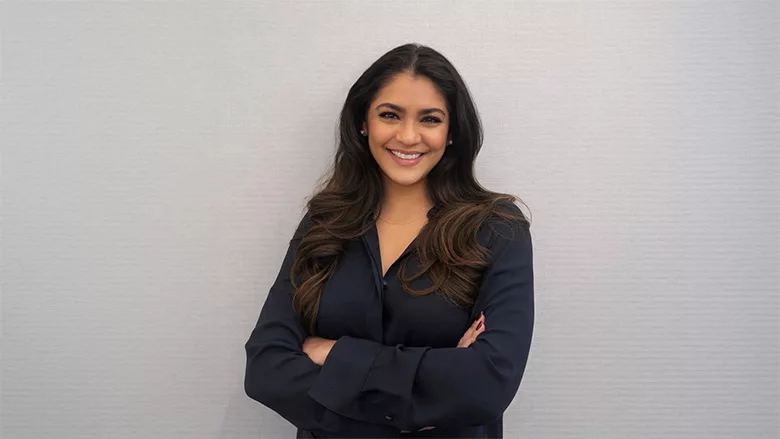

Priya Elliott
CetraRuddy
What initially inspired you to pursue a career in architecture, and who or what influenced you most along the way?
I’ve always felt drawn to this world. Growing up in India, my father was an engineer who worked for a multinational company—the world’s largest ball-bearing manufacturer, and his career was inspiring to me—he ran a large department and had a lot of responsibility. I remember thinking from a young age that I wanted to follow in his footsteps, but at the same there was a sense that I needed to find something that felt more artistic. I’ve always been very creative, and as a child I was constantly drawing, painting, sewing, cooking! Talking to my father one day, he said to me, “why don’t you think about becoming an architect?” and boom—the rest is history!
Can you share a project you’re especially proud of and explain what made it meaningful—either professionally or personally?
My forté is in multifamily residential architecture, ranging from rentals to condominium towers and affordable housing, and from new construction to adaptive reuse. One project that sticks out for me is from an earlier point in my career, when I helped lead the team for a major residential condo building in Brooklyn’s Dumbo neighborhood. This was the first new building to be built after the neighborhood became a landmark district, and it was very exciting to have the design approved by New York City’s Landmarks Preservation Commission. I loved creating a modern expression in an older context, and it feels good that this project is so prominent. You can see it from the Brooklyn Bridge, which means that hundreds of people interact with this work every day as a part of the skyline. I’ve always been fascinated by buildings and the effect and impact they have on people; built spaces are such a huge part of our world, so it’s amazing to feel that you are playing a role in that process. Growing up in India watching the world’s most iconic skyline on TV and in movies—and now being part of shaping it—feels like an incredible dream come true.
How do you see diversity and inclusion influencing better design outcomes in architecture today?
When I moved to New York City in 1999 after graduating from architecture school in India, I was not only a woman in architecture, but also an Indian woman in architecture — a doubly rare position. This wasn’t something I pondered too much at the time, but as I’ve gotten older it has become clear to me how amazing it is to work in a more diverse environment. Our firm CetraRuddy is about 50 percent women and it is extraordinarily diverse and international. I have colleagues from all over the world, and the dialogue between different experiences and cultures greatly enhances our creativity. People bring varied thought processes and perspectives, and they are genuinely eager to share those ideas because we care about what they have to say. In a concrete way, this process helps us achieve better and more creative design outcomes.
Have you had mentors or advocates who played a key role in your career growth, and how important is mentorship for women entering the field now?
Mentorship is critical for everyone, and this is something I take seriously. I love giving back and helping younger colleagues.
In my own experience, teachers and educators played an important role: my art teachers in elementary school noticed that I was always sketching streetscapes and buildings, and they encouraged that creative expression and helped me develop technical skills from a young age. And then when I was in architecture school, my professors had a strong influence on me, including several female educators. Combined with the fact that about half of my class was female, this environment really solidified my belief that architecture was a good profession for me as a woman, and for women overall. I wasn’t alone: many of my female classmates have gone on to be very successful practitioners in their own right. Throughout my career here in New York City, I’ve been incredibly fortunate to work alongside talented industry leaders whose support has helped shape my professional path.
How do you balance creativity with the technical, regulatory, and business demands of architecture?
I think for many creative people, the satisfaction comes from problem-solving and the sense that you’ve arrived at a solution or an idea that hasn’t been seen before. And for me personally that outlook helps me balance the varying demands of architectural practice. For example, at the moment I’m working on several office-to-residential conversion projects. These are challenging puzzles to solve, and I find a lot of satisfaction in figuring out the apartment layouts. Creativity here is about working within the constraints of an existing building structure and designing the best homes possible. When you arrive at a floorplan that just flows and you know it will be a comfortable environment, it’s a great feeling.
What changes have you seen for women in architecture over the course of your career, and where do you think progress is still needed?
When I started my career in New York City 25 years ago, for the most part I was the only woman in meetings—or on an exceptional day, one of two or three. Over time, seeing more women enter this industry not just as architects but also as engineers, consultants, and even developers, which has been a major shift and a positive one. At the same time, I think there is progress to be made in terms of how free women feel to express themselves or be themselves in professional settings. In some stages of my own career, the toughest and harshest criticism I received came from female leaders, who maybe felt they had more to prove. I keep that in mind for myself, and as a manager I always work to be open and honest with my feedback. I’m tough but kind.
How do you see the conversation on sustainability going in our industry?
From my perspective, the conversation on sustainability is really moving forward. In New York, for example, we have a regulatory and code environment that is pushing for innovation and much greener solutions, and our own firm CetraRuddy has a dedicated sustainability department tasked with evaluating all of our projects and identifying the best approach to meet our sustainability goals. All of this is hugely important. My son is 18 — what world is he going to live in as he gets older? What about his children? It can feel like extra work for us architects to adapt and accommodate more stringent codes or change the products we specify, but it’s critical that we do so. The choices we make today should ensure a healthier planet for generations yet to come.
What has been the most fulfilling moment of your career so far, and how did it shape your professional journey?
I only joined my current firm CetraRuddy in the summer of 2024, and being promoted to Associate principal this past fall was a hugely fulfilling moment for me. After 25 years in the field, it feels like I’ve worked towards this point my whole career, and the sense of validation that my experience and expertise matters is very meaningful. What I’m doing now is paying it forward, and I want to bring other people up with me. That makes me happy, and I’m especially happy to be in this role at CetraRuddy.
Having known and collaborated with the firm’s founders Nancy Ruddy and John Cetra in the past when I first started my career in New York City, I feel like this firm is a great fit for me—when I joined I said to myself, “finally, a place that matches my energy level!”
It’s a very positive and welcoming environment, and I do appreciate that we have a lot of women in the office at all levels including the most senior, from our cofounder Nancy Ruddy to principals Ximena Rodriguez and Theresa Genovese.
What advice would you give to young women or girls who are considering a career in architecture or the broader AEC industry?
This can be a great career and industry for women—we are intuitive and sharp, and we are also caring and invested in what we do, which in my opinion means we can deliver better products and results. And we do this while managing multiple responsibilities and keeping it all together. In many ways, this is just life as a woman, and that makes us well suited for architecture. Just recognizing the fact that this is a profession where we as women can excel is very important, I think. I would give younger women in the field a twofold piece of advice: You need to be assertive about what you want and how you think something should be done, but you also have to back that up with knowledge and experience. The best foundation for achieving what you think is right is to feel confident that you know what you’re doing.
During International Women’s Month, what does recognition like this mean to you, and how can the industry continue to better support and elevate women’s voices year-round?
I’m humbled by this recognition and proud to stand alongside—and represent—so many talented and amazing professionals. Admittedly I operate in a bit of a distorted world, because our firm is very female-forward and always has been. In general as an industry there have been dramatic strides towards better supporting women practitioners, but there needs to be more acknowledgment of specific challenges that women face in this field—including the emotional ones. Many women tend to internalize professional struggles and downplay emotional challenges they face in the workplace, feeling that it’s not professional or not their place to try and address them directly. There need to be more forums or platforms, within individual firms but also across the industry at large, to say “it’s ok to feel this way."

















Looking for a reprint of this article?
From high-res PDFs to custom plaques, order your copy today!

.webp?height=740&t=1767036885&width=auto "Header - BE 1170x658 (002).png")

.webp?height=740&t=1755781744&width=auto "KEE(2).png")