Building Enclosure logo
search
cart
facebook twitter linkedin youtube instagram Spotify Podcasts Apple Podcasts Spotify Podcasts Apple Podcasts
  • Sign In
  • Create Account
  • Sign Out
  • My Account
Building Enclosure logo
  • NEWS
    • Breaking News
  • SECTIONS
    • Columns
    • Project Profiles
    • Trade Shows
    • Sponsor Insights
  • SYSTEM DESIGNS
    • Low-Slope Roofs
    • Pitched Roofs
    • Metal Roofing Materials
    • Waterproofing
    • Sustainability
    • Insulation
    • Exterior Claddings
    • Wall Systems
    • Building Envelope
  • BLOG
    • The BE Blog
  • MEDIA
    • Podcasts
    • Webinars
    • Quiz
    • Videos
    • Polls
    • Interactive Spotlights
    • Newsletter
    • Photo Galleries
  • DIRECTORIES
    • Directory: Blue Book
    • Directory: Roofing Resource
  • PRODUCTS
  • TECHNICAL
    • Codes
      • Waterproofing
      • Roofing
    • Details
      • Waterproofing
      • Roofing
  • CONTINUING ED
  • ABOUT
    • Advertise
      • Editorial Calendar
    • Contact
    • eMag Archive Issues
  • SIGN UP!
Building EnvelopeSustainability

International Women’s Day in Design

Female Architect on Innovative Design, Technical Leadership, and Women in Architecture

Claudia Escala

By Lindsay Lewis
Claudia Escala, Carrier Johnson + Culture
March 2, 2026
Celebrating Women in Architecture, Engineering, and Construction fields

Claudia Escala

President

Carrier Johnson + Culture

30 years in the industry

What initially inspired you to pursue a career in architecture, and who or what influenced you most along the way? 

I can point to two early experiences that guided me toward a career in architecture. I had a serious accident when I was five years old, and during my recovery, one of the medications I was prescribed came in a cardboard box with instructions to build a small house model. That was the first model I ever built, and I immediately fell in love with both the process and the outcome.

I also had a very adventurous father who owned a Cessna plane, and as a family, we spent weekends flying along the coast of Lima, Peru. I was fascinated by the aerial views of the city, and by the time I was ten years old, I knew I wanted to be an architect.

As far as influences along the way, my family’s values have always guided my professional decisions and how I have conducted myself as an architect—emphasizing integrity, accountability, and respect for both people and the built environment.

Can you share a project you’re especially proud of and explain what made it meaningful—either professionally or personally? 

I am especially proud of an indoor skydiving project I worked on early in my career. It was a highly technical and unconventional building type that pushed me well beyond what I had previously accomplished. The constant learning required throughout the project was both challenging and deeply rewarding, and it expanded my confidence in navigating complex technical systems. That project remains a career highlight because it reshaped how I approach problem-solving and innovation.

How do you see diversity and inclusion influencing better design outcomes in architecture today? 

I firmly believe that diversity and inclusion strengthen creativity and innovation. Varied backgrounds challenge assumptions, disrupt conventional approaches, and push design teams beyond familiar solutions. An inclusive environment allows people to express themselves freely, contributing their best ideas while comfortably pushing boundaries.

Have you had mentors or advocates who played a key role in your career growth, and how important is mentorship for women entering the field now? 

I’ve been fortunate to have great mentors throughout my career. Early on, they focused on sharing technical knowledge, and I was a sponge—eager to learn everything I could. That foundation quickly translated into confidence, allowing me not only to deliver effectively on projects but also to lead teams in producing high-quality work.

Later in my career, mentors helped me develop leadership skills and consistently reminded me of the importance of having a voice. Mentorship is especially critical for women entering the field today, as it bridges the gap between education and practice by offering guidance on firm culture, client dynamics, and project leadership—areas rarely taught in school.

How do you balance creativity with the technical, regulatory, and business demands of architecture? 

I’ve always viewed the technical, regulatory, and business demands of architecture as integral to the creative process. Having a strong grasp of these areas allows designers to push boundaries with confidence while still delivering exceptional work. Throughout my career, I’ve also focused on developing leaders who can clearly articulate design intent and guide teams through complex technical and regulatory conditions.

What changes have you seen for women in architecture over the course of your career, and where do you think progress is still needed? 

Over the course of my career, I’ve seen meaningful improvements in workplace flexibility, which have allowed women like me to pursue professional aspirations while raising families. I was able to work full time, grow my career, and still be present for my children’s milestones.

I’ve also appreciated that conversations around pay equity and promotion pathways are happening more openly. However, progress is still needed when it comes to leadership parity. While women are well represented at the entry and mid levels, they remain underrepresented in principal, partner, and ownership roles.

How do you see the conversation on sustainability going in our industry? 

When I first heard the term sustainability applied to architecture, it felt aspirational—and for a long time, it remained just that. Today, however, sustainability means accountability. We now have clear data on the environmental impact of our buildings, and with that knowledge comes responsibility. As architects shaping the built environment, we play a critical role in stewarding the planet’s limited resources for future generations.

What has been the most fulfilling moment of your career so far, and how did it shape your professional journey? 

One of the most fulfilling moments of my career was seeing the first project I led as a licensed architect come to life. Witnessing each line drawn on paper materialize into physical space and tangible detail was incredibly powerful. That experience deeply reinforced the idea that every line we draw matters, a lesson I’ve made a point to pass on to younger architects throughout my career.

What advice would you give to young women or girls who are considering a career in architecture or the broader AEC industry? 

Enjoy the process of becoming a licensed architect. Seek opportunities to become a well-rounded professional by balancing creativity with strong technical skills. Raise your hand to take on challenges as they arise, and I assure you the journey will be a fulfilling one.

During International Women’s Month, what does recognition like this mean to you, and how can the industry continue to better support and elevate women’s voices year-round? 

Being recognized during International Women’s Month is meaningful because it helps other women see that leadership roles in architecture are attainable. The industry can continue to better support and elevate women’s voices year-round by committing to meaningful change in how firms operate, hire, develop, and promote talent.


Building Enclosure Celebrates International Women's Day

Part 1 of a 2 part series

Main Article

Claudia Escala KYUNG SOOK GEMMA KIM Priya Elliot Elina Cardet Liz Peabody Alexis Brackney Andrea Bono Jesy Acosta Sharmistra Mitra Susan Fernandez Melissa Taylor Gabrielle Kupfer Michelle Startt Jocelyn Corrigan Lisa Lombardy Kelly Gantner Juliana Sorzano

KEYWORDS: C-suite DEI (Diversity, equity, and inclusion) international building licensing mentors women in AEC

Share This Story

Looking for a reprint of this article?
From high-res PDFs to custom plaques, order your copy today!


Lindsaylewis

Lindsay Lewis is the Editor for Building Enclosure magazine. She has been with the publication since 2013 and is a graduate of Central Michigan University. She can be reached at lewisl@bnpmedia.com.

Recommended Content

JOIN TODAY
to unlock your recommendations.

Already have an account? Sign In

  • bar graph shows LEED v4/LEED v5/LEED v6 in various colors

    When Will LEED v4 / v4.1 and LEED v5 Expire?

    The latest version of the LEED rating system, LEED v5, is...
    Sustainability
    By: Daniel Overbey
  • Celebrating Women In AEC-2026

    Celebrating Women in The AEC Industry Part 1

    A round-up of women in the design, engineering and...
    Sustainability
    By: Lindsay Lewis
  • KEE membrane application on a roof

    A Beginner’s Guide to Single-Ply Roofing Membranes

    While PVC and TPO appear extremely similar, the chemistry...
    Low-Slope Roofs
    By: Peter Gross
Manage My Account
  • Sign up for the Newsletter
  • Online Registration
  • Manage My Preferences
  • Registration Customer Service

More Videos

Sponsored Content

Sponsored Content is a special paid section where industry companies provide high quality, objective, non-commercial content around topics of interest to the Building Enclosure audience. All Sponsored Content is supplied by the advertising company and any opinions expressed in this article are those of the author and not necessarily reflect the views of Building Enclosure or its parent company, BNP Media. Interested in participating in our Sponsored Content section? Contact your local rep!

close
  • HITT Construction headquarters
    Sponsored byBuilding Composites® LLC

    Pushing the Envelope

  • 2 construction workers and a DEXcell panel
    Sponsored byDEXcell Roof Boards

    Designing Low-Slope Roofs for Resilience

  • Bell Bank headquarters in Fargo, North Dakota
    Sponsored bySto Corp.

    Drained and Back-Ventilated Rainscreens vs Pressurized-Equalized Rainscreens

Popular Stories

graphic shows white arrows pointing to the right on a light green background

A Breakdown of Air Leakage Testing in LEED v5 BD+C

graphic shows a building destoryed by tornados with information on the amount of torandos in 2026 in the US

Record-Breaking Tornado Activity in Illinois Signals New Challenges for Architects

HITT Construction headquarters

Pushing the Envelope

Building Enclosure Newsletter

BE Poll

Events

April 9, 2026

Strategies for High-Performance Below-Grade Waterproofing

Credits: 1 AIA LU/HSW ; 1 IIBEC CEH; 0.1 IACET CEU

On-Demand Designing a high-performance building enclosure requires more than just surface-level protection; it demands a rigorous, performance-based mastery of below-grade water and gas mitigation. This discussion will provide an expert-level analysis of below-grade waterproofing within the comprehensive framework of the high-performance building enclosure.

April 28, 2026

Roof Design Considerations That Prevent Installation Failures and Change Orders

Credit: 1 AIA LU/HSW; 1 IIBEC CEH; 0.1 ICC CEU

On-Demand This course provides visual examples of actual field conditions. Some good, some not so good; along with design suggestions that can cut installation costs and reduce construction change orders. Upon completion of this course, you will have a better understanding of the requirements the roofing contractor must meet to provide the specified roofing system warranty, and long-term value to the owner.

View All Submit An Event

Products

Plaster and Drywall Assemblies Manual

Plaster and Drywall Assemblies Manual

This is a comprehensive manual that goes beyond codes and standards, providing expert guidance in design, detailing, material selection and troubleshooting for plaster and drywall.

See More Products

Related Articles

  • Liz Peabody, The Architectural Team

    Female Architect on Mentorship, Multifamily Design, and Building Inclusive Communities

    See More
  • Priya Elliot, CetraRuddy

    NYC Female Architect on Multifamily Housing & Adaptive Reuse

    See More
  • Elina Cardet, Arcadis

    Female Architect Speaks on Performance-Driven Design and Building Science

    See More

Related Products

See More Products
  • ecology.jpg

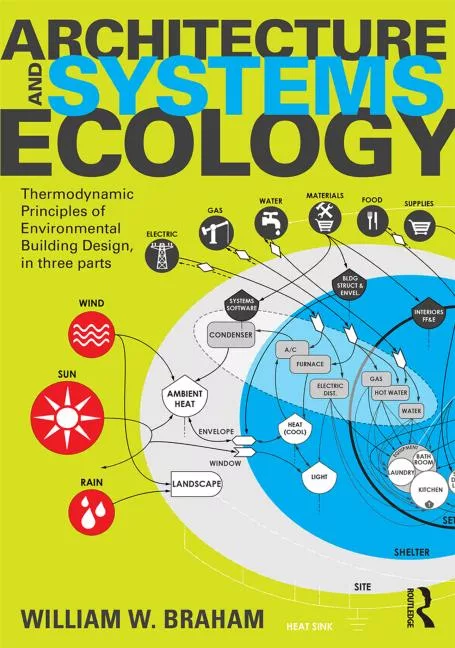
    Architecture and Systems Ecology: Thermodynamic Principles of Environmental Building Design, in three parts

  • 41G-JcZWT+L._SX342_SY445_.jpg

    The Architect's Studio Companion: Rules of Thumb for Preliminary Design, 7th Edition

  • net zero.jpg

    Net Zero Energy Design: A Guide for Commercial Architecture

See More Products
×

Enhance your expertise with unparalleled insights.

Join thousands of building professionals today. Shouldn’t you know what they know?

SUBSCRIBE TODAY!
  • RESOURCES
    • Advertise
    • Contact Us
    • Store
    • Want More
  • SIGN UP TODAY
    • Create Account
    • Newsletter
    • Customer Service
    • Manage Preferences
  • SERVICES
    • Marketing Services
    • Reprints
    • Market Research
    • List Rental
    • Survey/Respondent Access
  • STAY CONNECTED
    • LinkedIn
    • Facebook
    • Instagram
    • YouTube
    • X
  • PRIVACY
    • PRIVACY POLICY
    • TERMS & CONDITIONS
    • DO NOT SELL MY PERSONAL INFORMATION
    • PRIVACY REQUEST
    • ACCESSIBILITY

Copyright ©2026. All Rights Reserved BNP Media, Inc. and BNP Media II, LLC.

Design, CMS, Hosting & Web Development :: ePublishing