IMPs consist of an outer skin that serves as either metal wall siding or metal roofing, and an inner face that serves as a metal interior finish or liner, with insulation sandwiched between these metal skins.
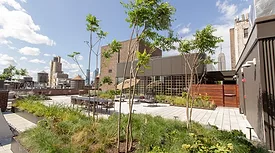
Designed by STUDIOS Architecture, $100 million renovation of the landmarked mixed-use tower introduces new rooftop pavilion, retail offerings, large floor plates and direct access to the flourishing Union Square neighborhood.
Building Enclosure had the pleasure of sitting down with Terry Swack, Founder and CEO of Sustainable Minds. Recently, Sustainable Minds announced a game-changing filter for its Transparency Catalog in collaboration with Health Product Declaration Collaborative and Perkins&Will.
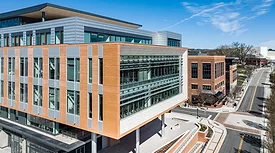
Designing a $100 million, 256,000 square-foot, six-story building that serves both historic downtown Blacksburg, Virginia and Virginia Tech University was no easy feat for Hanbury Architects and developer, W.M. Jordan Company.
The advantages of powder coating are numerous for aluminum building products. Powder coating offers excellent finish, strong performance, and customization, while providing a more environmentally sustainable and cost- effective solution for long-term durability.
On the first day of the project, the 7-man crew installed 16 sheets – more than 25,000 square feet of membrane. There was a little learning curve, but they were able to improve productivity starting on day one.
The journey to cleaner energy, healthier buildings and reduced emissions begins with retrofits. It’s essential to install renewable energy for businesses. However, reducing energy consumption first is more crucial because it tackles the root of the problem.
In this episode of Dear Anna, Anna Anderson talks about finding your right customer. Understanding what their design needs are and how to empower their goals.
The Center of Developing Entrepreneurs is a new sustainable, mixed-use project in downtown Charlottesville, comprised of a new public plaza and 215,000 square feet of multi-use space, including a strategic combination of co-working, office space, shared amenities, and retail.
For wall cladding and roofing systems, architectural zinc’s inherent metallic properties can help reduce buildings’ operational carbon footprints, and improve their energy-efficient, climate-resilient, long-lasting performance.
 RSS
RSS

.webp?height=168&t=1689862206&width=275 "Project 5 White Plains NY office (002).jpg")



.webp?height=168&t=1691680853&width=275 "RHEINZINK_MississippiAquarium_0521-6(2).jpg")