Although much has been said and written regarding the IRA and what it does and does not accomplish, the implications for the building design and construction industry may remain unclear.
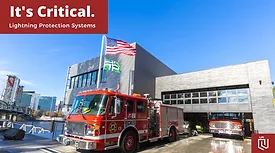
Critical facilities, as defined by the government/FEMA, can include: fire stations, police stations, hospitals, emergency operation centers…and more. Are these critical facilities in your community protected from a lightning strike?
With 298 units and numerous amenities, Artisan is the first completed component of the Circle Square Master Plan, which is designed to develop a mixed-use, walkable community featuring retail, office, parking, and residential spaces.
Weather in Florida isn't what it used to be. Tropical storms and hurricane seasons have intensified in recent years. Buildings need to be able to withstand the worst, no matter their size.
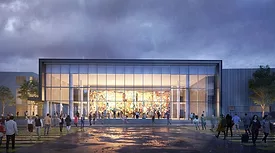
The project will showcase the iconic Pan American Unity mural created by Diego Rivera and is set to become a new hub for community and culture in San Francisco.
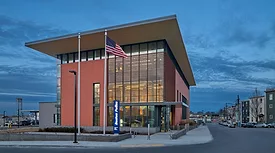
Designed during the period when the relationship between the police and the communities they serve was at the forefront of national conversation, Leers Weinzapfel Associates’ $25M, 27,500 square-foot East Boston Police Station opened on January 1, 2023.
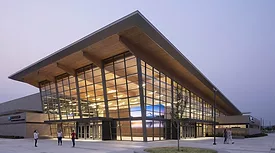
LRS Architects, a firm that values innovation, creativity, and collaboration, featured its contemporary design work for the 90,000 SF Wingspan Event and Conference Center, which is the culmination of an extensive community building and master planning process over the past 20 years.
Theoriginalcampusexemplified the mid-century style prevalent at thetime andconsisted of single-story classroom buildings with low-pitched roofs arranged in a finger-style layout, linked by a central covered walkway.
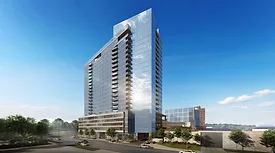
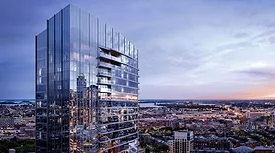
Capping off this world-class array of amenities, guests and residents will also find a sanctuary on the 4th floor, which features an exclusive state-of-the-art gym, Raffles Spa and 20-meter indoor pool with expansive city views.
 RSS
RSS