Building Enclosure logo
search
cart
facebook twitter linkedin youtube instagram Spotify Podcasts Apple Podcasts Spotify Podcasts Apple Podcasts
  • Sign In
  • Create Account
  • Sign Out
  • My Account
Building Enclosure logo
  • NEWS
    • Breaking News
  • SECTIONS
    • Columns
    • Project Profiles
    • Trade Shows
    • Sponsor Insights
  • SYSTEM DESIGNS
    • Low-Slope Roofs
    • Pitched Roofs
    • Metal Roofing Materials
    • Waterproofing
    • Sustainability
    • Insulation
    • Exterior Claddings
    • Wall Systems
    • Building Envelope
  • BLOG
    • The BE Blog
  • MEDIA
    • Podcasts
    • Webinars
    • Quiz
    • Videos
    • Polls
    • Interactive Spotlights
    • Newsletter
    • Photo Galleries
  • DIRECTORIES
    • Directory: Blue Book
    • Directory: Roofing Resource
  • PRODUCTS
  • TECHNICAL
    • Codes
      • Waterproofing
      • Roofing
    • Details
      • Waterproofing
      • Roofing
  • CONTINUING ED
  • ABOUT
    • Advertise
      • Editorial Calendar
    • Contact
    • eMag Archive Issues
  • SIGN UP!
Building EnvelopeLow-Slope RoofsPitched Roofs

Are Critical Facilities Protected From Lightning?
By Kelley Collins, Lightning Protection Institute
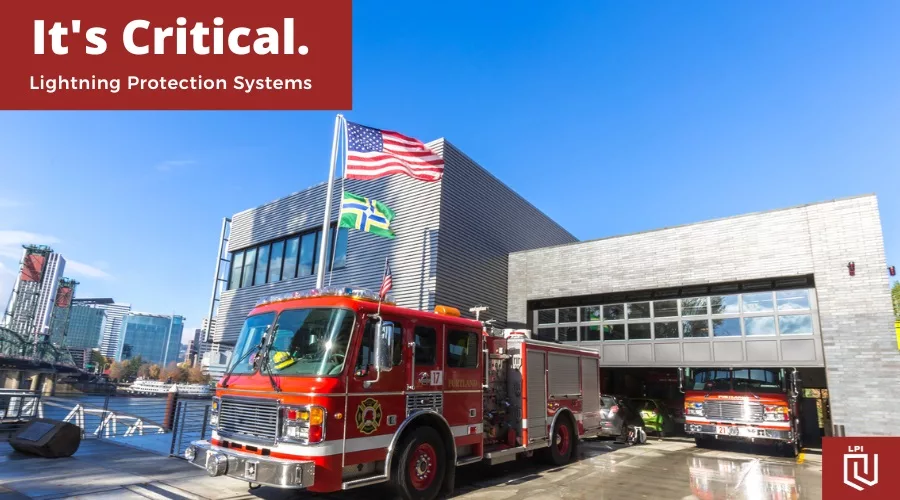
Its Critical red.jpg
June 22, 2023

We rely on critical facilities on a daily basis as well as during a natural disaster. Critical facilities, as defined by the government/FEMA, can include: fire stations, police stations, hospitals, emergency operation centers…and more. Are these critical facilities in your community protected from a lightning strike?


Impact of Lightning on Structures

Lightning happens daily, up to 100 times each second. Each strike yields large amounts of electricity, millions of volts, and immense heat which can reach temperatures hotter than the surface of the sun at 50 degrees Fahrenheit. When this energy and heat hit a structure, the power surges through the pipes, building structure, and electrical infrastructure. Commonly, the media shows the result of a lightning strike in the form of fires. Beyond fires, the internal damages can impact computers, communication devices, security systems, and the entire electrical/electronic infrastructure. This damage can result in the in loss of communication, data, revenue, and personal and business productivity. 

A single lightning strike can have devastating consequences to individuals, homes, businesses, and communities – including critical facilities. One lightning strike to any of these facilities could prevent them from providing the necessary services to their community.

Whether one is a homeowner, a business owner, or part of the design/build community, understanding the impact of a lightning strike and how to be prepared is vital. These consequences can be avoided with the proper design and installation of a lightning protection system.  


Regulatory Requirements

We know lightning happens every day – every second, yet there are little regulatory requirements for lightning protection systems on critical facilities. The Lightning Protection Institute believes that there is a strong foundation for regulating lightning protection systems on critical structures in high-risk areas.

First, to prevent the complete destruction that fire can do to a building and to mitigate human risks, there are requirements for fire alarms and sprinkler systems. Lightning protection systems perform the exact same function. These systems mitigate the impact of lightning on buildings and individuals.

Second, the government and federal agencies clearly see the need for higher standards in critical facilities and critical infrastructures. There are several documents that specifically outline what is considered a critical facility and what structures are encompassed in our critical infrastructure. Moreover, these agencies outline the necessity to protect these structures at a higher level to mitigate the risks to communities. Specific documents already outline the requirements to guard against flooding of these critical facilities to ensure services remain operational for the community.


Lightning Second to Floods

Lightning is second only to floods when impacting individuals and communities. Therefore, the same consideration should be given to mitigating risks of lightning. Lightning protection systems will mitigate the risks of a strike to these critical facilities and infrastructures. Creating regulatory requirements for lightning protection systems on critical facilities, in high-risk areas, would ensure that these buildings were protected/remained operational for their the communities.


Conclusion

With the frequency and potential of destruction, lightning deserves our attention. The damage of hurricanes, floods, and fires gains significant media exposure. We understand the consequences of those natural disasters and we have taken regulatory and personal efforts to be prepared and to be protected.  Lightning is just as powerful and should be understood so more actions are taken to be protected from the damages and consequences of just one strike.  

The design/build community continues to find ways to innovate through design and materials to increase safety for individuals and communities. Fire alarms are now standard practice to mitigate risks to individuals and minimize the structural damage caused by fires. Buildings can be designed to tolerate earthquakes. And over the last decade, new materials and design methods have been utilized and tested to build hurricane-resilient homes. These life safety measures are due to the collaboration of trades.

The next life safety step: regulatory measures for lightning protection systems to make these critical facilities resilient to a lightning strike. All of us, as experts in our fields, have the opportunity to protect the welfare of the community with a clear understanding of lightning and lightning protection systems. When properly installed by certified lightning contractors, lightning protection systems are scientifically proven to the mitigate the risks to homes, businesses, and communities - critical facilities.  The next time you drive past your community fire station, police station, or hospital - Look up! 

Is there a lightning protection installed? It’s Critical. These critical facilities in high-risk areas should be protected by lightning protection systems to maintain operations for individuals and communities.

KEYWORDS: jobsite safety lighting lightning natural disasters severe weather

Share This Story

Kelley collins linkedin

Kelley has been immersed in the business and science communities for over 25 years, with diverse roles such as executive management, marketing, sales and consulting. As the founder of EiP, her consulting company, she has provided guidance to entrepreneurs and businesses spanning from medical devices to organic farming to the lightning protection industry. 

Collins was intrigued with the science and the opportunity for growth in the lightning protection industry and joined the Lightning Protection Institute in 2020. Kelley works with the LPI developing strategy, partnerships, and communication to support the expansion and awareness of the lightning protection industry. She is also strategically involved in the Lightning Protection University, which provides online courses and in-person training for architects, engineers, and the military.


Recent Comments

These are actually very helpful tips. It is...

This is the most beneficial blog for all...

This blog is a great resource for anyone...

Thank you for sharing this important information. I...

This is a very interesting subject of the...

Manage My Account
  • Sign up for the Newsletter
  • Online Registration
  • Manage My Preferences
  • Registration Customer Service

More Videos

Sponsored Content

Sponsored Content is a special paid section where industry companies provide high quality, objective, non-commercial content around topics of interest to the Building Enclosure audience. All Sponsored Content is supplied by the advertising company and any opinions expressed in this article are those of the author and not necessarily reflect the views of Building Enclosure or its parent company, BNP Media. Interested in participating in our Sponsored Content section? Contact your local rep!

close
  • HITT Construction headquarters
    Sponsored byBuilding Composites® LLC

    Pushing the Envelope

  • 2 construction workers and a DEXcell panel
    Sponsored byDEXcell Roof Boards

    Designing Low-Slope Roofs for Resilience

  • Bell Bank headquarters in Fargo, North Dakota
    Sponsored bySto Corp.

    Drained and Back-Ventilated Rainscreens vs Pressurized-Equalized Rainscreens

Popular Stories

graphic shows white arrows pointing to the right on a light green background

A Breakdown of Air Leakage Testing in LEED v5 BD+C

Open vs. closed cell foam in an attic

Open-Cell vs. Closed-Cell Spray Foam

skyscraper

NYC Tower Failure Offers Warning for Contractors

Building Enclosure Newsletter

BE Poll

Events

April 9, 2026

Strategies for High-Performance Below-Grade Waterproofing

Credits: 1 AIA LU/HSW ; 1 IIBEC CEH; 0.1 IACET CEU

On-Demand Designing a high-performance building enclosure requires more than just surface-level protection; it demands a rigorous, performance-based mastery of below-grade water and gas mitigation. This discussion will provide an expert-level analysis of below-grade waterproofing within the comprehensive framework of the high-performance building enclosure.

April 28, 2026

Roof Design Considerations That Prevent Installation Failures and Change Orders

Credit: 1 AIA LU/HSW; 1 IIBEC CEH; 0.1 ICC CEU

On-Demand This course provides visual examples of actual field conditions. Some good, some not so good; along with design suggestions that can cut installation costs and reduce construction change orders. Upon completion of this course, you will have a better understanding of the requirements the roofing contractor must meet to provide the specified roofing system warranty, and long-term value to the owner.

View All Submit An Event

Products

Plaster and Drywall Assemblies Manual

Plaster and Drywall Assemblies Manual

This is a comprehensive manual that goes beyond codes and standards, providing expert guidance in design, detailing, material selection and troubleshooting for plaster and drywall.

See More Products
×

Enhance your expertise with unparalleled insights.

Join thousands of building professionals today. Shouldn’t you know what they know?

SUBSCRIBE TODAY!
  • RESOURCES
    • Advertise
    • Contact Us
    • Store
    • Want More
  • SIGN UP TODAY
    • Create Account
    • Newsletter
    • Customer Service
    • Manage Preferences
  • SERVICES
    • Marketing Services
    • Reprints
    • Market Research
    • List Rental
    • Survey/Respondent Access
  • STAY CONNECTED
    • LinkedIn
    • Facebook
    • Instagram
    • YouTube
    • X
  • PRIVACY
    • PRIVACY POLICY
    • TERMS & CONDITIONS
    • DO NOT SELL MY PERSONAL INFORMATION
    • PRIVACY REQUEST
    • ACCESSIBILITY

Copyright ©2026. All Rights Reserved BNP Media, Inc. and BNP Media II, LLC.

Design, CMS, Hosting & Web Development :: ePublishing