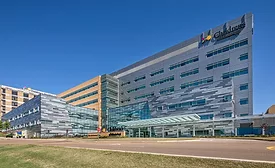
The tower, designed by HDR and CDFL Architects, gracefully combines metal panels, brick, and glazing to present an engaging, modern facade that successfully blends with the existing campus.
When it came to specifying the new roofs at the former Walter Reed Medical Center site in Northwest Washington, managing stormwater collection and runoff was a high priority.
The architects opted to use insulated metal panels (IMPs) for the 36,000 square-foot expansion, which brought the distribution center to approximately 225,000 square feet.
The newly constructed, LEED-certified Center for Virtual Learning at Ferris State University’s Big Rapids campus showcases technologically advanced classrooms, fully equipped 24-hour labs and the only purpose-built esports arena in Michigan.
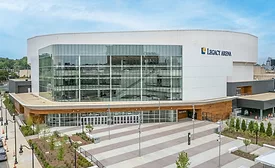
CCR and Populous Architecture designed a three-story curtain wall with glass from Vitro Architectural Glass, vastly transforming the concrete, bunker-like building into a transparent facade.
When Ohio’s Memorial Health System planned a medical campus for Athens, OH, a rural community in Southeastern Ohio, the organization sought a more expedited process. Memorial Health System coordinated with Modlogiq Inc., a modular fabricator, to more swiftly construct the Athens Medical Campus.
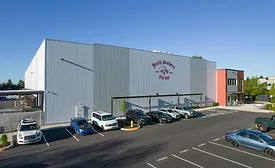
Specializing in home delivered organic and gourmet foods and signature varieties of organic milk and dairy products, Smith Brothers Farms needed a facility that could provide more cold storage space while meeting the company’s aesthetic goals.
A mixed-use residential destination is accelerating a resurgence in Springfield, Mass.’s Court Square neighborhood and setting the stage for the city’s long-term economic growth.
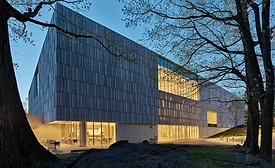
Comprising three floors, the expansion more than doubles the existing area of the facility and creates a welcoming visitor experience with clear circulation, generous galleries, and sufficient exhibition, storage, and archival spaces for the Museum’s growing collection.
Glenn Piotrowski Architect opted to use insulated metal panels (IMPs) on both buildings due to their design flexibility and thermal efficiency benefits. 31,000 square-feet of IMPs Installed by Frost Building Systems, Inc. gave the building a sleek, modern aesthetic.
 RSS
RSS
.webp?height=168&t=1732130383&width=275 "Green Roofs")
.webp?height=168&t=1731608248&width=275 "Kingspan(6).png")
.webp?height=168&t=1731252754&width=275 "Tubelite(2).png")
.webp?height=168&t=1730647066&width=275 "Nikita(1).png")
.webp?height=168&t=1729611255&width=275 "The Architectural Team(3).png")
.webp?height=168&t=1729004742&width=275 "Kingspan(2).png")