International Women’s Day in Design
Building Communities—and Women Leaders
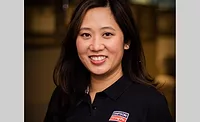
Monica Robertson


Monica Robertson
Hord Coplan Macht
What initially inspired you to pursue a career in architecture, and who or what influenced you most along the way?
I was drawn to architecture as a profession because I was inspired by the transformation of ideas into tangible spaces and places, and the opportunity that exists for good design to measurably improve the lives of people and entire communities altogether.
Can you share a project you’re especially proud of and explain what made it meaningful—either professionally or personally?
This is a tough question as I’ve had many impactful projects over my career, but one I worked on 15 years ago stands out. It was a 51-unit affordable, senior housing project. On opening day, several residents made a point to meet the design team, and to hug and thank us for our work. Seeing and hearing their gratitude was priceless. It was humbling to think of how truly excited and thankful they were about their new home. My memory of that day has never left me.
How do you see diversity and inclusion influencing better design outcomes in architecture today?
Diversity and inclusion within a team helps to bring a variety of experiences and perspectives to bear as we develop design solutions, leveraging cultural understanding where applicable and fostering broader creativity.
Have you had mentors or advocates who played a key role in your career growth, and how important is mentorship for women entering the field now?
I’ve been fortunate to have mentors and advocates who have provided guidance and reassurance at various points along my career path. While the number of women licensed in architecture is increasing, it remains a predominantly male-dominated field, so mentorship for women entering the field is as important at ever.
How do you balance creativity with the technical, regulatory, and business demands of architecture?
Technical, regulatory, and business demands of architecture are ever-present. Such factors are often an impetus for designers to create thoughtful, innovative solutions. While challenges like these can be frustrating, a ‘can-do’ attitude while problem-solving is critical to a successful outcome.
What changes have you seen for women in architecture over the course of your career, and where do you think progress is still needed?
I’ve been fortunate to build my career at a very equitable, forward-thinking architecture firm that has always been very supportive of women in architecture. The changes I’ve seen elsewhere, however, include more women leading projects and serving in key leadership roles at their firms. We need to continue to encourage future generations of women to pursue architecture and to not fear work-life integration. The industry has become considerably better in this area. Most firms are very supportive of women entering the field and are much more flexible and supportive of women during their mid-career years, arguably the toughest time, than ever before.
How do you see the conversation on sustainability going in our industry?
Sustainability has shifted from being a project differentiator to a commonplace expectation today. Years ago, the focus was on green building certification programs to validate the green strategies implemented. Today, sustainable designs often go beyond the basics of certification and, instead, include considerations for resilience, regenerative design, and wellness.
What has been the most fulfilling moment of your career so far, and how did it shape your professional journey?
The most fulfilling moment for me is not one singular event. Rather, it’s made up of many moments over the last three decades spent building a practice together with amazing colleagues. I’ve seen us transform from a firm of 25 people in one office in Baltimore to now over 400 team members, with 12 offices across the country.
What advice would you give to young women or girls who are considering a career in architecture or the broader AEC industry?
The field of architecture can be demanding, but it can be very rewarding as well. Enjoy each project and be innovative. Design with purpose and with resilience in mind. The next generation is going to have to be more sustainably minded than ever. Soak up as much knowledge as you can; knowledge is power. Ask questions when you don’t know something and advocate for yourself. Spend the early years of your career building your skills, resume and portfolio. When you are sufficiently trained, you will feel confident. Then, spend the rest of your career building up those around you. When you lift others up, you become a leader.
During International Women’s Month, what does recognition like this mean to you, and how can the industry continue to better support and elevate women’s voices year-round?
Recognition during International Women’s Month is meaningful because it provides a moment of reflection for us to take note of accomplished women in the AEC industry. Mentorship, mutual support, sharing of best practices and lessons learned are ways to support and elevate women’s voices year-round.


















Looking for a reprint of this article?
From high-res PDFs to custom plaques, order your copy today!

.webp?height=740&t=1767036885&width=auto "Header - BE 1170x658 (002).png")

.webp?height=740&t=1755781744&width=auto "KEE(2).png")