International Women’s Day in Design
Female Engineer on Historic Restoration, Mentorship, and Sustainable Design in AEC
Casey Williams
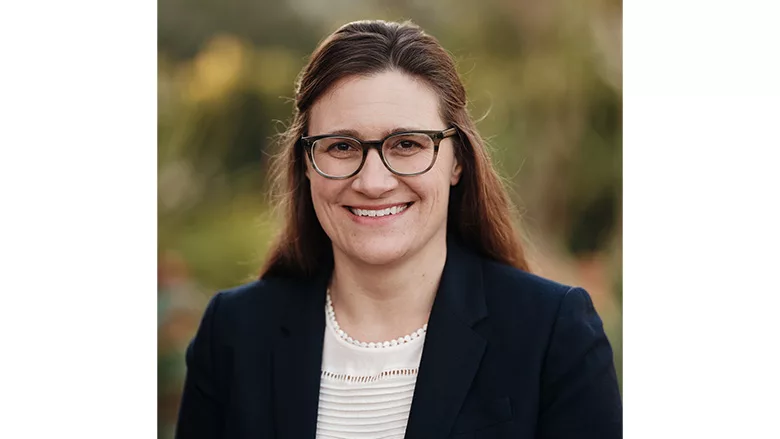

Casey Williams
Simpson Gumpertz & Heger (SGH)
What initially inspired you to pursue a career in the AEC industry, and who or what influenced you most along the way?
My dad was the first person to suggest a career in engineering, and I enjoyed math and science in school. My high school math teacher, who was a retired engineer, consistently connected abstract concepts to real-world applications; they were a pivotal influence in my decision to pursue an engineering career.
Being able to envision a practical perspective ultimately inspired me to pursue engineering in college—and continues to shape how I approach problem-solving today.
Can you share a project you’re especially proud of and explain what made it meaningful—either professionally or personally?
The repair and restoration of The First Church of Christ, Scientist, in Boston, MA, was the most personally impactful project I have worked on. The restoration design began early in my career, and the project’s phased construction allowed me to grow technically and professionally over time. The project team was exceptional, and navigating hidden conditions and construction challenges became a collaborative, creative process that made the experience especially meaningful and enjoyable.
How do you see diversity and inclusion influencing better design outcomes in architecture today?
Working with people from different backgrounds, experiences, and perspectives fosters creativity and innovation. Diversity and inclusion not only enrich the day-to-day experiences over a long career but also encourage us to think more broadly about design and engineering solutions, often resulting in more thoughtful and resilient outcomes.
Have you had mentors or advocates who played a key role in your career growth, and how important is mentorship for women entering the field now?
I have been fortunate to have several excellent mentors and advocates throughout my education and career. These impactful people have taken many forms and provide not only technical guidance but also encouragement, visibility, and confidence at critical moments. I’ve learned that staying open, curious, and receptive to guidance encourages support and opportunities.
How do you balance creativity with the technical, regulatory, and business demands of architecture?
Balancing project challenges, client needs, code requirements, and other project constraints is what makes each project rewarding. Applying creativity within these boundaries yields thoughtful, unique solutions, making each project interesting in its own way.
What changes have you seen for women in architecture over the course of your career, and where do you think progress is still needed?
Women who came before me have made significant progress in the AEC industry and have served as impactful mentors and role models. As a result, I don’t think of myself primarily as a woman in engineering, but simply as an engineer—while recognizing the importance of continuing to create space and opportunity for others. This mindset continues to move the profession forward and highlights the importance of ongoing mentorship and inclusion.
How do you see the conversation on sustainability going in our industry?
Sustainable thinking has become integral to nearly every design today. As an approach that can be scaled based on a project’s size, goals, and budget, sustainability encourages thoughtful decision-making and often sparks design creativity rather than limiting it.
What has been the most fulfilling moment of your career so far, and how did it shape your professional journey?
The most fulfilling moments of my career have been seeing high school students I’ve mentored through the ACE Mentor Program graduate from college and enthusiastically begin their careers in the AEC industry. Equally rewarding is watching colleagues grow, not only technically, but also into professional leaders. Seeing their development inspires me to continue learning and growing in my own career.
What advice would you give to young women or girls who are considering a career in architecture or the broader AEC industry?
Be curious and ask questions. Take an active role in your technical and professional growth, and don’t be afraid to be yourself—your perspective is a strength in the AEC industry.
During International Women’s Month, what does recognition like this mean to you, and how can the industry continue to better support and elevate women’s voices year-round?
I am humbled to be recognized alongside so many inspirational women. My hope is that the AEC industry continues to expand diverse perspectives and voices through sustained mentorship, open conversations, and meaningful action.


















Looking for a reprint of this article?
From high-res PDFs to custom plaques, order your copy today!

.webp?height=740&t=1767036885&width=auto "Header - BE 1170x658 (002).png")

.webp?height=740&t=1755781744&width=auto "KEE(2).png")