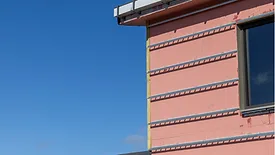
Designed with with EFCO curtain wall, storefront and entrances
July 20, 2026
Re-opened in March 2026, EFCO® curtain wall, storefront and entrances – a brand of Apogee Architectural Metals – met the project’s historical aesthetic, modern performance and low-maintenance for its future needs.
While CSI leadership has continued promoting its new Dynamic Standards platform, many longtime members say the organization's biggest challenge is no longer regarding just the software itself—it's the lack of clear communication about how key decisions were made
Months after the Construction Specifications Institute's (CSI) overhaul of its licensing model sparked widespread concern among specifiers and design professionals, the conversation has shifted from pricing to questions surrounding transparency, governance and member trust.
Completed in February of 2025, this landmark project showcases Solarban R77 Acuity glass and Solarban 60 Acuity glass, offering a balance of visual clarity, solar control and modern design versatility
July 15, 2026
Vitro Architectural Glass helped shape Pittsburgh’s skyline with high-performance glazing solutions featured prominently in the new FNB Financial Center, a 26-story, Class A office tower anchoring the redevelopment of the Lower Hill District.
The campus was developed as part of Dallas ISD’s long-term strategy to relieve overcrowding within the Seagoville feeder pattern while increasing access to innovative educational programming
July 13, 2026
KAI joined Dallas Independent School District (Dallas ISD) officials, community leaders and project partners on May 21 to break ground on the new Seagoville PK-8 Campus in Seagoville, Texas.
Looking for the right glass to blend with the brick and optimize visibility, the architects considered a variety of products
July 10, 2026
Creating a new gateway to the campus and merging with the existing architecture, ZGF Architects curated an aesthetic blend of high-performance curtain wall, spandrels, metal panels and red brick for the new Schweitzer Engineer Hall at Washington State University (WSU) in Pullman, Washington.
For construction and design companies, high performance and innovation can no longer be treated as a specialized offering reserved for select applications.
High-performance design isn't about choosing the most expensive, or newest, material; it's about finding the "sweet spot" where physics, budget, code compliance and constructability meet.
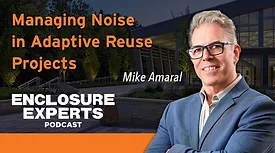
Mike Amaral, QuietRock Product Manager for PABCO Gypsum, discusses why acoustics are a critical consideration when converting commercial buildings into residential or mixed-use spaces, explaining the limitations of relying solely on STC ratings and the impact of flanking paths and structure-borne noise.
 RSS
RSS
.webp?height=168&t=1784898977&width=275 "design(14).png")
.webp?height=168&t=1784644326&width=275 "Oldham County Judicial Center in Kentucky")
.webp?height=168&t=1784643972&width=275 "CSI Licensing Controversy Continues")
.webp?height=168&t=1784119630&width=275 "glass(1).png")
.webp?height=168&t=1783942103&width=275 "KAI(2).png")
.webp?height=168&t=1783617699&width=275 "Vitro(19).png")
.webp?height=168&t=1783529950&width=275 "concrete(1).png")