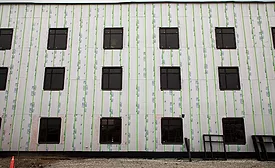
The team selected insulated metal panels (IMPs) as the building envelope. IMPs provide four layers of protection – air, water, vapor, and insulation – in a single component system.
This article addresses ten common questions specific to LEED recertification, which may not be so clearly or pointedly addressed in the officially published material.
The Role of Service Life Prediction Models and Corrosion Inhibitors
January 22, 2025
Cortec recently shared the importance of service life prediction models and Migrating Corrosion Inhibitors® in helping engineers achieve a structure’s desired lifespan.
Conventional building envelope setups will work less effectively in 2025, and commercial construction companies must adopt new strategies to stay successful.
With the latest developments in thermal analysis, carbon emission reductions are possible. Other innovative techniques are also essential for developing sustainable roofs and improving the building envelope efficiency against the worst thermal flux and bridging.
This article explores why and how lightning protection systems can be an integral part of building resiliency against the powerful and destructive impact of lightning.
Effective weatherization techniques are critical to keeping out air and moisture to preserve longevity, ensure energy efficiency, and promote indoor air quality.
This article explores how the asthma & allergy friendly Certification Program evaluates a range of fiberglass insulation products, ensuring they contribute to healthier indoor environments.
This article addresses the challenges associated with window openings in building envelopes, focusing on the thermal performance issues that arise from improper or insufficient integration of continuous insulation systems.