Innovations in Thermal Analysis
Sustainable Building Roofs for Energy and Carbon Emission Reductions
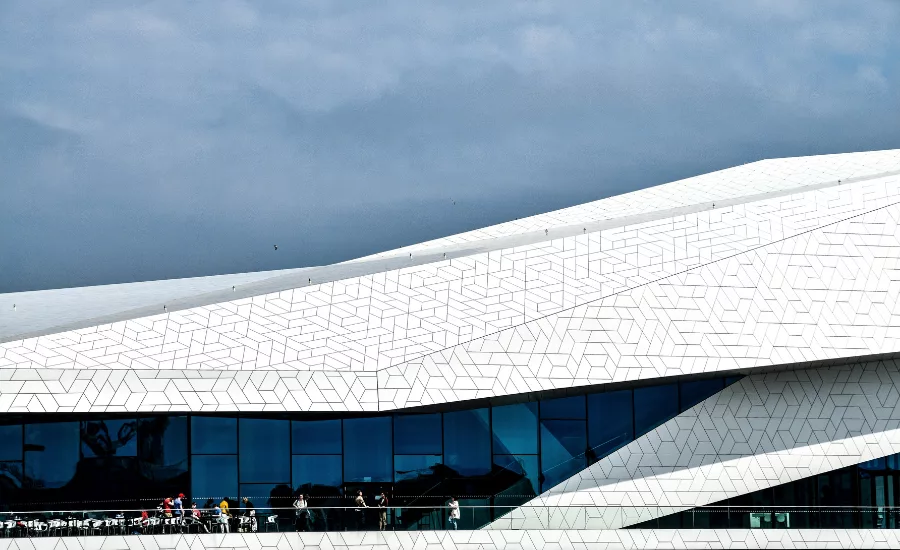
Photo courtesy of Anthony Da Cruz via Unsplash.
As urban areas expand and more building occupants turn to digital systems, the built environment’s reliance on the power grid increases, fueling greenhouse gas emissions. Both commercial and residential construction is suspect. The exponential growth is unsustainable and widespread, industry action is vital with architects, engineers and builders facing increasing pressure to implement climate-reduction strategies.
With the latest developments in thermal analysis, carbon emission reductions are possible. Other innovative techniques are also essential for developing sustainable roofs and improving the building envelope efficiency against the worst thermal flux and bridging.
The Merit of Thermal Analysis for Sustainable Roofs
The built environment is generally unsustainable. According to the United Nations, buildings and construction account for approximately 37 percent of greenhouse gas emissions globally. While increased reliance on heating and cooling systems is a major factor, the design and deployment of materials are among the main drivers.
In an era of rapidly developing urbanization, electrification and digitalization, infrastructure complexity is growing. Occupants’ increasing reliance on resource-intensive smart technologies alone should compel key construction players to reconsider buildings’ energy efficiency and sustainability.
While thermal analysis is always necessary to ensure a property’s safety and performance in the long term, it also plays a vital role in reducing the built environment’s carbon footprint. Thermal analysis helps decision-makers understand inefficiencies in air flow, heat transfer and thermal comfort, enabling building envelope optimization.
Professionals can use thermal analysis to reduce their reliance on heating and cooling systems, minimizing their construction’s environmental impact. Since the ceiling accounts for around 25 to 35 percent of heat loss or gain — up to 25 percent happens through walls and up to 20 percent occurs through floors — the roof takes priority.
Although thermal flux can happen anywhere within a structure, heat rises — and insulation is often inadequate in ceilings and attics. Paired with thermal bridging issues caused by poor material selection or improper installation, the roof is often the building envelope’s weak point. Conducting thermal analyses here is essential for improving sustainability.
Innovative Thermal Analysis Techniques
Professionals can significantly benefit from the latest in thermal analysis technology. These innovations help building enclosure specialists achieve their goal of reducing carbon emissions and power consumption.
Modern Advancements
Several innovations have occurred in thermal analysis over the years. As research and development continue, companies uncover increasingly effective techniques. One such technique is nondestructive infrared testing. This noncontact method leverages infrared radiation to visualize variations in a roof’s surface temperature.
The innovative aspect of infrared thermography comes from modern technology. This diagnostic tool becomes significantly more effective when paired with the Internet of Things (IoT) or artificial intelligence. This is because these technologies enable rapid processing for data-driven decision-making.
Stand-Alone Techniques
Technology like the IoT is still powerful alone. When integrated into a building information management system, thermal sensors enable real-time monitoring and alerts. Decision-makers can manage thermal flux remotely. If an issue with heat loss or gain arises, they can rapidly identify and address it.
Alternatively, decision-makers can integrate IoT technology into a digital twin, enabling modeling and real-time monitoring. This approach is ideal for commercial properties where ongoing monitoring and maintenance are crucial for energy efficiency.
Architects, engineers and builders should also consider the power of AI. Integrating an advanced algorithm into modern thermal analysis tools facilitates testing automation, accelerating the time to completion. Using a natural-language-processing-enabled model, they can ask questions about the issue’s root cause or a strategy’s effectiveness.
Architectural Best Practices for Thermal Management
Architects play a central role in thermal management by ensuring the building envelope’s design effectively regulates heat flux. They should follow these architectural best practices to ensure each project has a sustainable, energy-efficient roof and design.
1. Minimize Thermal Bridging
Out of all of the building envelope’s components, the roof often has the shortest life span. Even though commercial models can last up to 100 years, some last as little as 20. The foundation, frame and wall often endure far longer. That said, replacing the roof relatively frequently is ideal — it gives architects a unique opportunity to build better.
Construction professionals can minimize thermal bridging by conducting a thermal analysis. It reveals hidden pain points, telling them whether to prioritize adding insulation, using long-lasting sealants or putting more money toward material selection. Innovative solutions like AI or IoT offer data-driven insights to guide decision-making.
2. Use Heat Resistant Materials
Materials with high thermal resistance are essential. One study shows surrounding reinforced cement concrete with a layer of phase change material results in the largest greenhouse gas reduction. In arid and temperate regions, it mitigates over 300 kilograms of carbon dioxide yearly, making it the most energy-efficient option for sustainable roofs.
3. Pair With Sustainable Roofs
Pairing thermal management practices with the latest in sustainable roofing can reduce carbon emissions and decrease power consumption. For instance, commercial green roofs yield an average return on investment of 224 percent after a roughly six-year payback period, mainly due to the 72 percent reduction in heat flux and up to 40 percent decrease in surface temperature.
4. Shade the Building Envelope
Architects should design roofs with overhangs to shade the building’s exterior from the sun. This approach is particularly practical in urban areas with heat islands with temperatures up to 20 degrees Fahrenheit warmer than surrounding areas. Retractable awnings are ideal in some climates because they help reduce heating costs during the colder months.
Applying Thermal Analysis Innovations in Practice
Pairing modern thermal management best practices with innovative thermal analysis techniques can drastically reduce the building envelope’s greenhouse gas emissions and power consumption rate, facilitating sustainability. Whether decision-makers use modern technology to elevate an existing tool or develop an entirely new solution, they will see improvements.
That said, successfully leveraging these best practices may take time. As architects transition from using conventional technologies, they may encounter new pain points, like an overwhelming influx of raw data or a lack of necessary technical knowledge. It may take time to see desirable results.
