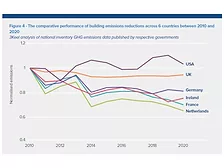
A new study revealed that U.S. emissions from the built environment have increased by 3 percent in the last decade - a trend that looks set to continue. Research by 3Keel and Kingspan found that reductions in greenhouse gas emissions from buildings are reversing in the U.S.
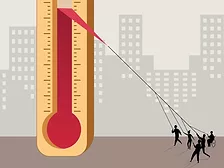
Increasing temperatures, population growth, urbanization and rising incomes are driving the increased need for cooling. According to the first ever Global Cooling Watch Report, launched at this year’s COP28, cooling demand could triple by 2050.
Two California bills were recently signed into law this month requiring companies to analyze and report on their GHG emissions—as well as their climate-related financial risks. Kathleen Hetrick, an Associate and Senior Sustainability Engineer with Buro Happol, recently sat down with us to discuss what these bills mean for architects.
NEU: An ACI Center of Excellence for Carbon Neutral Concrete—with a mission to drive education, awareness and adoption of carbon neutral concrete materials and technologies—announces its involvement in the forthcoming COP28, the UN Climate Change Conference in the United Arab Emirates.
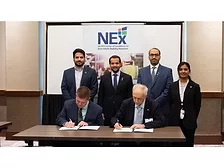
The Slag Cement Association and NEx, an ACI Center of Excellence for Nonmetallic Building Materials, signed a Memorandum of Understanding on October 30 at the ACI Concrete Convention in Boston.
Reductions in carbon emissions from buildings are stalling in several G20 countries in Europe and emissions are now rising in the USA, warns a major new study from sustainability consultancy 3Keel for Kingspan.
We sat down with PIMA president Justin Koscher to discuss the role of polyiso insulation in energy-efficient building construction and how the industry can further efforts to increase building energy efficiency and decarbonize.
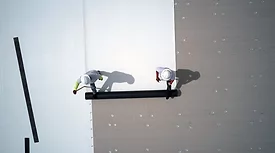
A typical building loses up to 25 percent of its heat through the roof. Industry-leading Elevate roofing and insulation systems by Holcim were thus instrumental in the construction of the world’s largest Passive House-certified office building: the Winthrop Center in Boston.
The prospect of decarbonizing the electrical sector is riddled with myriad economic, technological, political, and outright physical challenges. There will be unanticipated setbacks and some nascent technologies will offer staggering breakthroughs. Goals notwithstanding, the future has yet to be written.
The new initiative, which is being spearheaded by Armstrong, will facilitate the exchange of ideas, connections, and collaborations necessary to improve the health of indoor environments while advancing pathways for circularity and decarbonization across the industry.
.webp?height=168&t=1703026308&width=275 "kingspan-808-memorial-drive-cambridge-ma-dw2000-kp-ops-case-study-08 (1).jpg")