Together, federal agency representatives, NEU members and allied industry association representatives discussed industry needs, current initiatives, and how all parties can work together to reach carbon neutrality throughout the cement-concrete value chain by 2050.
The American Institute of Architects published the newest edition of its annual 'By the Numbers' report, providing a detailed analysis of the energy performance of architecture and design firm signatories of the 2030 Commitment.
The American Institute of Architects has long acknowledged the urgency of the climate crisis and is excited to continue its support of the Biden-Harris Administration in its efforts to aggressively drive zero emissions goals for buildings.
According to a new report from sustainable development consultancy Arup, California is one of the first states in the country to take meaningful steps toward slashing embodied carbon emissions from new buildings and some construction materials, and can set a course for clean materials production, procurement, and use across the United States.
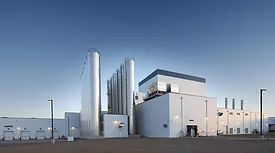
Insulated metal panels are increasingly the preferred building envelope solution for these plants because of their versatility that includes thermal efficiency, temperature control, design flexibility, safety, ease of installation, durability and more.
IMPs consist of an outer skin that serves as either metal wall siding or metal roofing, and an inner face that serves as a metal interior finish or liner, with insulation sandwiched between these metal skins.
Implementation of existing technology for buildings, transport, and sector integration can bridge half the gap in the urban GHG emissions reductions needed for a 1.5°C pathway.
The Board of Directors of the Charles Pankow Foundation announced the appointment of Colonel Stuart Harrison, PE, CFM, F.SAME, USA (ret) as the organization’s new Executive Director, effective June 12, 2023.
Building Enclosure was recently joined by Brian Pallasch, EVP/CEO, IBBEC. Brian sat down with us to talk about the Moving Forward report. Each year, The National Institute of Building Sciences Consultative Council publishes the Moving Forward Report to investigate critical challenges facing the building industry.
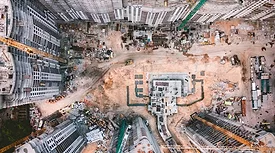
Pressure is mounting for the building and construction industry to become more sustainable. Designing more energy-efficient buildings is part of that, but reducing embodied carbon is a more pressing — and often challenging — issue.
.webp?height=168&t=1696866447&width=275 "NEUSummit2023 (002).jpg")