USGBC has unveiled LEED v5, the latest evolution in sustainable building certification, emphasizing decarbonization and energy efficiency across a building’s full lifecycle
May 12, 2025
The USGBC has unveiled LEED v5, the latest in sustainable building certification, emphasizing decarbonization and energy efficiency across a building’s full lifecycle.
This blowable insulate is a renewable, gap-free solution for attics, ceilings, floors, and hard-to-reach spaces, and is made from cellulosic natural fibers
May 9, 2025
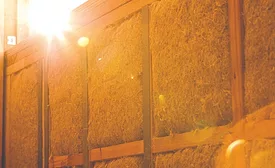
FiberFill cellulosic natural insulation is a high-performance thermal and acoustic insulator. It has a uniform consistency, is odorless, and is made entirely from cellulosic fibers.
Mentor program funding supported by Con Edison Clean Energy and Tech Careers Grant
April 2, 2025
The Rising Stars Program, a nonprofit that aims to cultivate a strong, well-rounded workforce and drive success in the construction industry, announced it is launching a mentorship alliance in Brooklyn, following a successful pilot program.
A brief chronicle of the efforts underway by leading building design professionals to support and galvanize action toward decarbonizing the built environment
A brief chronicle of the efforts underway by leading building design professionals to support and galvanize action toward decarbonizing the built environment.
With the push to decarbonize the building sector, there are more opportunities for renovations and retrofits and this area is primed for the uptake in circularity. Here are some key reasons to integrate circular practices into building design and construction.
The U.S. Department of Energy has awarded USGBC California and its team of partners $3.8 million to accelerate building decarbonization in collaboration with municipalities throughout California including the City of Los Angeles, the County of Los Angeles, and local trade organizations.
Panu Pasanen, CEO & Founder of One Click LCA, joins us to talk about what 2024’s top sustainability data tells us about the built environment, and what 2025 may bring.
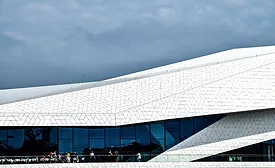
With the latest developments in thermal analysis, carbon emission reductions are possible. Other innovative techniques are also essential for developing sustainable roofs and improving the building envelope efficiency against the worst thermal flux and bridging.
LEED v5 maintains the same familiar structure of prerequisites and credits, cataloged into broad-based categories. The four certification levels remain. However, one major structural change in LEED v5 is that every prerequisite and credit has been harmonized around three impact categories: decarbonization, quality of life, and ecological conservation and restoration.