Building Enclosure logo
search
cart
facebook twitter linkedin youtube instagram Spotify Podcasts Apple Podcasts Spotify Podcasts Apple Podcasts
  • Sign In
  • Create Account
  • Sign Out
  • My Account
Building Enclosure logo
  • NEWS
    • Breaking News
  • SECTIONS
    • Columns
    • Project Profiles
    • Trade Shows
    • Sponsor Insights
  • SYSTEM DESIGNS
    • Low-Slope Roofs
    • Pitched Roofs
    • Metal Roofing Materials
    • Waterproofing
    • Sustainability
    • Insulation
    • Exterior Claddings
    • Wall Systems
    • Building Envelope
  • BLOG
    • The BE Blog
  • MEDIA
    • Podcasts
    • Webinars
    • Quiz
    • Videos
    • Polls
    • Interactive Spotlights
    • Newsletter
    • Photo Galleries
  • DIRECTORIES
    • Directory: Blue Book
    • Directory: Roofing Resource
  • PRODUCTS
  • TECHNICAL
    • Codes
      • Waterproofing
      • Roofing
    • Details
      • Waterproofing
      • Roofing
  • CONTINUING ED
  • ABOUT
    • Advertise
      • Editorial Calendar
    • Contact
    • eMag Archive Issues
  • SIGN UP!
Sustainability

When it Comes to Electrical Grid Decarbonization, Location Matters
By Daniel Overbey
Header - BE 1170x658Nov.jpg

Image courtesy of author

October 30, 2023

In January 2021, the White House established a National Climate Task Force to help facilitate the organization and deployment of a government-wide approach to climate action. Within a year, the White House set ambitious long-term goals for decarbonizing the electrical grid in the United States. These goals are part of a broader effort to combat climate change and transition to a clean energy future. 

The White House has since identified the key goals and initiatives related to decarbonizing the electrical grid, including the transition to 100 percent clean electricity by 2035 and a deep investment in the U.S. energy infrastructure such that the electrical grid will reach net-zero greenhouse gas (GHG) emissions no later than 2050.

Pursuant to the decarbonization of the electrical sector, the Inflation Reduction Act (IRA) and Bipartisan Infrastructure Law represent the single largest investment in climate and energy in American history—including the funneling of billions of dollars toward the decarbonization of the U.S. electrical infrastructure through investments in renewable energy resources and technologies.

Market analysts have sought to temper expectations due to challenges related to engineering/procurement/construction company (EPC) and labor shortages, limited access to land and permits, inflation and commodity price volatility, interconnection costs and timelines, and supply chain constraints.

The prospect of decarbonizing the electrical sector is riddled with myriad economic, technological, political, and outright physical challenges. There will be unanticipated setbacks and some nascent technologies will offer staggering breakthroughs. Goals notwithstanding, the future has yet to be written. 


Forecasting Grid Decarbonization

The National Renewable Energy Laboratory (NREL) is one of the national laboratories of the U.S. Department of Energy and specializes in renewable energy and energy efficiency research and development. Among a wide range of information resources publicly available through NREL, the lab maintains a tool called Cambium. 

Through Cambium, NREL assembles structured data sets of simulated hourly cost and operational data for modeled futures of the U.S. electric sector with metrics designed to be useful for long-term decision-making. It was developed to expand the metrics reported in the NREL’s Standard Scenarios—which is an annually released set of projections of how the U.S. electric sector may be altered across a suite of different potential future outcomes. The Cambium data sets can be viewed and downloaded at https://scenarioviewer.nrel.gov/.

Cambium is a data-rich tool and offers a range of future scenarios for analysis. The tool can even incorporate the potential catalytic impacts of IRA investments. Cambium also offers state-specific forecasts by aggregating data from Cambium's 20 Generation and Emission Assessment (GEA) regions. The GEA regions cover the contiguous United States. They are based off of the U.S. Environmental Protection Agency’s eGRID regions, but are not identical to them due to the geographic structure of the models in the Cambium workflow.


Each State Has a Unique Grid Decarbonization Journey

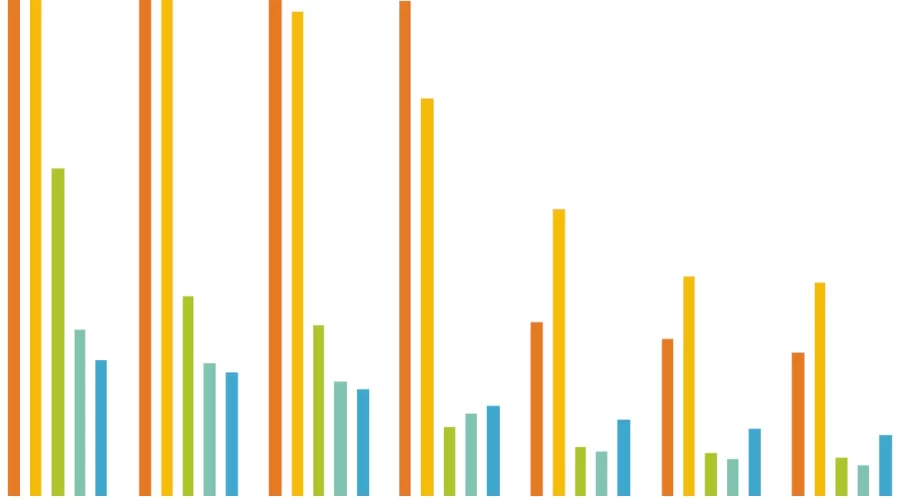
Each state tells a unique story regarding its forecast toward a decarbonized energy sector. Consider the following scenario. The projected combustion emissions rate (in kilograms of carbon-dioxide equivalent emission per megawatt hour) for five states—West Virginia, Indiana, Texas, California, and New York—are directly compared using Cambium's 2022 Mid-Case scenario assuming no nascent technologies and with current policies maintained. In all cases, the states' combustion emissions rates drop considerably (Figure 1). In this scenario, the U.S. average combustion emissions rate (kg CO2e / MWh) of 371.9 in 2022 drops to 87.9 by 2050.

What might be the impact on the same 2022 Mid-Case scenario should we incorporate nascent technologies and a successful 95 percent decarbonization rate by 2050? We see an even deeper reduction in each state's combustion emissions rate (Figure 2). Under this scenario, the U.S. average combustion emission rate drops to 18.5 kg CO2e/MWh by 2050.

NREL's projection data brings to bear the impact of each state's energy resource mix, grid condition, and regulatory context. This underscores the impact of location regarding a building project's operational carbon intensity relative to grid-supplied electricity.


Figure 1: Projected combustion emissions rates for select states under the Cambium 2022 Mid-Case with no nascent technologies and assuming current policies are maintained. Data by the National Renewable Energy Laboratory (NREL) via Cambium (accessed October 26, 2023). Figure by Daniel Overbey.


Figure 2: Projected combustion emissions rates for select states under the Cambium 2022 Mid-Case with nascent technologies and 95% decarbonization by 2050. Data by the National Renewable Energy Laboratory (NREL) via Cambium (accessed October 26, 2023). Figure by Daniel Overbey. 


KEYWORDS: carbon reduction decarbonization electricity

Share This Story

Overbey   head shot 2020 3

Daniel Overbey, AIA, NCARB, LEED Fellow (LEED AP BD+C, ID+C, O+M), WELL AP is an Assistant Professor of Architecture at Ball State University and the Director of Sustainability for Browning Day in Indianapolis, Ind. His work focuses on high-performance building design and construction, environmental systems research, green building certification services, energy/life-cycle assessment modeling, and resilient design. He can be reached at djoverbey@bsu.edu.

Recent Comments

These are actually very helpful tips. It is...

This is the most beneficial blog for all...

This blog is a great resource for anyone...

Thank you for sharing this important information. I...

This is a very interesting subject of the...

Manage My Account
  • Sign up for the Newsletter
  • Online Registration
  • Manage My Preferences
  • Registration Customer Service

More Videos

Sponsored Content

Sponsored Content is a special paid section where industry companies provide high quality, objective, non-commercial content around topics of interest to the Building Enclosure audience. All Sponsored Content is supplied by the advertising company and any opinions expressed in this article are those of the author and not necessarily reflect the views of Building Enclosure or its parent company, BNP Media. Interested in participating in our Sponsored Content section? Contact your local rep!

close
  • 2 construction workers and a DEXcell panel
    Sponsored byDEXcell Roof Boards

    Designing Low-Slope Roofs for Resilience

  • Bell Bank headquarters in Fargo, North Dakota
    Sponsored bySto Corp.

    Drained and Back-Ventilated Rainscreens vs Pressurized-Equalized Rainscreens

  • A construction worker using DEXcell roof boards
    Sponsored byDEXcell Roof Boards

    The Hidden Strength of Low-Slope Roof Systems: Why Roof Cover Boards Matter

Popular Stories

construction industry workers in hard hats stand around a city scape

Construction Industry Revolts Over New CSI Licensing Plan

Canalino Elementary School and Canalino Family School exterior

Daylighting Design to Support Rapidly Growing Trend in Modular Building Construction

construction workers on a roof, plane flies in background

Why Specifications Are Becoming the Next Critical Layer of Construction Compliance

Building Enclosure Newsletter

BE Poll

Events

June 17, 2025

Addressing Condensation in Low-Slope Roof Assemblies

Credits: 1 AIA LU/HSW; 0.1 ICC CEU; 1 IIBEC CEH; 0.1 IACET CEU

On Demand In modern roofing systems, vapor retarders and air barriers do more than just minimize air leakage—they’re essential to maximizing performance and longevity. This engaging course dives into the next generation of moisture control: permeable vapor retarders and air barriers. Discover how these cutting-edge technologies are transforming low-slope roofing assemblies by improving energy efficiency, managing moisture, and boosting wind uplift resistance.

April 9, 2026

Strategies for High-Performance Below-Grade Waterproofing

Credits: 1 AIA LU/HSW ; 1 IIBEC CEH; 0.1 IACET CEU

On-Demand Designing a high-performance building enclosure requires more than just surface-level protection; it demands a rigorous, performance-based mastery of below-grade water and gas mitigation. This discussion will provide an expert-level analysis of below-grade waterproofing within the comprehensive framework of the high-performance building enclosure.

View All Submit An Event

Products

Plaster and Drywall Assemblies Manual

Plaster and Drywall Assemblies Manual

This is a comprehensive manual that goes beyond codes and standards, providing expert guidance in design, detailing, material selection and troubleshooting for plaster and drywall.

See More Products
×

Enhance your expertise with unparalleled insights.

Join thousands of building professionals today. Shouldn’t you know what they know?

SUBSCRIBE TODAY!
  • RESOURCES
    • Advertise
    • Contact Us
    • Store
    • Want More
  • SIGN UP TODAY
    • Create Account
    • Newsletter
    • Customer Service
    • Manage Preferences
  • SERVICES
    • Marketing Services
    • Reprints
    • Market Research
    • List Rental
    • Survey/Respondent Access
  • STAY CONNECTED
    • LinkedIn
    • Facebook
    • Instagram
    • YouTube
    • X
  • PRIVACY
    • PRIVACY POLICY
    • TERMS & CONDITIONS
    • DO NOT SELL MY PERSONAL INFORMATION
    • PRIVACY REQUEST
    • ACCESSIBILITY

Copyright ©2026. All Rights Reserved BNP Media, Inc. and BNP Media II, LLC.

Design, CMS, Hosting & Web Development :: ePublishing