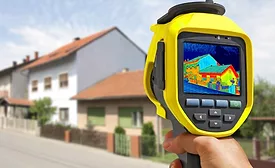
Commercial buildings consumed 18 percent of all energy used in the U.S. in 2022. Architects are fully aware that savings can be made using a variety of different retrofit measures. Too often, however, they cannot financially justify those projects because they can’t reliably forecast the potential savings.
The new 2,000 sq.ft. InSpire® wall, installed in October of 2023, preheats 6,000 cfm of outside air feeding the plant while reducing its carbon footprint by 12,3 tons of CO2, year after year, for the next 25 years.
The Asthma and Allergy Foundation of America and Allergy Standards Limited announced that Knauf’s HVAC fiberglass insulation product line, Knauf Performance+, has been CERTIFIED by the asthma & allergy friendly Certification Program.
One proven way that design teams can deliver a virtually airtight, low-embodied building envelope is by integrating structural insulated panels (SIPs) during the planning stages of a project.
Designing a building such that its interiors may allow for passive survivability and the ability for occupants to shelter in place during an extreme temperature event can be assessed using the standard effective temperature (SET) metric.
The refrigeration machine of a mechanical system is that component that removes thermal energy (heat) from one location and transfers it to another location by inducing a cycle of heat exchange.
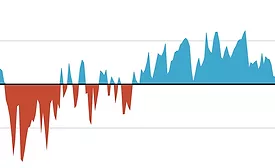
There are many ways of gauging the relative heating and/or cooling needs of a building due to the local climate. However, a long-established metric is the "degree day"

.webp?height=168&t=1724770715&width=275 "Untitled design(45).jpg")


.webp?height=168&t=1675017988&width=275 "Header - BE 1170x658 (002).jpg")

-web.webp?height=168&t=1634942208&width=275 "cool roofs")