Building Enclosure logo
search
cart
facebook twitter linkedin youtube instagram Spotify Podcasts Apple Podcasts Spotify Podcasts Apple Podcasts
  • Sign In
  • Create Account
  • Sign Out
  • My Account
Building Enclosure logo
  • NEWS
    • Breaking News
  • SECTIONS
    • Columns
    • Project Profiles
    • Trade Shows
    • Sponsor Insights
  • SYSTEM DESIGNS
    • Low-Slope Roofs
    • Pitched Roofs
    • Metal Roofing Materials
    • Waterproofing
    • Sustainability
    • Insulation
    • Exterior Claddings
    • Wall Systems
    • Building Envelope
  • BLOG
    • The BE Blog
  • MEDIA
    • Podcasts
    • Webinars
    • Quiz
    • Videos
    • Polls
    • Interactive Spotlights
    • Newsletter
    • Photo Galleries
  • DIRECTORIES
    • Directory: Blue Book
    • Directory: Roofing Resource
  • PRODUCTS
  • TECHNICAL
    • Codes
      • Waterproofing
      • Roofing
    • Details
      • Waterproofing
      • Roofing
  • CONTINUING ED
  • ABOUT
    • Advertise
      • Editorial Calendar
    • Contact
    • eMag Archive Issues
  • SIGN UP!
Building EnvelopeInsulation

Fixing Leaks in Commercial Building Envelopes is no Longer a Guessing Game

New Audit Software Optimizes Process to Predict Energy Savings

By Tom Harris
buildings
September 9, 2024

Commercial buildings consumed 18 percent of all energy used in the U.S. in 2022. Architects, engineers and building owners are fully aware that savings can be made using a variety of different retrofit measures. Too often, however, they cannot financially justify those projects because they can’t reliably forecast the potential savings.
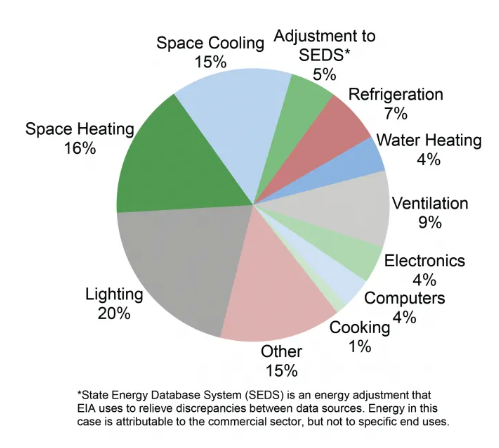
Figure 1.png

For very large retrofit projects, Energy Service Companies, ESCOs, have offered a solution. Using a very detailed ‘whole building energy analysis’, they provide building owners with a low-risk contract where the retrofit is paid for by the resulting cost savings.

Unfortunately, those contracts are not available to most building owners, or to their professional consultants. Neither is the expensive whole building approach that the ESCOs use.

Most engineers, architects and building owners know that cutting energy consumption is an important step towards decarbonization. And the better informed among them know that fixing leaks in the building envelope saves energy and money, but the absence of a reliable way to predict those savings too often means projects are cancelled before they start.

Is there a way to lower the initial capital investment for the building owner, involve more individuals in the energy retrofit conversation, generate immediate ROI benefits to the building owner which can be leveraged against future work, and provide proof-of-performance data for future energy conservation measures?  

Here’s one solution—if we address each ECM (Energy Conservation Measure) individually, we can allow the building owner to fund critical activities around specific measures.


Does the Building Envelope Offer the Best Potential Savings and How Can Those Savings be Reliably Predicted?

The U.S. Department of Energy and several other reputable sources, have identified the energy waste associated with uncontrolled air leakage through the building envelopes at anywhere between 30 and 60 percent of yearly HVAC related energy costs.  

The BEAT™ (Building Envelope Audit Team) approach has two stages—first an audit, then a proprietary calculation process known as ALIC™ (Air Leakage Impact Calculator).

Trained auditors physically look at the building envelope and identify each potential air leakage point and measure it.  That leakage location is then placed on a building map and entered onto an Auditor Input Form.  Photographs and descriptions are provided for location and identification of the air leakage problem.  

Next, the building owner provides historical energy consumption and cost information. This data, in combination with the building map and auditor input form, is input into the calculator. Using principles and methods established by accepted ALCAP (Air Leakage Control Assessment Procedure) and EC 128 standards, the software determines ROI, Payback Periods based on local wage and material costs and environmental impact—all resulting from the reduced energy consumption.

Going a step further, the Inflation Reduction Act in the U.S. now provides commercial building owners with tax credits under section 179D which can include the BEAT audit and the identified retrofit work.

According to Dr. Randy Van Straaten, President, Building Enclosure Labs Inc., "The BEAT Audit process utilizes a truly optimized process for predicting retrofit energy savings".

BEAT™ auditors are trained to gather information, not design HVAC systems or make calculations. The BEAT approach is to include more individuals in the retrofit conversation by keeping it simple.  Insulation and Roofing contractors are already training their customer facing teams to become BEAT™ auditors and adding a new revenue stream to their companies.  Campus owners are having their maintenance staff trained as BEAT™ auditors to conduct audits and execute the work needed within their existing maintenance staff.      
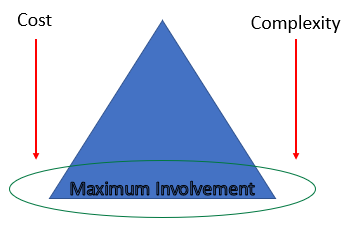

Figure 2.png


The need for air leakage control is well defined.  The process is codified in the residential sector and now available for existing commercial/Industrial buildings.  Get involved, take the first step towards decarbonization by creating a more effective and efficient building enclosure.


References

  1. U.S. EIA (2023) Monthly Energy Review May 2023.
  2. BEAT and ALIC are registered trademarks of Tom Harris PUR Consulting, LLC.
KEYWORDS: energy efficiency HVAC insulation systems retrofitting

Share This Story

Looking for a reprint of this article?
From high-res PDFs to custom plaques, order your copy today!


Tom Harris is President of Tom Harris PUR Consulting, LLC. He is a recognized leader in the field of building envelope auditing and a successful product integrator and marketer to the built environment. Reach him at tom@letstalkpur.com. For more information about the BEAT Audit go to www.buildingenvelopeaudit.com

Recommended Content

JOIN TODAY
to unlock your recommendations.

Already have an account? Sign In

  • bar graph shows LEED v4/LEED v5/LEED v6 in various colors

    When Will LEED v4 / v4.1 and LEED v5 Expire?

    The latest version of the LEED rating system, LEED v5, is...
    Sustainability
    By: Daniel Overbey
  • Celebrating Women In AEC-2026

    Celebrating Women in The AEC Industry Part 1

    A round-up of women in the design, engineering and...
    Building Envelope
    By: Lindsay Lewis
  • KEE membrane application on a roof

    A Beginner’s Guide to Single-Ply Roofing Membranes

    While PVC and TPO appear extremely similar, the chemistry...
    Low-Slope Roofs
    By: Peter Gross
Manage My Account
  • Sign up for the Newsletter
  • Online Registration
  • Manage My Preferences
  • Registration Customer Service

More Videos

Sponsored Content

Sponsored Content is a special paid section where industry companies provide high quality, objective, non-commercial content around topics of interest to the Building Enclosure audience. All Sponsored Content is supplied by the advertising company and any opinions expressed in this article are those of the author and not necessarily reflect the views of Building Enclosure or its parent company, BNP Media. Interested in participating in our Sponsored Content section? Contact your local rep!

close
  • 2 construction workers and a DEXcell panel
    Sponsored byDEXcell Roof Boards

    Designing Low-Slope Roofs for Resilience

  • Bell Bank headquarters in Fargo, North Dakota
    Sponsored bySto Corp.

    Drained and Back-Ventilated Rainscreens vs Pressurized-Equalized Rainscreens

  • A construction worker using DEXcell roof boards
    Sponsored byDEXcell Roof Boards

    The Hidden Strength of Low-Slope Roof Systems: Why Roof Cover Boards Matter

Popular Stories

construction industry workers in hard hats stand around a city scape

Construction Industry Revolts Over New CSI Licensing Plan

graph shows green, orange and red dot lines going up

LEED v5 and the Cost Impacts of ASHRAE Standard 90.1-2019

2 construction workers and a DEXcell panel

Designing Low-Slope Roofs for Resilience

Building Enclosure Newsletter

BE Poll

Events

June 17, 2025

Addressing Condensation in Low-Slope Roof Assemblies

Credits: 1 AIA LU/HSW; 0.1 ICC CEU; 1 IIBEC CEH; 0.1 IACET CEU

On Demand In modern roofing systems, vapor retarders and air barriers do more than just minimize air leakage—they’re essential to maximizing performance and longevity. This engaging course dives into the next generation of moisture control: permeable vapor retarders and air barriers. Discover how these cutting-edge technologies are transforming low-slope roofing assemblies by improving energy efficiency, managing moisture, and boosting wind uplift resistance.

April 9, 2026

Strategies for High-Performance Below-Grade Waterproofing

Credits: 1 AIA LU/HSW ; 1 IIBEC CEH; 0.1 IACET CEU

On-Demand Designing a high-performance building enclosure requires more than just surface-level protection; it demands a rigorous, performance-based mastery of below-grade water and gas mitigation. This discussion will provide an expert-level analysis of below-grade waterproofing within the comprehensive framework of the high-performance building enclosure.

View All Submit An Event

Products

Plaster and Drywall Assemblies Manual

Plaster and Drywall Assemblies Manual

This is a comprehensive manual that goes beyond codes and standards, providing expert guidance in design, detailing, material selection and troubleshooting for plaster and drywall.

See More Products

Related Articles

  • Closed-cell spray polyurethane foam

    Insulation is No Longer Just Insulation

    See More
  • GP Dens Deck

    Barrier System for Commercial Building Envelopes

    See More
  • Solar ROofing

    Commercial Investors Can No Longer Ignore Energy Efficiency

    See More

Related Products

See More Products
  • 1118458605.jpg

    Sustainable Facades: Design Methods for High-Performance Building Envelopes

  • 0470872616.jpg

    Sustainable Renovation: Strategies for Commercial Building Systems and Envelope

  • net zero.jpg

    Net Zero Energy Design: A Guide for Commercial Architecture

See More Products
×

Enhance your expertise with unparalleled insights.

Join thousands of building professionals today. Shouldn’t you know what they know?

SUBSCRIBE TODAY!
  • RESOURCES
    • Advertise
    • Contact Us
    • Store
    • Want More
  • SIGN UP TODAY
    • Create Account
    • Newsletter
    • Customer Service
    • Manage Preferences
  • SERVICES
    • Marketing Services
    • Reprints
    • Market Research
    • List Rental
    • Survey/Respondent Access
  • STAY CONNECTED
    • LinkedIn
    • Facebook
    • Instagram
    • YouTube
    • X
  • PRIVACY
    • PRIVACY POLICY
    • TERMS & CONDITIONS
    • DO NOT SELL MY PERSONAL INFORMATION
    • PRIVACY REQUEST
    • ACCESSIBILITY

Copyright ©2026. All Rights Reserved BNP Media, Inc. and BNP Media II, LLC.

Design, CMS, Hosting & Web Development :: ePublishing