Building Enclosure logo
search
cart
facebook twitter linkedin youtube instagram Spotify Podcasts Apple Podcasts Spotify Podcasts Apple Podcasts
  • Sign In
  • Create Account
  • Sign Out
  • My Account
Building Enclosure logo
  • NEWS
    • Breaking News
  • SECTIONS
    • Columns
    • Project Profiles
    • Trade Shows
    • Sponsor Insights
  • SYSTEM DESIGNS
    • Low-Slope Roofs
    • Pitched Roofs
    • Metal Roofing Materials
    • Waterproofing
    • Sustainability
    • Insulation
    • Exterior Claddings
    • Wall Systems
    • Building Envelope
  • BLOG
    • The BE Blog
  • MEDIA
    • Podcasts
    • Webinars
    • Quiz
    • Videos
    • Polls
    • Interactive Spotlights
    • Newsletter
    • Photo Galleries
  • DIRECTORIES
    • Directory: Blue Book
    • Directory: Roofing Resource
  • PRODUCTS
  • TECHNICAL
    • Codes
      • Waterproofing
      • Roofing
    • Details
      • Waterproofing
      • Roofing
  • CONTINUING ED
  • ABOUT
    • Advertise
      • Editorial Calendar
    • Contact
    • eMag Archive Issues
  • SIGN UP!
Building Envelope

How a High-Performance Building Envelope Increases Heating and Cooling Efficiency
By Michael Tobias
Building ENvelope
March 29, 2019

Energy efficiency measures often focus on upgrading building systems such as lighting, mechanical ventilation, air conditioning and space heating. However, the building envelope also has a significant impact on energy efficiency. A high-performance envelope reduces heat transfer in both directions, which decreases cooling loads during summer and heating loads during winter.

New constructions provide the best opportunity to deploy a high-performance building envelope, since it can be built into the project. While it is also possible to improve the envelope of an existing building, the cost tends to be very high because existing walls and facade elements must be disrupted. A major renovation also provides an excellent chance to improve insulation and airtightness.

Benefits of a High-Performance Envelope: Savings and Resilience
As previously stated, a high-performance building envelope reduces both heat gain and heat loss. The energy savings achieved vary depending on the season:

During summer, an efficient building envelope reduces electricity bills because the load on air-conditioning equipment is smaller. While there are exceptions where air conditioning does not run with electricity, they are rare; absorption chillers that use industrial waste heat are an example.

Winter savings are more varied, since space heating systems use a wide range of fuels: natural gas, heating oil, propane and electricity are common options. Combustion-based heating is more common due to the high operating cost of resistance heaters, but electric heat pumps have emerged as a viable option.

The energy expenses associated with space heating and air conditioning depend on equipment efficiency and the corresponding loads. Therefore, high-efficiency equipment cannot achieve its savings potential if a deficient envelope increases heating and cooling loads.

In new constructions, a high-performance building envelope can also reduce the upfront cost of mechanical installations. Since heating and cooling loads are decreased, the nameplate capacity of the corresponding equipment may also be reduced. Smaller equipment not only has a lower price, but also reduced maintenance costs.

An efficient envelope also increases building resilience against extreme weather events that interrupt the power supply. If there is a blackout, an airtight and well-insulated building can sustain adequate temperatures for a longer time than a building with a deficient envelope.

Improving Envelope Performance in Existing Properties
Designing a building with an efficient envelope from the start is the optimal solution, but the business case is often favorable for upgrades in existing properties. However, before proceeding with any building upgrade, the recommended first step is identifying deficiencies in the existing envelope.

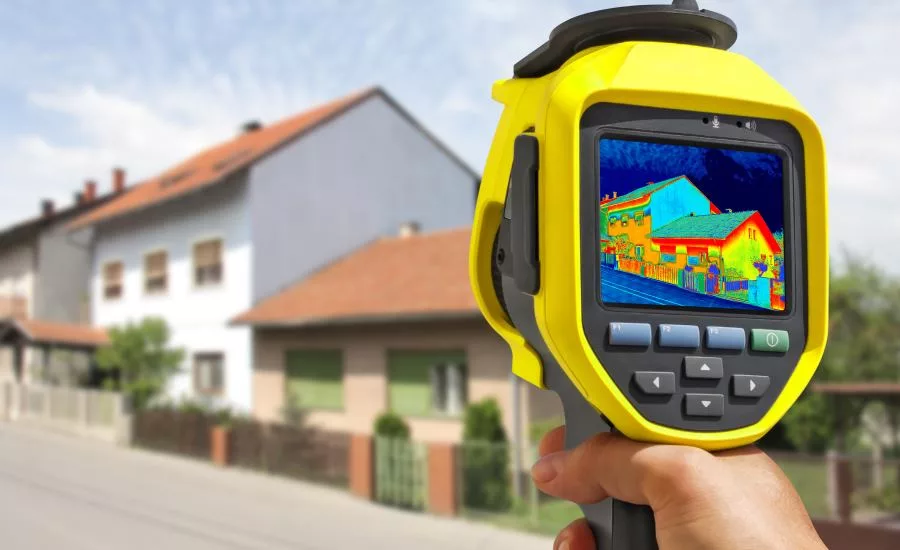
Although air leaks and deficient insulation are invisible, energy consultants can pinpoint them with methods such as thermal imaging and pressurization tests. Caulking can be applied in air leaks that affect fixed building elements, and weatherstripping is suitable for moving elements such as doors and windows.

Window upgrades can drastically reduce unwanted heat transfer from fenestration, although the project can be expensive due to the associated labor cost.

Triple-pane windows with low-emissivity coating offer the top performance in the market.

If the property owner wants to avoid disrupting the existing envelope, an alternative upgrade is adding storm windows in front of the existing ones. This creates an air gap that improves insulation.

If a property owner is considering a mechanical equipment upgrade to improve energy efficiency, a building envelope inspection is recommended first. By correcting building envelope deficiencies, the new HVAC equipment will be subject to a reduced workload.

KEYWORDS: building envelope design energy efficiency high-performance buildings HVAC

Share This Story

Michael Tobias is the founder and principal of New York Engineers, an Inc 5000 Fastest Growing Company in America. He leads a team of 30+ mechanical, electrical, plumbing, and fire protection engineers from the company headquarters in New York City; and has led over 1,000 projects in New York, New Jersey, Pennsylvania, Connecticut, Florida, Maryland and California, as well as Singapore and Malaysia. He is a graduate of Georgia Tech class of 2004, with a Bachelors of Mechanical Engineering with honors. His innovative approach to MEP engineering comes from graduating GE’s Engineering Leadership Program, where he designed wind turbines and biofuel power plant engines. He is an advocate for green design and technologies, and has designed to both Passive House and Net 0 energy standards. He has spoken numerous times at the AIA, been featured in Georgia Tech’s Alumni magazine, and is an engineering expert on Discovery Channel’s show “Impossible Engineering."

Recent Comments

These are actually very helpful tips. It is...

This is the most beneficial blog for all...

This blog is a great resource for anyone...

Thank you for sharing this important information. I...

This is a very interesting subject of the...

Manage My Account
  • Sign up for the Newsletter
  • Online Registration
  • Manage My Preferences
  • Registration Customer Service

More Videos

Sponsored Content

Sponsored Content is a special paid section where industry companies provide high quality, objective, non-commercial content around topics of interest to the Building Enclosure audience. All Sponsored Content is supplied by the advertising company and any opinions expressed in this article are those of the author and not necessarily reflect the views of Building Enclosure or its parent company, BNP Media. Interested in participating in our Sponsored Content section? Contact your local rep!

close
  • HITT Construction headquarters
    Sponsored byBuilding Composites® LLC

    Pushing the Envelope

  • 2 construction workers and a DEXcell panel
    Sponsored byDEXcell Roof Boards

    Designing Low-Slope Roofs for Resilience

  • Bell Bank headquarters in Fargo, North Dakota
    Sponsored bySto Corp.

    Drained and Back-Ventilated Rainscreens vs Pressurized-Equalized Rainscreens

Popular Stories

Open vs. closed cell foam in an attic

Open-Cell vs. Closed-Cell Spray Foam

graphic shows white arrows pointing to the right on a light green background

A Breakdown of Air Leakage Testing in LEED v5 BD+C

graphic shows a building destoryed by tornados with information on the amount of torandos in 2026 in the US

Record-Breaking Tornado Activity in Illinois Signals New Challenges for Architects

Building Enclosure Newsletter

BE Poll

Events

April 9, 2026

Strategies for High-Performance Below-Grade Waterproofing

Credits: 1 AIA LU/HSW ; 1 IIBEC CEH; 0.1 IACET CEU

On-Demand Designing a high-performance building enclosure requires more than just surface-level protection; it demands a rigorous, performance-based mastery of below-grade water and gas mitigation. This discussion will provide an expert-level analysis of below-grade waterproofing within the comprehensive framework of the high-performance building enclosure.

April 28, 2026

Roof Design Considerations That Prevent Installation Failures and Change Orders

Credit: 1 AIA LU/HSW; 1 IIBEC CEH; 0.1 ICC CEU

On-Demand This course provides visual examples of actual field conditions. Some good, some not so good; along with design suggestions that can cut installation costs and reduce construction change orders. Upon completion of this course, you will have a better understanding of the requirements the roofing contractor must meet to provide the specified roofing system warranty, and long-term value to the owner.

View All Submit An Event

Products

Plaster and Drywall Assemblies Manual

Plaster and Drywall Assemblies Manual

This is a comprehensive manual that goes beyond codes and standards, providing expert guidance in design, detailing, material selection and troubleshooting for plaster and drywall.

See More Products
×

Enhance your expertise with unparalleled insights.

Join thousands of building professionals today. Shouldn’t you know what they know?

SUBSCRIBE TODAY!
  • RESOURCES
    • Advertise
    • Contact Us
    • Store
    • Want More
  • SIGN UP TODAY
    • Create Account
    • Newsletter
    • Customer Service
    • Manage Preferences
  • SERVICES
    • Marketing Services
    • Reprints
    • Market Research
    • List Rental
    • Survey/Respondent Access
  • STAY CONNECTED
    • LinkedIn
    • Facebook
    • Instagram
    • YouTube
    • X
  • PRIVACY
    • PRIVACY POLICY
    • TERMS & CONDITIONS
    • DO NOT SELL MY PERSONAL INFORMATION
    • PRIVACY REQUEST
    • ACCESSIBILITY

Copyright ©2026. All Rights Reserved BNP Media, Inc. and BNP Media II, LLC.

Design, CMS, Hosting & Web Development :: ePublishing