Mike Rosen, Co-Founder of The Cubiverse joins us to show us a glimpse of the platform. The Cubiverse is a Web3 platform that provides users with an intuitive cubic interface to store and organize big data, multimedia, and 3D models.
The design goal of the project was to improve tenant comfort (lighting, circulation, accessibility) while strengthening the residential community and its identity.
Transparent glazing, whether window assemblies or full curtain wall assemblies, can help designers achieve a complex set of performance criteria with one product, eliminating redundant systems and streamlining construction.
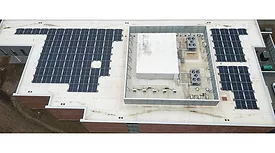
The 108kW system is installed on the state-of-the-art George B. Duke Engineering and Information Technologies Building on the Pitt-Bradford campus in Bradford, Pennsylvania. Now operational, it is expected to produce 116,500 kWh of electricity each year, offsetting approximately 40% of the building’s total electricity use.
Fire codes help owners protect their buildings from property-destroying blazes. Those codes, however, are often set to a minimum standard for fire safety and are not always representative of best practices. One of those instances surrounds codes related to fire-rated floor doors.
Join us on August 8th at 2pm EST for a FREE webinar. Benjamin Meyer, the Building Enclosure Business Director with Siplast and Jennifer Keegan, the Director of Building & Roofing Science for Siplast will be presenting the webinar "Designing Walls for Control of Air, Water, Thermal, and Vapor." Ben and Jennifer joined us to briefly talk about the webinar that they’ll be presenting on behalf of the ABAA.
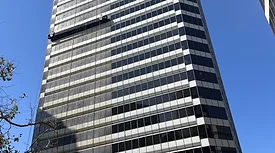
With questions of coating compatibility, sealing strategies, abatement procedures, and maintainability not seen in framed walls or masonry facades, the task of refurbishing these structures is a rapidly developing field in restoration technology.
Built environments are essential for human health, safety, and comfort. Properly constructed buildings enable us to live and thrive in any natural environment, many of which would be otherwise virtually unlivable.
Although both wet-bulb globe temperature and Heat Index take into consideration dry-bulb temperature and relative humidity, Heat Index is calculated specifically for outdoor shaded areas and does not consider conductive heat transfer from wind speed or the heat stress added by direct sun exposure.
In creating a building befitting of the cutting-edge, high-tech research and cyber security programs taking place at the University of Texas at San Antonio National Security Collaboration Center, a combination of red brick, limestone masonry, metal and high-performance glass were selected for the modern façade.