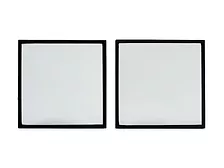
Guardian Glass and Privacy Glass Solutions have entered into an agreement for the commercialization of Lyto™, the full blackout, between-the-glass, automated micro-shade technology designed and developed by Guardian Glass.
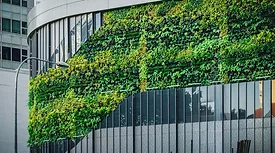
As urbanization becomes more prevalent, the built environment’s impact on climate change and local ecosystems will worsen. Since thermal bridging significantly reduces buildings’ energy efficiency, it’s one of the main drivers for these outcomes. What technologies and analytical techniques can prevent heat loss?
In many cases, building envelope design is mostly a matter of aesthetics and costs. As attention to environmental issues grows, however, sustainability and energy-related concerns play an increasing role in these decisions. The push to reduce urban heat island effects is one of the most prominent of these concerns.
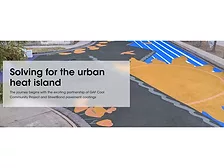
GAF and Climate Resolve, a Los Angeles-based nonprofit dedicated to climate resilience, announced the results of a peer-reviewed study. Jeff Terry, Vice President of Corporate Social Responsibility & Sustainability at GAF, joined Building Enclosure to chat about this study and some of its biggest takeaways.
The study, which was conducted in the Pacoima neighborhood of Los Angeles as part of the GAF Cool Community Project, revealed reductions of ambient air temperatures by as much as 3.5°F during extreme heat events and a 25-50% reduction in the local census-tract urban heat island effect during temperature peaks.
Part of the goal of this project was that these public-facing elements like the theater could really have a presence on the street. During the design process, Mackey Mitchell Architects explored ways to fit the complex’s solid volume within its surroundings.
Vitro Architectural Glass has launched SungateThermL™ glass, a new low-emissivity coating engineered for use on the interior surface of a typical one-inch insulating glass unit that reduces heat transfer and dramatically improves U-values when paired with a Solarban®solar control low-e glass by Vitro on the second surface.
Although both wet-bulb globe temperature and Heat Index take into consideration dry-bulb temperature and relative humidity, Heat Index is calculated specifically for outdoor shaded areas and does not consider conductive heat transfer from wind speed or the heat stress added by direct sun exposure.
The EPDM Roofing Association is recommending that Federal, state and local governments, as well as regulatory bodies, pause the development and implementation of reflective roofing and cool roofing mandates.
With increasing evidence of a shifting climate, many building project teams are confronting the compounded threat of increasingly severe heat waves and the vulnerability of our country's electrical grid.
.webp?height=168&t=1725557184&width=275 "S&T researcher patents sensor that tracks movements in buildings and bridges(1).jpg")
.webp?height=168&t=1723846206&width=275 "Untitled design(13).jpg")