Building Enclosure logo
search
cart
facebook twitter linkedin youtube instagram Spotify Podcasts Apple Podcasts Spotify Podcasts Apple Podcasts
  • Sign In
  • Create Account
  • Sign Out
  • My Account
Building Enclosure logo
  • NEWS
    • Breaking News
  • SECTIONS
    • Columns
    • Project Profiles
    • Trade Shows
    • Sponsor Insights
  • SYSTEM DESIGNS
    • Low-Slope Roofs
    • Pitched Roofs
    • Metal Roofing Materials
    • Waterproofing
    • Sustainability
    • Insulation
    • Exterior Claddings
    • Wall Systems
    • Building Envelope
  • BLOG
    • The BE Blog
  • MEDIA
    • Podcasts
    • Webinars
    • Quiz
    • Videos
    • Polls
    • Interactive Spotlights
    • Newsletter
    • Photo Galleries
  • DIRECTORIES
    • Directory: Blue Book
    • Directory: Roofing Resource
  • PRODUCTS
  • TECHNICAL
    • Codes
      • Waterproofing
      • Roofing
    • Details
      • Waterproofing
      • Roofing
  • CONTINUING ED
  • ABOUT
    • Advertise
      • Editorial Calendar
    • Contact
    • eMag Archive Issues
  • SIGN UP!
Building EnvelopeInsulation

Advanced Techniques for Modeling and Mitigating Thermal Bridges

By Evelyn Long
Thermal Bridging

Photo courtesy of Erik Mclean (@introspectivedsgn) via Unsplash.

August 19, 2024

As urbanization becomes more prevalent, the built environment’s impact on climate change and local ecosystems will worsen. Since thermal bridging significantly reduces buildings’ energy efficiency, it’s one of the main drivers for these outcomes. What technologies and analytical techniques can prevent heat loss?


Why Standard Solutions Can’t Mitigate Thermal Bridging 

According to the United States Department of Housing and Urban Development, framing members account for up to 30% of the total heat loss in a wood-framed wall assembly. Since 

commercial buildings have a high ratio of total wall area to header and stud volume, thermal bridging is usually a serious issue.

You’re likely aware that builders like using metal fasteners and studs on junctions and exterior framing despite their tendency to act as thermal bridges. Despite the current tariffs on steel, the metal fabrication industry will likely achieve the U.S. Gross Domestic Product rate of 2.7% to 3.4%, meaning it will likely remain their material of choice for years.

Although using aluminum or steel is sensible since metal structures are long-lasting and durable, they can contribute to thermal bridging. You can still use them in commercial construction — especially when pairing them with other sustainable materials to offset energy consumption — but building in particularly cold or warm climates may require a more direct solution.

Alternative materials are often prone to cost fluctuations. For instance, while lumber was priced as low as $340 per 1,000 board feet in 2023, it reached a high of $1,650 as recently as 2021. It surged again in 2022, exceeding $1,464 per 1,000 board feet. Realistically, more surges are likely, so advanced technical solutions are necessary instead.


Advanced Technologies for Thermal Bridge Mitigation

These advanced technologies can improve thermal assessment precision and guide your decision-making processes, helping you mitigate thermal bridging.

Artificial Neural Network

When combined with digital twin technology — a three-dimensional, one-to-one virtual representation of a real-world asset — an artificial neural network can simulate how interventions could mitigate thermal intervention for a room, floor or building. Research shows this subset of artificial intelligence can accurately simulate and predict operative temperature and energy consumption without time-consuming modeling. It performs tasks automatically, so you don’t have to enter data manually.

Building Information Modeling

A building information modeling (BIM) system uses interconnected sensors and relevant documentation to create a 3D digital version of a building’s functional and physical characteristics. You can use it during engineering, construction or operation.

Integrating building energy modeling (BEM) — a computer simulation that factors thermal conduction, convention and phase changes — into a BIM system enables you to create a virtual heat flux map. This technology is already widely used in design phases for its efficacy. 

There are countless use cases for BIM and BEM technologies. For example, you could use them to simulate an air conditioning system's performance under specific conditions. This approach wouldn’t require building a test unit, saving you time and money. 

Phase-Changing Materials

Phase-changing materials absorb and store thermal energy to be released as latent heat when they transition physical states, like from a solid to liquid. Suspending them in a paint-like substance lets you use them strategically as thermal breaks.

You can apply a coating of phase-changing materials post-construction to improve a building’s thermal behavior. Doing so provides energy savings up to 29,84 kilowatt hours per square meter per annum. It also results in an energy payback period of as low as 0.81 years.


Analytical Methods for Thermal Bridge Mitigation 

Leveraging these cutting-edge analytical techniques can help you identify, predict and address thermal bridging.

Computational Fluid Dynamics 

Computational fluid dynamics calculates gas and liquid flows using computer-based simulation and analysis. This analytical tool leverages governing equations to determine how unknown variables react when energy, momentum or mass change.

Finite Element Analysis 

Finite element analysis (FEA) uses a mathematical technique called the finite element method to predict an asset’s behavior. You can use it in the engineering phase to evaluate how a building reacts to heat, enabling you to optimize your design pre-construction.

While FEA can simulate several external forces, fluid and heat flow are the primary ones you should concern yourself with to mitigate thermal bridging. However, you could also track load-carrying capacity to optimize framing and reduce material usage, reducing heat loss.


The Bottom Line of Mitigating Heat Loss With Technology

You have the technology and resources to eliminate thermal bridging in new construction almost entirely. If you strategically deploy the latest, most precise tools, you can substantially improve buildings’ energy efficiency and help progress the built environment toward a more sustainable future.

KEYWORDS: apps and software BIM (Building Information Modeling) heat mitigation thermal bridging

Share This Story

Looking for a reprint of this article?
From high-res PDFs to custom plaques, order your copy today!


Evelyn Long is a writer and editor focused on home building and construction. She is the co-founder of Renovated, a web magazine for the home industry.

Recommended Content

JOIN TODAY
to unlock your recommendations.

Already have an account? Sign In

  • bar graph shows LEED v4/LEED v5/LEED v6 in various colors

    When Will LEED v4 / v4.1 and LEED v5 Expire?

    The latest version of the LEED rating system, LEED v5, is...
    Sustainability
    By: Daniel Overbey
  • Celebrating Women In AEC-2026

    Celebrating Women in The AEC Industry Part 1

    A round-up of women in the design, engineering and...
    Building Envelope
    By: Lindsay Lewis
  • KEE membrane application on a roof

    A Beginner’s Guide to Single-Ply Roofing Membranes

    While PVC and TPO appear extremely similar, the chemistry...
    Low-Slope Roofs
    By: Peter Gross
Manage My Account
  • Sign up for the Newsletter
  • Online Registration
  • Manage My Preferences
  • Registration Customer Service

More Videos

Sponsored Content

Sponsored Content is a special paid section where industry companies provide high quality, objective, non-commercial content around topics of interest to the Building Enclosure audience. All Sponsored Content is supplied by the advertising company and any opinions expressed in this article are those of the author and not necessarily reflect the views of Building Enclosure or its parent company, BNP Media. Interested in participating in our Sponsored Content section? Contact your local rep!

close
  • HITT Construction headquarters
    Sponsored byBuilding Composites® LLC

    Pushing the Envelope

  • 2 construction workers and a DEXcell panel
    Sponsored byDEXcell Roof Boards

    Designing Low-Slope Roofs for Resilience

  • Bell Bank headquarters in Fargo, North Dakota
    Sponsored bySto Corp.

    Drained and Back-Ventilated Rainscreens vs Pressurized-Equalized Rainscreens

Popular Stories

Open vs. closed cell foam in an attic

Open-Cell vs. Closed-Cell Spray Foam

graphic shows white arrows pointing to the right on a light green background

A Breakdown of Air Leakage Testing in LEED v5 BD+C

graphic shows a building destoryed by tornados with information on the amount of torandos in 2026 in the US

Record-Breaking Tornado Activity in Illinois Signals New Challenges for Architects

Building Enclosure Newsletter

BE Poll

Events

April 9, 2026

Strategies for High-Performance Below-Grade Waterproofing

Credits: 1 AIA LU/HSW ; 1 IIBEC CEH; 0.1 IACET CEU

On-Demand Designing a high-performance building enclosure requires more than just surface-level protection; it demands a rigorous, performance-based mastery of below-grade water and gas mitigation. This discussion will provide an expert-level analysis of below-grade waterproofing within the comprehensive framework of the high-performance building enclosure.

April 28, 2026

Roof Design Considerations That Prevent Installation Failures and Change Orders

Credit: 1 AIA LU/HSW; 1 IIBEC CEH; 0.1 ICC CEU

On-Demand This course provides visual examples of actual field conditions. Some good, some not so good; along with design suggestions that can cut installation costs and reduce construction change orders. Upon completion of this course, you will have a better understanding of the requirements the roofing contractor must meet to provide the specified roofing system warranty, and long-term value to the owner.

View All Submit An Event

Products

Plaster and Drywall Assemblies Manual

Plaster and Drywall Assemblies Manual

This is a comprehensive manual that goes beyond codes and standards, providing expert guidance in design, detailing, material selection and troubleshooting for plaster and drywall.

See More Products

Related Articles

  • thermal bridging

    Mitigating Thermal Bridging in Metal-over-Metal Recover Assemblies

    See More
  • resilient-design-techniques-hospitals.jpg

    Resilient Design Techniques for Hospitals

    See More
  • man standing under scaffoldings

    Ensuring Building Code Compliance With Advanced Data Analytics

    See More

Related Products

See More Products
  • bim-3e.jpg

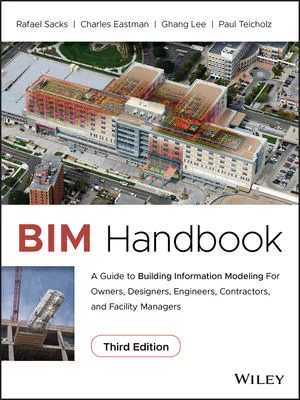
    BIM Handbook: A Guide to Building Information Modeling for Owners, Designers, Engineers, Contractors, and Facility Managers, 3rd Edition

  • energy modeling.jpg

    Energy Modeling and Computations in the Building Envelope

  • buildings.jpg

    Mechanical and Electrical Equipment for Buildings, 13th Edition

See More Products
×

Enhance your expertise with unparalleled insights.

Join thousands of building professionals today. Shouldn’t you know what they know?

SUBSCRIBE TODAY!
  • RESOURCES
    • Advertise
    • Contact Us
    • Store
    • Want More
  • SIGN UP TODAY
    • Create Account
    • Newsletter
    • Customer Service
    • Manage Preferences
  • SERVICES
    • Marketing Services
    • Reprints
    • Market Research
    • List Rental
    • Survey/Respondent Access
  • STAY CONNECTED
    • LinkedIn
    • Facebook
    • Instagram
    • YouTube
    • X
  • PRIVACY
    • PRIVACY POLICY
    • TERMS & CONDITIONS
    • DO NOT SELL MY PERSONAL INFORMATION
    • PRIVACY REQUEST
    • ACCESSIBILITY

Copyright ©2026. All Rights Reserved BNP Media, Inc. and BNP Media II, LLC.

Design, CMS, Hosting & Web Development :: ePublishing