Understanding Real CO2e Emissions in Mass Timber Production
Includes the impact of the transport of raw material on the embodied carbon and makes recommendations to designers on how to manage this effectively
Approximately 20% of a building’s total energy use over its lifetime is determined before it is even built and occupied1. Recently, mass timber (MT) projects have gained attention due to their perceived “carbon-neutrality” and sustainability characteristics compared to conventional construction materials such as concrete and steel – particularly for low to mid-rise projects. As a result, the global demand for wood products is expected to quadruple by 2050. However, as the 2023 WRI report states2, there are hidden sources of CO2e emissions, especially as it relates to timber harvesting practices, that are often overlooked.
When assessing embodied carbon in the final MT product, it is vital to analyze how the debris and waste left behind during the logging operations — including bark, roots, branches, twigs, foliage, and sometimes larger pieces of wood that are not used for commercial purposes, also known as slash —contribute to near-term CO2e emissions3.
This research identifies different tree species typically used in MT products, applies varying scenarios for managing the slash-associated CO2e emissions, and provides qualitative analysis of embodied carbon in a case study. The study also includes the impact of the transport of raw material (A4) on the embodied carbon and makes recommendations to designers on how to manage this effectively.
Current Practices in Wood Harvesting & Mass Timber Production
Slash: An Overview of Harvest Residues
Slash — the debris left behind from logging — plays a key role in the carbon cycle by initially storing biogenic carbon absorbed by trees. The journey that harvested wood takes before it is used in buildings shows that only 35% of a tree’s mass makes it to the building it is ultimately used in, with around 25% staying in the forest. As slash decomposes over the years, stored carbon is gradually released back into the atmosphere4. Effective management of harvest residuals can mitigate the immediate release of biogenic CO₂ emissions by reducing slash decomposition and other post-harvest waste processes.
Slash Management
This research evaluates three slash management practices: pile burning, mastication, and site composting.
- Pile burning clears woody debris, reducing fire risk, but can release 92–94% of its carbon content in a short period of time, significantly increasing emissions5.
- Mastication grinds vegetation into mulch left on site, and is useful where burning is difficult, but it requires specialized, costly equipment and may cause soil compaction6.
- Site composting returns nutrients to the soil and helps to prevent soil erosion but can hinder forest regeneration and pose a fire hazard if not managed properly7.
Assumptions and Study Scope
This research addresses the question: What is the impact of tree leftover parts; and wood species selection; and its typical geographical location on carbon emissions; and how should designers integrate these into their carbon calculations?
To answer this, three scenarios for timber harvesting were evaluated: pile burning, mastication, leaving slash on site, and using byproducts in a secondary market. The EPDs for the wood products is sourced from OneClick LCA and investigates the wood characteristics of tree species from various North American forests.
Methodology
To account for the slash generated as a percentage of the tree during the A1 stage, a comprehensive literature review using USDA forestry and academic databases was conducted8. Next, a model to account for the carbon emissions associated with three main scenarios for slash’s end-of-life was developed. OneClick LCA was selected for the A1 to A4 analysis as it provides detailed biogenic carbon storage information and accommodates assumptions when biogenic carbon details are unavailable in EPDs.
Tree Species Studied
The team analyzed seven different trees species that are the most frequently used in MT production for use in building construction, according to Corgan’s 2023 Mass Timber report 9: Alaska Yellow Cedar, Douglas Fir, Hemlock Fir, Ponderosa Pine, Southern Yellow Pine, Spruce Pine Fir, and Western Red Cedar.
Dynamic Carbon Accounting Model
To accurately determine the amount of modified biogenic carbon in the final product based on building specifications, Corgan developed a dynamic formula accounting model. This model considers several key factors, including carbon in the roots and soil of trees, residual biomass of slash, and the release of CO2e over time. Using Autodesk Revit to quantify the wood in the building, the number of trees harvested to produce Cross-Laminated Timber (CLT) and Glue-Laminated Timber (GLT) products was calculated.
Results
Corgan Mass Timber Carbon Calculator
To help designers estimate and account for the effect of slash on the amount of biogenic carbon, the Corgan Hugo-Echo team developed a calculator for estimating CO2e released from slash. Using data collected from different tree species from USDA10 and wood database 11 (Table 1), the calculator includes seven tree species and three slash management scenarios.
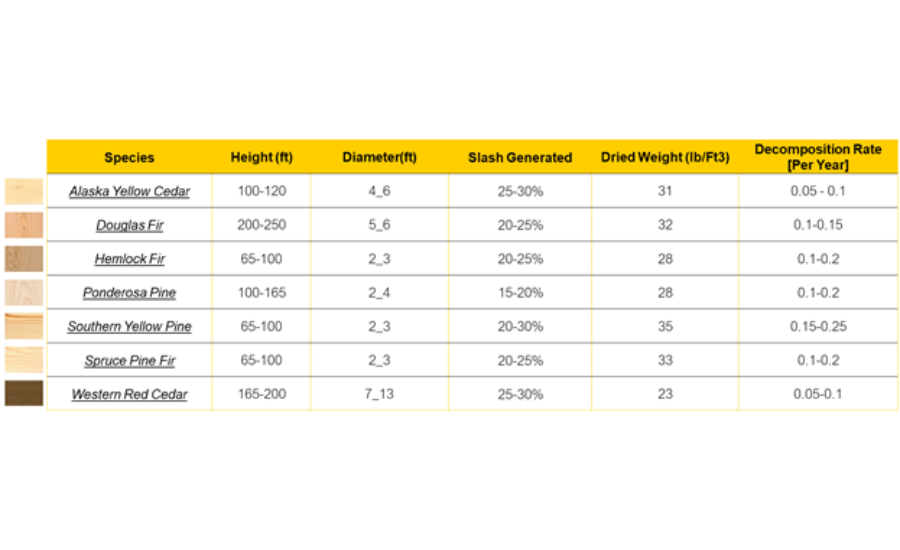
The tool first calculates the CO2e emissions for the A1 stage and then assesses the emissions from the shipping process of the raw material (A4). The A2 and A3 stages have been considered constant and have not been omitted, as discussed in the assumptions. This approach ensures a comprehensive analysis of emissions throughout the entire supply chain.
The team also calculated the distance between the manufacturing plant (Point A) and the construction site (Point B) in miles using their GPS coordinates. A standard formula (Haversine) was used to account for the curve of the Earth.
The calculator also accounts for the number of trucks required to transport the material and uses the emission factor for a 40-ton heavy truck sourced from the EPA. This emission value was then doubled to account for the round trip, as each truck returned to its origin.
Case Study
To illustrate the practical application of these calculations, a case study of a theoretical 216,000-square-foot, six-story office building office building with MT structural elements was conducted (Figure 4). The total volume of wood used in the building was estimated to be 115,250 cubic feet, with Douglas Fir used in flooring and structural columns and Spruce used in framing.
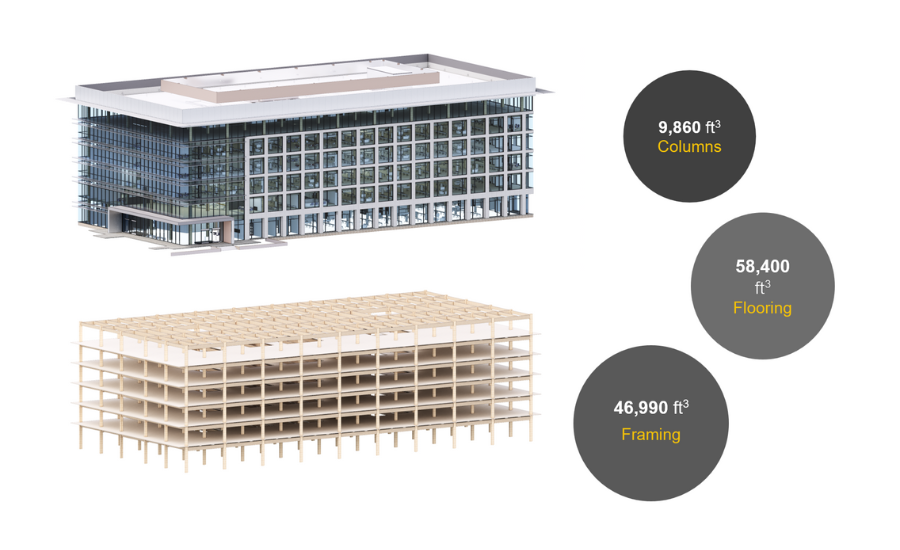 Figure 4. Case study illustrating timber volume in square feet for structural columns, framing, and flooring
The results show that the method of slash management significantly impacts the overall biogenic carbon balance of wood subassemblies. The pile burning scenario consistently shows the highest carbon release, while the mastication scenario shows minimal carbon release. When compared to site composting, mastication releases less CO2e in the environment, as the materials are spread thinly over a large area, providing soil protection and nutrients 12.
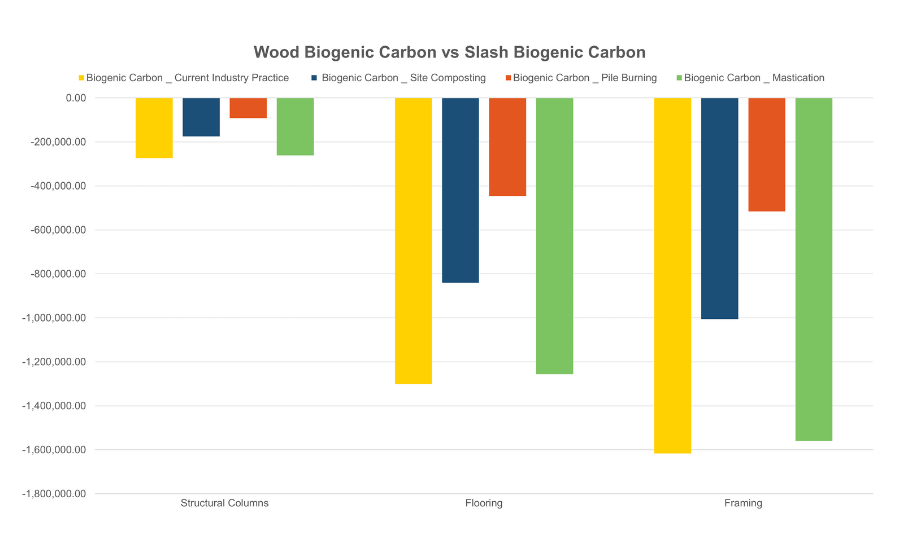 Figure 5. Comparison of the I=industry biogenic carbon for each subassembly element of the building with different slash management scenarios.
Effective slash management is crucial for maintaining the carbon sequestration benefits of wood products: in this case study, the difference between the current biogenic carbon and the slash-released carbon were 35.15% for structural columns, 35.41% for flooring, and 37.78% for framing. These insights can help guide decisions in sustainable forestry and construction practices.
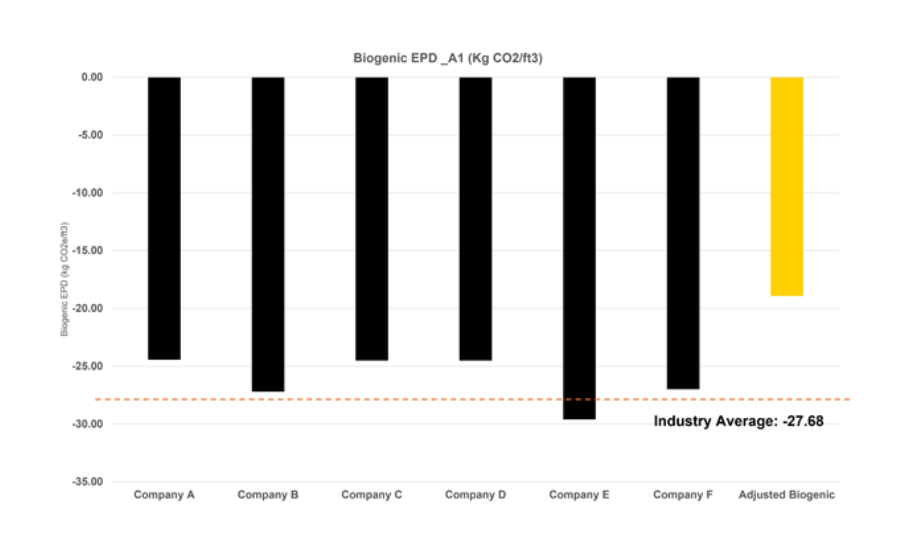 Figure 6. Biogenic carbon EPD comparison: six wood companies vs. adjusted biogenic carbon with slash
Tree Species
The selection of tree species plays a crucial role in the biogenic carbon sequestration potential of wood products. Alaska Yellow Cedar, Douglas Fir, and Western Red Cedar consistently show high sequestration potential, especially under mastication. These species can be prioritized in reforestation and timber production projects to maximize carbon sequestration benefits.
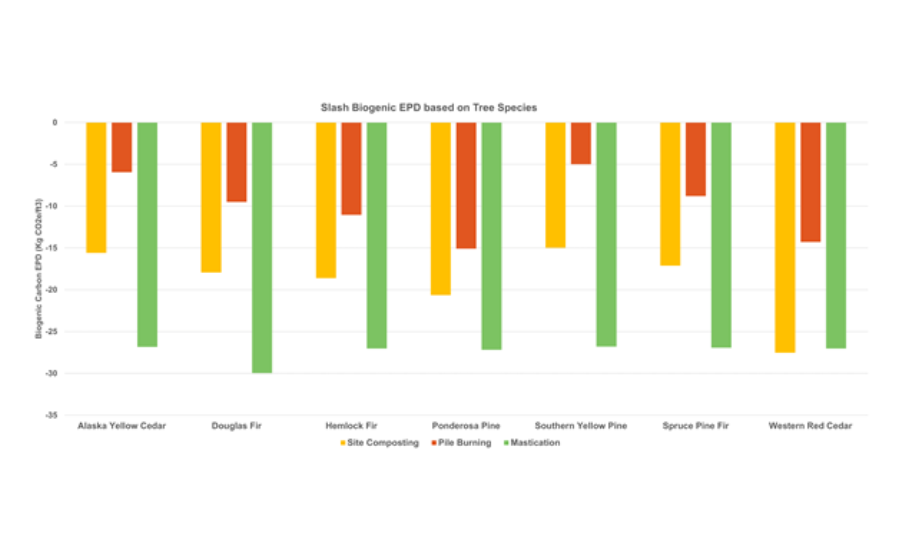 Figure 7. Adjusted biogenic carbon comparison by tree species and slash management scenarios
 Transport
Long transport distances from manufacture to the building site can have a considerable effect on the final embodied carbon of the building material. The research accounts for the emissions of each route, enabling informed decisions about material sourcing. As designers, it is crucial to consider which wood is used in the project and, if possible, choose alternative local options that are closer to the project site. The calculator allows AEC professionals to make informed decisions that optimize supply chains and enhance the sustainability of MT construction.
Insight & Future Work
Corgan Mass Timber Carbon Calculator: Creating a dynamic biogenic EPD calculator for designers allows them to see the impact of slash management scenarios for different tree species, leading to more sustainable project outcomes. The calculator enables near real-time decision-making for selecting lower carbon-intensive timber types at every project phase, facilitating discussions with contractors and engineers.
Acknowledgment
Brad Benke, Low Caron Buildings Manager, Carbon Leadership Forum, was an external reviewer who provided feedback on this document. The inclusion of his name and organization does not represent either party’s total agreement or endorsement of this publication.
Authors
Mahdi Afkhami, Ph.D.
Design Researcher IV, Environment Design
Eiman Graiz
Analyst, Sustainability
Constantina Varsami
Analyst, Sustainability
Priyal Chheda
Analyst, Sustainability
Abe Desooky
Design Researcher II, Experience Design
Varun Kohli
Director of Sustainability, Principal
Samantha Flores
Director, Hugo, Vice President
Assistant Director, Associate
References
1 King, B. (2017). The New Carbon Architecture: Building to Cool the Climate. New Society Publishers
2 Searchinger, T., Peng, L., Waite, R., & Zionts, J. (2023, July 20). Wood is not the climate friendly building material some claim it to be. World Resources Institute. https://www.wri.org/insights/mass-timber-wood-construction-climate-change
3 Ciolkosz, D., & Jacobson, M. (2012, July 31). A primer on Woody Biomass Energy for the Forest Community. Penn State Extension. https://extension.psu.edu/a-primer-on-woody-biomass-energy-for-the-forest-community
4 Melton, P. (2024, February 26). Wood: Is it still good? part One: Embodied carbon. BuildingGreen. https://www.buildinggreen.com/feature/wood-it-still-good-part-one-embodied-carbon
5 Mott, C. M., Hofstetter, R. W., & Antoninka, A. J. (2021). Post-harvest slash burning in coniferous forests in North America: A review of ecological impacts. Forest Ecology and Management, 493, 119251. https://doi.org/10.1016/j.foreco.2021.119251
6 Heinsch, F. A., Sikkink, P. G., Smith, H. Y., & Retzlaff, M. L. (2018). Characterizing fire behavior from laboratory burns of multi-aged, mixed-conifer masticated fuels in the western United States (RMRS-RP 107; p. RMRS-RP-107). U.S. Department of Agriculture, Forest Service, Rocky Mountain Research Station. https://doi.org/10.2737/RMRS-RP-107
7 James C. Finley Center for Private Forests. (2018) Slash: What good is it?, Department of Ecosystem Science and Management. Available at: https://ecosystems.psu.edu/research/centers/private-forests/news/slash-what-good-is-it (Accessed: 03 June 2024)
8 Bidlack, A., Buma, B., Bisbing, S., & Naald, B. V. (2019, December). Case Studies Reveal Large
Variation In Producer Efficiency And Profitability. Yellow-Cadar Slavage Logging in Southeast Alaska.
https://acrc.alaska.edu/docs/Yellow-cedar-salvage-report.pdf
9 HUGO Research and Innovation Team. (2023). Designing with mass timber. https://www.corgan.com/sites/default/files/inline-files/Designing with Mass Timber.pdf
10 Oswalt, S. N., Smith, W. B., Miles, P. D., & Pugh, S. A. (2014, October). Forest Resources of the United States, 2012:. General Technical Report WO-91. https://www.srs.fs.usda.gov/pubs/gtr/gtr_wo091.pdf
11 Temple, J. (2022, December 15). A stealth effort to bury wood for carbon removal has just raised millions. MIT Technology Review. https://www.technologyreview.com/2022/12/15/1065016/a-stealth-effort-to-bury-wood-for-carbon-removal-has-just-raised-millions/
12 Hidden Resource. (2019, October 10). Compost & Mulch Market Study https://www.sandiegocounty.gov/content/dam/sdc/dpw/SOLID_WASTE_PLANNING_and_RECYCLING/F iles/CompostMulchMarketStudy_052020.pdf
Looking for a reprint of this article?
From high-res PDFs to custom plaques, order your copy today!
.webp?height=740&t=1767036885&width=auto "Header - BE 1170x658 (002).png")

.webp?height=740&t=1755781744&width=auto "KEE(2).png")