By hitching their wagon to the horse of Standard 90.1, LEED-related hard costs are rising and becoming increasingly misaligned with low-margin project cost models based largely on minimum energy standards within the project’s regulatory context
By hitching their wagon to the horse of Standard 90.1, LEED-related hard costs are rising and becoming increasingly misaligned with low-margin project cost models based largely on minimum energy standards within the project’s regulatory context.
As the AIA 2030 Commitment moves to reposition itself over the coming years, it will also come into stronger alignment with AIA's Strategic Plan 2026–2030, which acknowledges within the four interconnected "PACE" goals
Energy efficiency benchmarking alone is no longer sufficient and we recommend evolving the American Institute of Architects' (AIA) primary climate action program to track total carbon intensity by incorporating fuel source reporting, electrification metrics, expanded embodied carbon tracking, and updated baselines.
Baselines and benchmarks are both valuable. A project's performance narrative should use both deliberately. The baseline grounds the conversation in the specifics of the project. The benchmark situates the project in the larger context.
The recently published Metropolis + Interface U.S. Sustainable Design Report 2026 provides a comprehensive overview of the current state of the U.S. building design and construction industry
The recently published Metropolis + Interface U.S. Sustainable Design Report 2026 provides a comprehensive overview of the current state of the U.S. building design and construction industry. The report primarily focuses on decarbonization, material transparency, and circularity.
Only time will tell if nascent technologies can close the gap on these challenges to realize economically viable solutions that will usher a breakthrough in the market and catalyze efforts to decarbonize the building sector.
Information suggests that LEED v6 would likely rollout in early 2030, serve as the current version from 2030 through 2035, and ultimately sunset around 2041
The latest version of the LEED rating system, LEED v5, is open for business. Registration is open, the Credit Library the Reference Guides are published, and a new version of Arc has replaced the old LEED Online platform.
The building design and construction industry has come a long way toward advancing how project teams design and specify products and materials that are healthier for both humans and the environment
While collecting "disclosure" documents proved easy enough for project teams, it turned out that LEED v4 was a bit ahead of the curve on the "optimization" side. Frankly, the industry lacked a common framework to facilitate rigorous, standardized, and streamlined workflows to achieve optimization. Simply put, the industry was not quite ready. It is ready now.
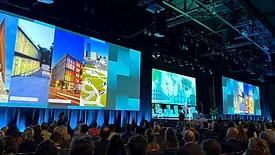
The 2025 Greenbuild International Conference and Expo convened at the Los Angeles Convention Center from November 4-7. Five major themes emerged that encapsulate the current discourse in "green building" and where the AEC is heading with regard to sustainability.
Representatives from across the industry gathered regularly starting in March 2023 to form a strategic partnership to pursue greater alignment regarding the collection and reporting of embodied carbon data by certification programs and initiatives across the industry
Representatives from across the industry gathered regularly starting in March 2023 to form a strategic partnership to pursue greater alignment regarding the collection and reporting of embodied carbon data by certification programs and initiatives across the industry. The result: ECHO.
Recent Comments
These are actually very helpful tips. It is...
This is the most beneficial blog for all...
This blog is a great resource for anyone...
Thank you for sharing this important information. I...
This is a very interesting subject of the...