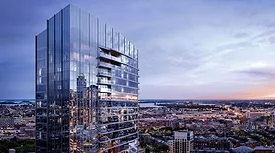
Capping off this world-class array of amenities, guests and residents will also find a sanctuary on the 4th floor, which features an exclusive state-of-the-art gym, Raffles Spa and 20-meter indoor pool with expansive city views.
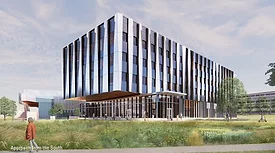
The two wings of the building that will contain academic research offices and computational labs are joined by a suite of collaborative spaces on each of their upper floors.
Driven by rising energy costs, government mandates, long-term cost savings, and simply doing the right thing for future generations, schools are increasingly turning to engineers and architects to move towards net zero energy consumption.
The team replaced the building’s old roof with a low-maintenance roof garden system designed to alleviate stormwater runoff, extend the life of the roof, and add aesthetic value.
Building Enclosure is excited to be joined by Carolyn Kiernat, AIA, principal with Page & Turnbull. Carolyn is here today to talk about all things historic preservation.
Polyisocyanurate (polyiso) exterior wall insulation is a high-performing closed-cell, rigid foam continuous insulation that is bonded to various organic and inorganic facers on both sides. Polyiso accounts for over 75 percent of the insulation used in new and retrofit residential and commercial construction in the U.S.
For the renovation of the Porsche of the Village, the owners sought to replace an old, drafty curtainwall with one that would parallel the performance of the brands’ industry-leading supercars.
A new station opens up the department to the surrounding community, both visually and literally, thanks to its substantial meeting space. It also features a classic design highlighted by metal roof panels and wall highlights that will help ease maintenance for decades to come.
Building Enclosure was recently joined by Brian Pallasch, EVP/CEO, IBBEC. Brian sat down with us to talk about the Moving Forward report. Each year, The National Institute of Building Sciences Consultative Council publishes the Moving Forward Report to investigate critical challenges facing the building industry.
Pressure is mounting for the building and construction industry to become more sustainable. Designing more energy-efficient buildings is part of that, but reducing embodied carbon is a more pressing — and often challenging — issue.
 RSS
RSS