Among myriad strategies to help make buildings healthier for occupants, one of the most potent ways to improve their psychological and physiological responses to a built space is to appeal to our hardwired affinity for the natural environment.
A successful recladding project is usually only known by the project team, as the final product looks almost identical to the original product, just without the deterioration.
The common denominator for today’s design is that one type of material is no longer good enough. Combining multiple aesthetics into the design of a building is the standard rather than the exception. Because the days of monolithic design are long gone, architects are pushing the limits seeking to integrate materials for a modern, sophisticated look.
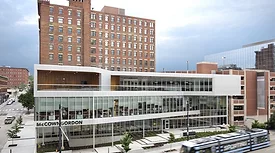
The renovation work for the 1960s-1970s era original brick façade buildings included extensive interior and exterior work, the complete resurfacing of the buildings’ façades and the replacement of all windows.
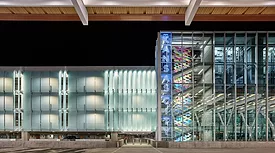
Architects at BNIM designed a striking structure that embraces the inclusive, user-friendly tone of the new airport. Building for the long term, they prioritized sustainability as well. One choice in particular supported both intentions: the facility’s iconic exterior, an elegant glass façade created through BNIM’s collaboration with Bendheim and Längle Glas.
The high-rise condominium’s combination of Alumicor systems provides high thermal performance to support the building’s energy efficiency and keep residences comfortable during British Columbia’s cold winters. In warmer weather, projected window vents integrated within the curtainwall offer fresh air and natural ventilation.
Jansen AG, the market leader for steel profile systems for windows, doors, and facades, has expanded its presence in the North American market via a new subsidiary, Jansen America, Inc.
One of the more subtle ways to make a building temperature controlled while considering the planet is ventilated facade systems. This cladding system changes a building’s envelope, improving the building’s efficiency and impact.
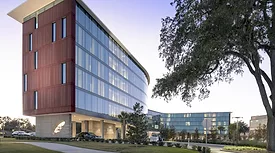
Design architect Alfonso Architects, Tampa, was tasked to create something special that departed from the brick buildings typically seen on hospital and college campuses. That variation led to the selection of Weathering Steel wall panels.