Reducing Risk Through Integrated Rainscreen Design
An integrated rainscreen system represents an investment in performance, durability, and peace of mind
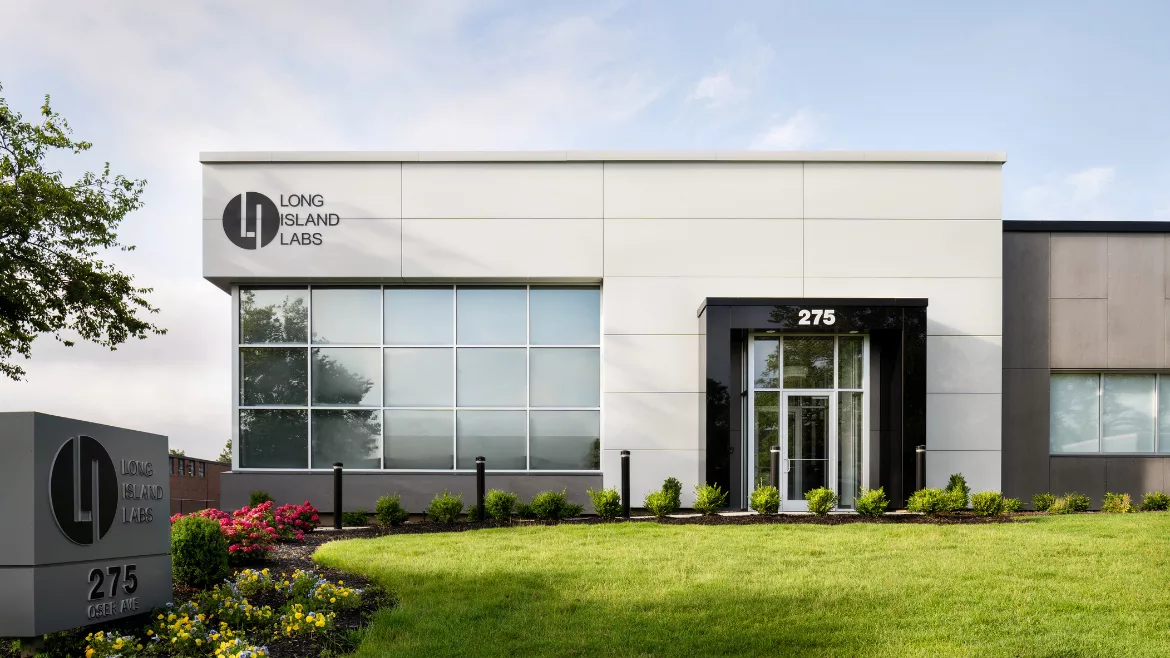
The finished facade, featuring StoVentec Glass Rainscreen System and StoVentec Fiber Cement Rainscreen System, reflects the value of a single-source approach, where multiple cladding aesthetics are supported by one fully tested, integrated system.
The purpose of building envelopes is to improve building performance. As its core, a rainscreen separates the cladding from the structural wall, creating a drainage and ventilation cavity. This gap allows for the passive removal of liquid, facilitating air movement, drying and preventing structural decay, mold growth, and thermal degradation. However, numerous variables and surrounding decisions can compromise enclosure performance. The real risk is complexity.
Modern building envelopes are increasingly complex due to higher performance demands, tighter codes, and layered assemblies. Architects, building engineers, contractors, and owners face a critical choice in rainscreen design: Should they specify a complete, pre-engineered, integrated system from a single manufacturer, or assemble a rainscreen by sourcing individual components (cladding, sub-construction, insulation, fasteners, and barriers) from multiple manufacturers.
While the component method might appear to offer cost savings or material flexibility, it can undermine the principles of durable, high-performance construction when not properly coordinated. This article explores the significant design, engineering, and long-term performance benefits of an integrated rainscreen system compared to a non-integrated component assembly.
Where Envelope Risk Begins
In the component-built approach, a water intrusion event becomes a logistical and legal nightmare. Who is responsible? The architect who specified the parts? The general contractor who oversaw the installation? Or the myriad individual component manufacturers? The inevitable "blame game" delays investigations and repairs, escalating costs. Often, multiple manufacturers and/or trades point fingers at each other, leaving the building owner caught in the middle.
But the risk begins long before warranty ambiguity, it begins during construction. A non-integrated system often comprises products that were not originally engineered to work together as a unified assembly.
These piecemeal solutions often increase coordination challenges and liability, creating vulnerabilities within the enclosure assembly. Common failures include:
- Incompatible materials
- Unclear responsibility for transitions
- Conflicting installation requirements
- Warranty gaps
Without system-level testing, risk is effectively transferred to the design and construction team, who must validate performance through coordination rather than relying on proven, assembly-level data.
So, what is the solution? Simplicity via a single-source, integrated envelope system.
What “Single-Source” Really Means
All too often, manufacturers claim to offer a “complete system.” That system may only comprise the cladding itself. Is sub-construction included? What about the air and water-resistive barrier? Who supplies the fasteners? Does the whole system have NFPA 285 testing?
A single-source system is one in which components are engineered to work together, with verified compatibility across all control layers. Integrated components reduce coordination challenges, improve performance reliability, and limit long-term risk. At a fundamental level, single-source systems serve as a practical risk-reduction strategy.
Integrated systems are not only designed to work together, but they are also tested as complete assemblies. This includes fire, air, water, and structural performance testing, which cannot be replicated by combining individually tested components from multiple manufacturers. Without assembly-level validation, system performance cannot be reliably predicted.
One of the most significant benefits of an integrated system is clear accountability. A single manufacturer provides a comprehensive warranty covering system performance, from the air barrier to the exterior cladding. This approach eliminates ambiguity, simplifies the claims process, and ensures a single point of responsibility for design, compatibility, and long-term durability.
Where Systems Typically Fail: Transitions & Interfaces
While individual components may perform as intended, enclosure failures most often occur at transitions and interfaces, where dissimilar materials meet and responsibility becomes less defined. These include critical areas such as window perimeters, floor lines, expansion joints, and transitions between vertical and horizontal assemblies.
In component-based designs, these conditions require field coordination among multiple trades and manufacturers, each with their own details, tolerances, and installation requirements. Even when each component is properly installed, inconsistencies at these intersections can create pathways for air and water infiltration, compromising the overall system.
Integrated rainscreen systems address this challenge by incorporating pre-engineered transition details that maintain continuity across control layers. Manufacturers develop, test, and document these details as part of the system rather than leaving them to interpret in the field. As a result, designers and contractors can rely on consistent performance at the most vulnerable points of the enclosure.
By resolving complexity at transitions, integrated systems reduce installation variability and improve long-term durability in areas where risk is most likely to manifest.
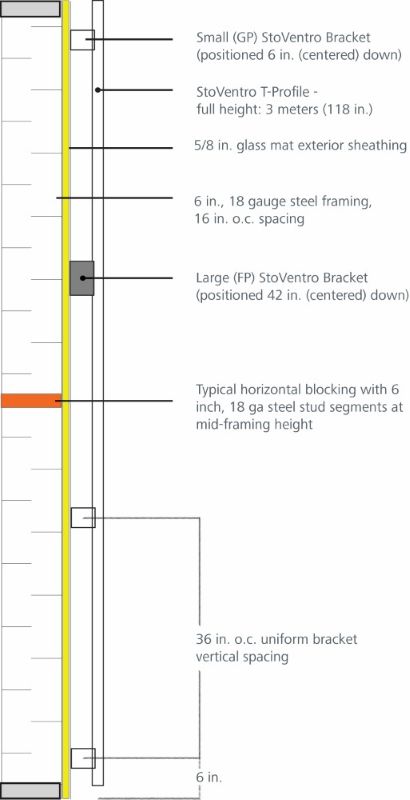
Pre-engineered assemblies within the StoVentec® Rainscreen® System, including both Render and Fiber Cement options, provide prescriptive design paths with tested components and standardized details, simplifying specification while ensuring system-wide compatibility.
Image courtesy of Sto Corp.
Construction Efficiency: Speed and Simplicity on Site
The benefits of an integrated system extend from the drawing board to the job site. Non-integrated assemblies require coordination across multiple trades and the installation of disparate components, each with its own set of instructions, required tools, and potential for error. The installation process often involves field measurements, cutting, and adapting components, which can slow schedules and increase material waste.
Integrated systems, however, are designed for ease and speed of installation. They are often kitted together, with components pre-engineered for specific wall assemblies and pre-cut or manufactured to size. Installation instructions are clear, standardized, and cover the entire system. General contractors often find that integrated systems can be installed faster, with less labor, and with a significantly lower risk of installation errors. This streamlined process can translate into measurable savings in construction time and labor, often offsetting perceived differences in component-by-component material costs. Furthermore, a single manufacturer provides training and support for the installation crews, ensuring quality control on the job site.
Why Simplicity Matters More as Codes Get Stricter
As building codes become more stringent, particularly regarding energy efficiency (such as updates to the International Energy Conservation Code), thermal performance becomes paramount. Achieving required performance with a component-built system can be challenging and often relies heavily on complex, often inaccurate, calculations of thermal bridging. Every fastener, framing channel, and connection point through the continuous insulation layer acts as a thermal bridge, conducting heat and reducing the system’s effective R-value.
Integrated rainscreen systems are designed specifically to mitigate thermal bridging. Engineers often integrate these systems with thermally broken framing and attachment methods that minimize energy loss. These systems are also often pre-tested to determine their actual, effective R-value. A comprehensive report from the Whole Building Design Guide underscores this critical difference: "Non-integrated systems require detailed thermal modeling and complex detailing to account for the numerous thermal bridges. Integrated systems have these issues already engineered out, ensuring predictable thermal performance and simplified compliance with energy codes.” This integrated approach provides greater certainty that the building will meet its intended energy performance targets.
Simplicity as a Strategy
While the component method of rainscreen construction might offer the allure of flexibility or initial material cost savings, it is fundamentally risky and, over the life of a building, often more expensive. Building science, practical risk management, and construction efficiency all point to the overwhelming advantages of a single-source, integrated rainscreen design. These systems offer predictable performance, streamlined construction, and clear accountability through a single-source warranty.
In an environment where building performance is under intense scrutiny and energy codes are increasingly strict, assembling a critical enclosure system from multiple, unverified sources is no longer a sustainable or responsible practice. An integrated rainscreen system represents an investment in performance, durability, and peace of mind, ensuring reliable long-term control of water, air, and thermal performance for the life of the building.
Sources
1 Raina, Rainscreen Association In North America.
2 Building Science Corporation. (2021). Design for Durability: Integrated Solutions for High-Performance Enclosures.
3 Whole Building Design Guide. (2023). Continuous Insulation (c.i.) R-Value: Performance, Modeling, and Code Compliance.
4 Sto Corp. (2026).
Looking for a reprint of this article?
From high-res PDFs to custom plaques, order your copy today!

.webp?height=740&t=1767036885&width=auto "Header - BE 1170x658 (002).png")

.webp?height=740&t=1755781744&width=auto "KEE(2).png")