Finland Sets New Architectural Standard for Special Needs Youth
Nestled within the serene pine forests of Finland’s west coast, Lagmansgården residential institution offers a safe, home-like environment for young people in need of intensive foster care and special needs education
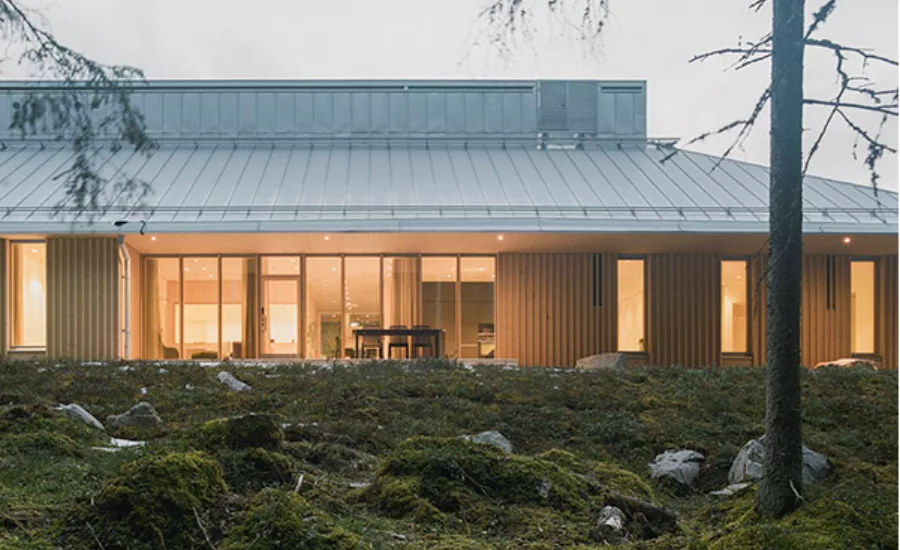
Lagmansgården is a pioneering building developed from extensive research by the Finnish Institute for Health and Welfare (THL) to create a new type of residential institution model that integrates nature and architecture for a more supportive, restorative learning and healing environment. The purpose is also to make use of Lagmansgården’s experiences in the further development of new residential institutions.
Designed by award winning Anttinen Oiva Architects, the Lagmansgården seamlessly integrates residential, educational, and therapeutic spaces into a unified, nature-oriented setting. The complex comprises school and residential buildings featuring 20 accommodation rooms across four units, alongside classrooms, recreational areas, administrative spaces, and a communal kitchen with a dining hall. Designed around a central courtyard opening toward the lakeside, the layout respects the site’s century-old pine forest and fosters outdoor activity and social connection.
”The architecture of Lagmansgården represents a new way of thinking in the design of demanding child welfare facilities and special-support learning environments in Finland. The aim has been to create a holistic environment that supports young people’s growth and recovery,” says architect and partner Selina Anttinen of Anttinen Oiva Architects.
Local Architecture Traditions for Homelike Environment
Constructed primarily from wood, including exposed cross-laminated timber (CLT) and plywood, the buildings embody the simplicity of local Ostrobothnian architectural traditions. A calm roof form unites the various functions under one structure. The single-storey design, extended eaves, spatial organization and natural material palette promote an atmosphere conducive to recovery and community life. The light-colored standing seam metal roof conceals technical systems while harmonizing with the surrounding landscape.
Functionality and adaptability guided the interior design, where warm wooden surfaces and flexible, durable furnishings create a comfortable, informal setting. Color schemes reflect the tones of the surrounding forest.
“A sense of community and safety, a feeling that you can shape your own environment play a major role when creating an enjoyable space for young people,” says Anttinen. “The staff were actively involved in the planning process, and the young people participated in concrete ways, for example by making coffee tables for the living rooms of the residential units."
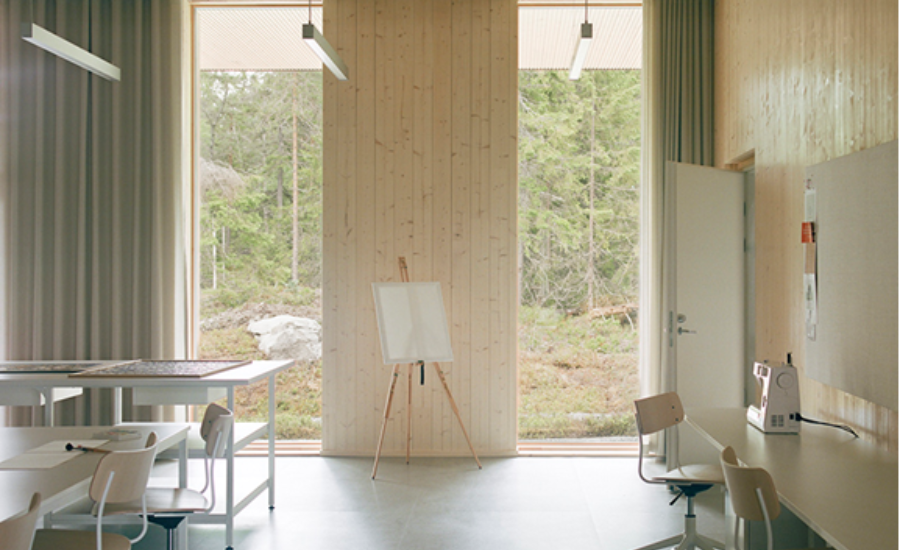 Anttinen Oiva Architects
Lagmansgården is Senate Properties’ lowest-carbon construction project to date. Alongside low carbon performance, energy efficiency as well as simple, maintainable, and long-lasting solutions have been emphasised from the very beginning. The building uses ground-source heat, and the on-site solar power plant generates renewable energy.
”The staff and young people at Lagmansgården have settled into the new premises extremely well. The architecture and spatial design emphasise a homelike atmosphere and close communal living, with a strong therapeutic approach evident in all residential units. The environment has a major impact on the wellbeing of both the young people and the staff,” says Carl-Johan Strömberg, Director of Lagmansgården.
Looking for a reprint of this article?
From high-res PDFs to custom plaques, order your copy today!
.webp?height=740&t=1767036885&width=auto "Header - BE 1170x658 (002).png")

.webp?height=740&t=1755781744&width=auto "KEE(2).png")