Assessing and Repairing Plaza Deck Waterproofing
Beneath the Surface

- Exterior plaza decks are exposed to harsh weather, heavy use, and thermal cycling. Therefore, regular upkeep of drains, sealant joints, and surface finishes can prevent conditions that compromise the underlying membrane.
Exterior terraces, balconies, and plaza decks often provide desirable outdoor amenities in commercial, institutional, and residential buildings. Yet beneath the landscaped surfaces, pavers, or concrete topping slabs lies a critical system that is often overlooked: the waterproofing membrane. This buried system serves as the primary line of defense against water infiltration into occupied spaces below. If the membrane is compromised, leaks can migrate through the structure, leading to compromised comfort of interior space for building users and potentially deterioration of building materials.
Plaza deck waterproofing systems are available in different product types. Hot fluid-applied rubberized asphalt, cold fluid-applied urethanes or silicones, and sheet-applied membranes made of thermoplastics or composite layers. These membranes are typically installed on a structural deck and then covered with insulation, drainage mats, protection boards, and overburden materials such as soil, pavers, or concrete. Because the system is concealed, it is often forgotten until water infiltration becomes evident in the spaces below.
The importance of plaza deck waterproofing is critical in keeping facilities below them watertight. Failure of the membrane compromises not only interior finishes but also occupant comfort and health, structural durability, and the financial burden of building owners. However, identifying problems and implementing repairs presents significant challenges due to the system’s hidden nature and the disruption required to access it. This article explores these challenges, strategies for assessment, pathways to appropriate repair solutions, and best practices for long-term performance.
Assessment of Existing Waterproofing
Before any repair strategy can be determined, the condition of the existing waterproofing and areas of distress must be understood. Unlike roofing, where membranes are more readily accessible, plaza deck membranes are typically buried under multiple layers of protection and finishes. Assessing them requires a thoughtful and methodical approach.
The first step is to review and study the original construction documents, including architectural drawings, waterproofing details, and specifications. These documents can reveal the type of membrane originally installed, the intended protection and drainage strategy, and where insulation was placed in the assembly. If information regarding the actual installation is available, such as photographs during construction, that should be requested and reviewed as well.
Reviewing the original design intent can confirm whether the waterproofing was adequately designed for its current use, as well as highlight potential areas of concern where unique detailing may have been a challenge to install correctly.
Additionally, interviewing building facility personnel and occupants can provide valuable insight into the location of chronic leak areas as well as the timing and conditions that historically lead to water infiltration. Reviewing maintenance records can help determine whether any repairs or replacements were performed in the past, which can suggest the relative age of the current membrane in place. Water stains on ceilings, corrosion of structural elements, and interior finish deterioration often point toward problem areas.
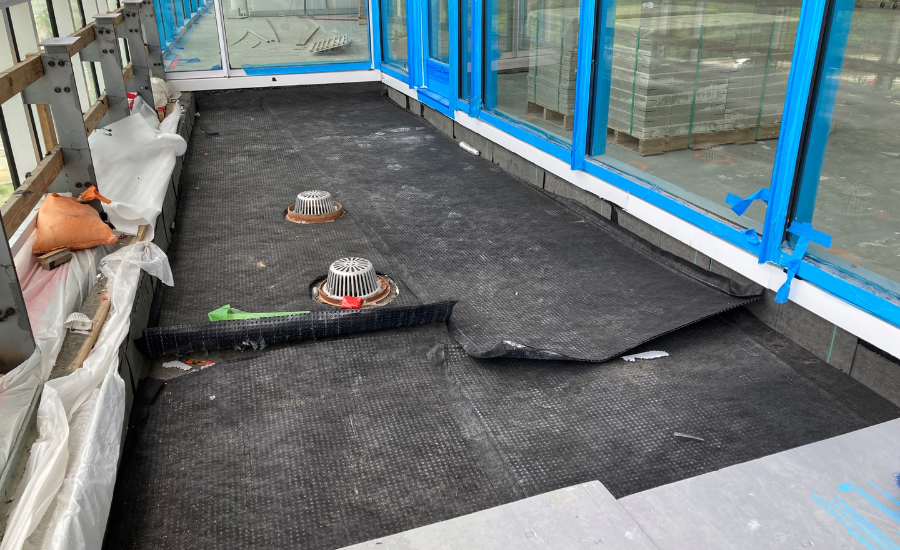
Previous repair efforts, such as localized membrane patches or sealant applications, should also be evaluated. Find out whether they were temporarily effective or did the leaks persist. Understanding this history helps determine whether the system is nearing the end of its service life or if isolated problems can still be addressed.
Understanding the building’s current use is also important. A plaza deck in a busy retail area may require continuous access for patrons, while a relatively unused terrace over a parking structure may easily allow temporary closures. Direct observation of the membrane usually requires removing overburden materials, which can be disruptive to the building’s operation. Because such work is invasive and costly, it is important to plan exploratory locations ahead of time based on the history of leaks and suspected weak points, such as drains, expansion joints, or wall transitions. Strategic test cuts or exploratory openings can confirm membrane type, thickness, adhesion, and any signs of deterioration.
In addition to visual observations, nondestructive testing methods can aid in assessment. Infrared thermography can detect moisture beneath overburden by identifying temperature differentials which are easiest to detect near sunrise or sunset times. Electrical capacitance and resistance testing methods can sometimes locate breaches in membranes without excavation. However, these techniques have limitations when multiple layers and saturated soils are present, so they should be combined with selective exploratory openings for accuracy.
Ultimately, the scope of the condition assessment must balance cost, disruption, and diagnostic value. The more thorough the investigation, the better the repair strategy will align with the actual condition of the waterproofing membrane.
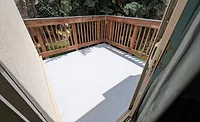
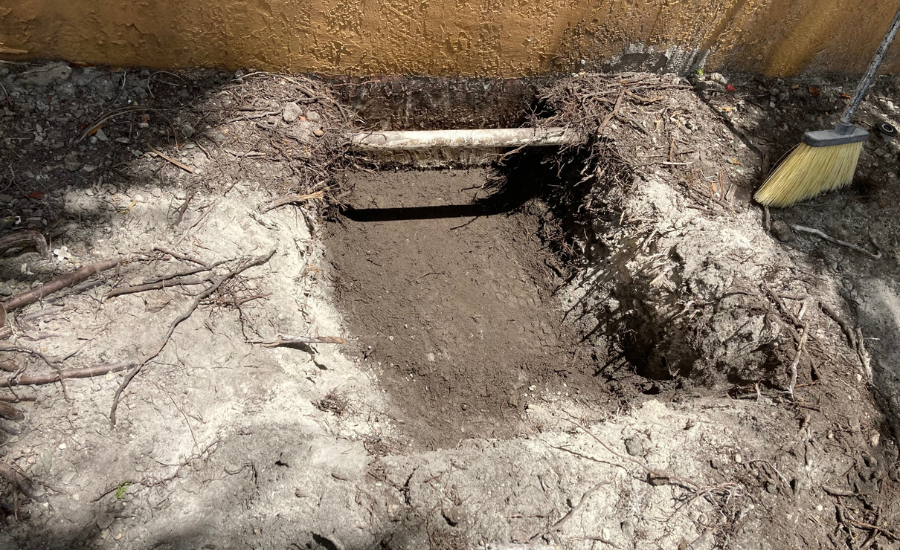 Identifying the source of water infiltration can present significant challenges due to the hidden nature of a waterproofing system as well as the disruption required to access the area for replacement. Photo courtesy of Walter P Moore.
Determining the Proper Repair
Once the assessment is complete, the next step is to determine the appropriate repair approach. This process requires balancing owner priorities, technical performance, and constructability.
Every project begins with a thorough understanding of the owner’s goals. Some may prioritize the lowest possible cost solution to stop active leaks, even if temporary. Others may seek a comprehensive replacement strategy to maximize long-term durability, while others may want to minimize potential disruption to the facility. Some factors to consider and discuss with the owner include:
- Cost: Full removal and replacement of plaza deck waterproofing is expensive due to demolition and reconstruction of overburden materials. Owners must weigh upfront costs against long-term savings from reduced maintenance.
- Effectiveness: A patch may stop an isolated location of water intrusion in the short term but may not address widespread deterioration. Owners need clear communication about the expected service life of each option.
- User Impact: On commercial sites, access disruptions to tenant plazas, retail spaces, or parking areas can significantly impact revenue or tenant satisfaction. A repair program may need to be phased or scheduled during low-use periods.
- Aesthetics: Replacing finishes such as decorative pavers, landscaping, or water features may be costly and visually disruptive. Owners may prefer repairs that preserve existing finishes where possible or may want to take the opportunity to renovate the space with a new aesthetic design.
Clearly defining these priorities allows the design team to develop appropriate repair solutions that align with the owner’s needs.
Designing for Resiliency
Plaza deck waterproofing repairs can be designed simply to restore the structure to its original condition. However, it is typically worth recommending a design package that aims to improve durability and resilience of the waterproofing installation. Improvements to incorporate into the design of repairs can include:
- Upgraded Materials: Replacing older sheet membranes with newer fluid-applied products can provide seamless protection and greater flexibility, especially for locations with unique or challenging geometries.
- Enhanced Drainage: Ensuring water does not pond above the membrane by improving slopes or adding drainage composites is key to extending the membrane’s service life.
- Improved Detailing: Pay special attention to transitions at walls, columns, drains, and expansion joints, which are common points of failure.
- Redundancy: Incorporating protection boards, root barriers (for planters), and robust flashing systems at penetrations can safeguard the overall assembly from incidental damages and distress in the future.
Designing with resiliency in mind reduces the likelihood of recurring problems and provides more value for the investment associated with repair.
Verifying Installation
Even the best product selection and design intent can fail if the materials are not installed correctly. Therefore, appropriate quality assurance and quality control measures during construction are critical. Some key steps to verify during installation include:
- Surface Preparation: The existing structural deck must be sound, dry, and clean of any impurities. Surface irregularities, voids, or cracks should be patched and addressed. For concrete slabs, the concrete surface profile should be appropriate to receive the new materials. For metal substrates, confirm whether any primers or other surface preparation is required.
- Manufacturer’s Requirements: Installers should strictly follow manufacturer guidelines for thickness, curing times, application methods, and protection. Manufacturer’s technical representatives are often available to assist the design and construction teams with any questions on unique details or project-specific conditions.
- Field Quality Control Testing: Field adhesion tests (ASTM D4541), thickness gauge testing (ASTM D4414), electronic leak detection testing (ASTM D7877), and/or flood testing (ASTM D5957) should be planned and coordinated between all parties to verify performance of the installed waterproofing before any overburden materials are reinstalled. The testing program requirements should also be discussed early on as part of a pre-construction meeting agenda.
- Third-Party Inspections: Independent inspectors and/or periodic observations by the design team can provide objective quality assurance and quality control, ensuring installed repairs meet the design intent, industry standards, and warranty requirements.
By emphasizing proper installation practices, owners can avoid premature failures from poor construction.
Maintaining the System
Once a plaza deck waterproofing system has been repaired or replaced, periodic maintenance, inspection, and repair play a vital role in its long-term durability.
Because plaza decks are exposed to harsh weather, heavy use, and thermal cycling, a consistent maintenance program is essential. Regular upkeep of drains, sealant joints, and surface finishes can prevent conditions that compromise the underlying membrane. Scheduled annual or biennial inspections allow early detection of problems before leaks manifest inside the building. Small repairs, such as re-sealing joints or addressing localized damage, can be handled at relatively low cost compared to large-scale replacements. Monitoring should also include reviewing interior spaces for signs of water infiltration, as early detection often begins from the inside out. No waterproofing system lasts indefinitely, but proactive care can extend service life significantly.
Key Takeaways
Plaza deck waterproofing is a critical but often overlooked component of building enclosure performance. Because it is buried beneath overburden, its deterioration is difficult to detect until damage is already occurring.
Below are some key takeaways to remember for evaluating plaza deck waterproofing:
- Plaza deck waterproofing protects interior spaces but is difficult to assess due to being hidden beneath the surface.
- Reviewing original design, leak history, and conducting selective testing is essential for accurate assessment.
- Repair solutions must align with owner priorities while aiming to provide long-term resilience.
- Proper quality assurance and quality control testing during installation help ensure success.
- Regular maintenance and monitoring extend the life of the waterproofing system and reduce future costs.
By approaching plaza deck waterproofing repairs with careful assessment, resilient repair design, and scheduled maintenance, building owners and facility managers can benefit from their improved building enclosure performance.
Looking for a reprint of this article?
From high-res PDFs to custom plaques, order your copy today!
.webp?height=740&t=1767036885&width=auto "Header - BE 1170x658 (002).png")

.webp?height=740&t=1755781744&width=auto "KEE(2).png")