Building Enclosure logo
search
cart
facebook twitter linkedin youtube instagram Spotify Podcasts Apple Podcasts Spotify Podcasts Apple Podcasts
  • Sign In
  • Create Account
  • Sign Out
  • My Account
Building Enclosure logo
  • NEWS
    • Breaking News
  • SECTIONS
    • Columns
    • Project Profiles
    • Trade Shows
    • Sponsor Insights
  • SYSTEM DESIGNS
    • Low-Slope Roofs
    • Pitched Roofs
    • Metal Roofing Materials
    • Waterproofing
    • Sustainability
    • Insulation
    • Exterior Claddings
    • Wall Systems
    • Building Envelope
  • BLOG
    • The BE Blog
  • MEDIA
    • Podcasts
    • Webinars
    • Quiz
    • Videos
    • Polls
    • Interactive Spotlights
    • Newsletter
    • Photo Galleries
  • DIRECTORIES
    • Directory: Blue Book
    • Directory: Roofing Resource
  • PRODUCTS
  • TECHNICAL
    • Codes
      • Waterproofing
      • Roofing
    • Details
      • Waterproofing
      • Roofing
  • CONTINUING ED
  • ABOUT
    • Advertise
      • Editorial Calendar
    • Contact
    • eMag Archive Issues
  • SIGN UP!
CodesColumns

2027 IECC: New Process, New Challenges

Code development has been a source of frustration, growth, defeat, success, pride and above all camaraderie

By Amy Schmidt
employee shows frustration at work

Image courtesy of IECC

July 30, 2025

I have participated in International Code Council (ICC) code development since 2007. Code development has been a source of frustration, growth, defeat, success, pride and above all camaraderie. Even though we don’t always agree, I have found my fellow code development stakeholders to be extremely passionate, smart and giving individuals. 

The recent process changes for the development of the 2027 International Energy Conservation Code (IECC) are welcomed by some and disliked by others.  

Prior to the development of the 2024 IECC the IECC was developed alongside all other ICC codes under Council Policy 28.  That changed starting with the 2024 IECC when the process became a standards development process.

Most participants in the 2024 process would agree that the change resulted in a bigger time commitment, greater opportunity for discussion and refining of changes, less code official participation, very little improvement to energy efficiency, and a lot of process confusion.

The process for the 2024 and the start of the 2027 IECC development cycle was defined by ICC Council Policy 12.  But earlier this year the ICC Board of Directors added 3 sub policies to provide specific procedures depending on the type of standard being developed: (A) for ANSI standards, (B) for Standards Council of Canada standards, and (C) for ICC standards.  The IECC is considered an ICC standard and follows ICC Council Policy 12C procedures.  

Despite the added procedures the committee has wrestled with the consistent handling of modifications, lack of scope clarity, and subgroup* level procedures.  

The process seems to also be struggling with the voting procedures in that they are very restrictive. Subgroups only require a majority vote to approve, modify or disapprove a code change and send their recommendation on to the main committee but the committee requires a 2/3 vote to approve or modify a code change proposal but only a majority vote to disapprove a proposal. This is true not just for a final vote but to move items into the second public comment draft.

Code change proposals can (and have) received a majority vote at the subgroup level but did not receive a 2/3 vote at the main committee. A proposal can even be approved by a majority vote at both the subgroup and main committee but fail to move forward. Unfortunately, some really good proposals that would have benefited from public input in the current process are going to fail to make it into the public comment draft unless a proponent can bring new information to the table to convince the committee to move it forward during the committee balloting process (not a likely scenario).

A balloting process follows the initial committee actions allows committee members to confirm their vote on the code proposals that were approved or to try and overturn or further amend the action by convincing at least 1/3 of the committee to reconsider and overturn the action. Chances of this occurring are slim. As mentioned above also allows proponents of disapproved proposals to try and convince the committee to change their position on the proposal and move it on to public comment but once again, chances are slim.  

After completion of the balloting process the ICC staff will develop a public comment draft with the intent that it will be available for 30 days starting around the middle of November.  Only approved changes in the public comment draft will be available for comment.

Subgroups and the committee will then commence a second round of actions related to the comments received, likely beginning early 2026.  This second round of committee action should be completed mid 2026 and result in what will be the 2027 IECC.  

ICC plans to publish the 2027 IECC late 2026.

My thoughts thus far . . . I think I can safely say that I still prefer the code development process that allows greater participation from code officials and does not require the extremely high workday time commitment. On average I spent 4 hours a day, four days per week, February through June (a lot of time). Council Policy 28 which governs the code development process is also much more clear and easier to follow, not to mention it is also stood the test of time.  I also do not like the high bar for proposals to move forward in the standard development process.  The code development process only requires a majority vote by the committee to move a code change proposal forward to the next step and allows for two committee hearings and modifications opportunities which provides ample opportunity for refinement of proposals.  In short, I would love the old process to come back for the IECC.


* Subgroup not subcommittee per the new CP12C procedures.

KEYWORDS: boards and committees building codes ICC (International Code Council) IECC (International Energy Conservation Code)

Share This Story

Looking for a reprint of this article?
From high-res PDFs to custom plaques, order your copy today!


Amy Schmidt is the Executive Director of the Energy Efficient Codes Coalition

Recommended Content

JOIN TODAY
to unlock your recommendations.

Already have an account? Sign In

  • bar graph shows LEED v4/LEED v5/LEED v6 in various colors

    When Will LEED v4 / v4.1 and LEED v5 Expire?

    The latest version of the LEED rating system, LEED v5, is...
    Sustainability
    By: Daniel Overbey
  • Celebrating Women In AEC-2026

    Celebrating Women in The AEC Industry Part 1

    A round-up of women in the design, engineering and...
    Sustainability
    By: Lindsay Lewis
  • KEE membrane application on a roof

    A Beginner’s Guide to Single-Ply Roofing Membranes

    While PVC and TPO appear extremely similar, the chemistry...
    Low-Slope Roofs
    By: Peter Gross
Manage My Account
  • Sign up for the Newsletter
  • Online Registration
  • Manage My Preferences
  • Registration Customer Service

More Videos

Sponsored Content

Sponsored Content is a special paid section where industry companies provide high quality, objective, non-commercial content around topics of interest to the Building Enclosure audience. All Sponsored Content is supplied by the advertising company and any opinions expressed in this article are those of the author and not necessarily reflect the views of Building Enclosure or its parent company, BNP Media. Interested in participating in our Sponsored Content section? Contact your local rep!

close
  • 2 construction workers and a DEXcell panel
    Sponsored byDEXcell Roof Boards

    Designing Low-Slope Roofs for Resilience

  • Bell Bank headquarters in Fargo, North Dakota
    Sponsored bySto Corp.

    Drained and Back-Ventilated Rainscreens vs Pressurized-Equalized Rainscreens

  • A construction worker using DEXcell roof boards
    Sponsored byDEXcell Roof Boards

    The Hidden Strength of Low-Slope Roof Systems: Why Roof Cover Boards Matter

Popular Stories

a man wearing a mask installs insulation into a wall system

Quiet Rooms and Healthier Air: A Second Look at What Goes Inside the Wall Cavity

Canalino Elementary School and Canalino Family School exterior

Daylighting Design to Support Rapidly Growing Trend in Modular Building Construction

construction workers on a roof, plane flies in background

Why Specifications Are Becoming the Next Critical Layer of Construction Compliance

Building Enclosure Newsletter

BE Poll

Events

June 17, 2025

Addressing Condensation in Low-Slope Roof Assemblies

Credits: 1 AIA LU/HSW; 0.1 ICC CEU; 1 IIBEC CEH; 0.1 IACET CEU

On Demand In modern roofing systems, vapor retarders and air barriers do more than just minimize air leakage—they’re essential to maximizing performance and longevity. This engaging course dives into the next generation of moisture control: permeable vapor retarders and air barriers. Discover how these cutting-edge technologies are transforming low-slope roofing assemblies by improving energy efficiency, managing moisture, and boosting wind uplift resistance.

April 9, 2026

Strategies for High-Performance Below-Grade Waterproofing

Credits: 1 AIA LU/HSW ; 1 IIBEC CEH; 0.1 IACET CEU

On-Demand Designing a high-performance building enclosure requires more than just surface-level protection; it demands a rigorous, performance-based mastery of below-grade water and gas mitigation. This discussion will provide an expert-level analysis of below-grade waterproofing within the comprehensive framework of the high-performance building enclosure.

View All Submit An Event

Products

Plaster and Drywall Assemblies Manual

Plaster and Drywall Assemblies Manual

This is a comprehensive manual that goes beyond codes and standards, providing expert guidance in design, detailing, material selection and troubleshooting for plaster and drywall.

See More Products

Related Articles

  • Van Zhao and Jonathan Busam  headshots

    Precis Announces New Process Engineering Leadership

    See More
  • Architect Profile: In Pursuit of New Challenges

    See More
  • Architects and Contractors Simplify Specification Process with New USG Tool

    See More

Related Products

See More Products
  • 41G-JcZWT+L._SX342_SY445_.jpg

    The Architect's Studio Companion: Rules of Thumb for Preliminary Design, 7th Edition

  • bim-3e.jpg

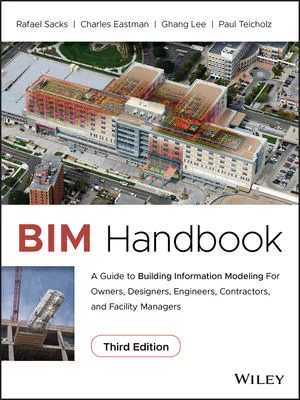
    BIM Handbook: A Guide to Building Information Modeling for Owners, Designers, Engineers, Contractors, and Facility Managers, 3rd Edition

  • interior design.jpg

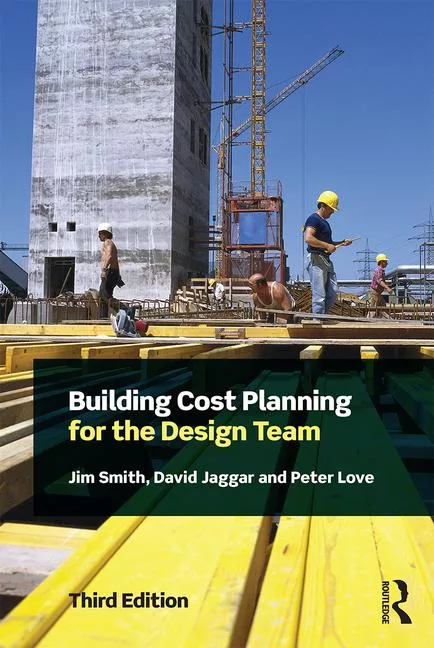
    Building Cost Planning for the Design Team

See More Products

Events

View AllSubmit An Event
  • April 30, 2026

    Where Energy Efficiency Meets Life Safety: Polyiso CI and the Critical Role of NFPA 285

    Credits: 1 AIA LU/HSW; 1 IIBEC CEH; 0.1 ICC CEU On-Demand This presentation delivers a comprehensive look at the performance advantages of continuous insulation, with a special focus on polyisocyanurate (polyiso CI) solutions.
  • May 14, 2026

    Parapet Perplexities Solved

    Credit: 1 AIA LU/HSW pending approval; 1 IIBEC CEH; 0.1 ICC CEUOn-Demand The course provides guidelines to follow when designing, specifying and constructing these details to ensure design and code requirements are met while ensuring the long-term performance of the building enclosure.
View AllSubmit An Event
×

Enhance your expertise with unparalleled insights.

Join thousands of building professionals today. Shouldn’t you know what they know?

SUBSCRIBE TODAY!
  • RESOURCES
    • Advertise
    • Contact Us
    • Store
    • Want More
  • SIGN UP TODAY
    • Create Account
    • Newsletter
    • Customer Service
    • Manage Preferences
  • SERVICES
    • Marketing Services
    • Reprints
    • Market Research
    • List Rental
    • Survey/Respondent Access
  • STAY CONNECTED
    • LinkedIn
    • Facebook
    • Instagram
    • YouTube
    • X
  • PRIVACY
    • PRIVACY POLICY
    • TERMS & CONDITIONS
    • DO NOT SELL MY PERSONAL INFORMATION
    • PRIVACY REQUEST
    • ACCESSIBILITY

Copyright ©2026. All Rights Reserved BNP Media, Inc. and BNP Media II, LLC.

Design, CMS, Hosting & Web Development :: ePublishing