Spray Foam Insulation in Action
Spray foam insulation emerges as the ideal material for achieving ambitious performance and efficiency goals
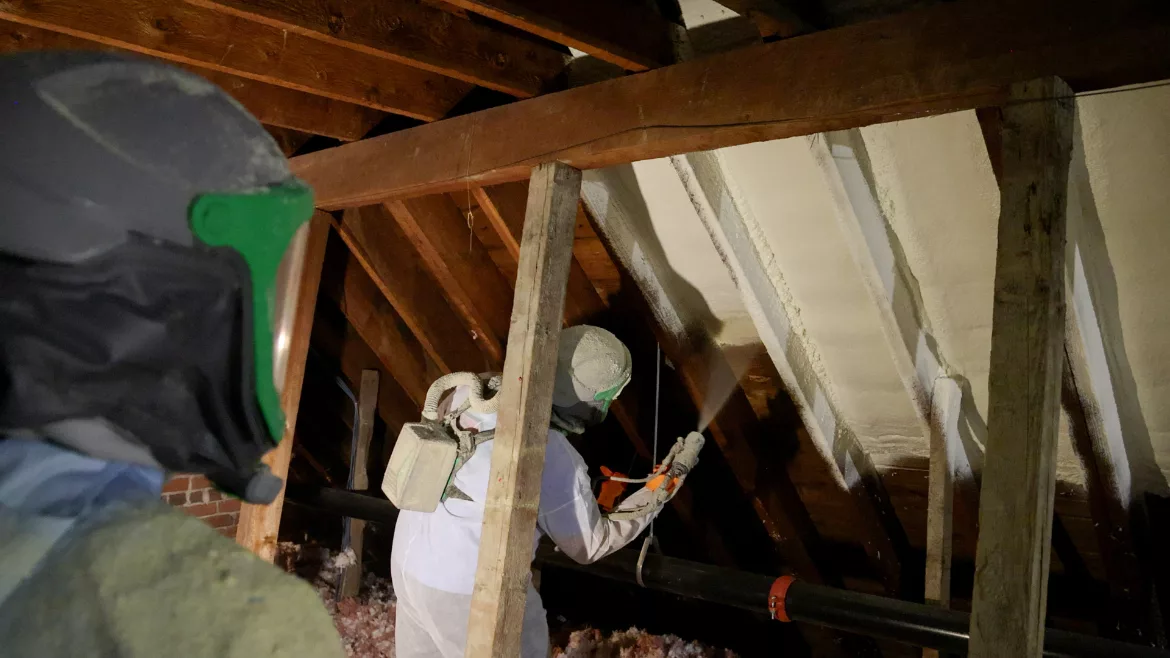
All photos courtesy of Enverge
As the demand for high-performance buildings grows across commercial, institutional, and residential sectors, developers across the U.S. are turning to advanced insulation strategies to meet evolving energy goals. Two recent New England projects – Smith College in Northampton, Massachusetts, and Artemis Living in Littleton, New Hampshire – offer a window into how spray polyurethane foam (SPF) is being applied for operational efficiency, long-term resilience, and occupant wellness.
Though each facility serves a distinct purpose, both relied on similar envelope design strategies including air sealing, continuous insulation, and thoughtful material selection across the walls, roofs, and foundations. In both cases, spray foam insulation emerged as the ideal material for achieving ambitious performance and efficiency goals.
Smith College: Integrating Envelope Upgrades into Campus Decarbonization
In Northampton, Massachusetts, Smith College is progressing through a campus-wide Geothermal Energy Project aimed at reducing emissions and improving long-term energy performance. As part of this multi-phase initiative, buildings undergoing renovation or repurposing are receiving comprehensive envelope upgrades, including spray foam insulation.
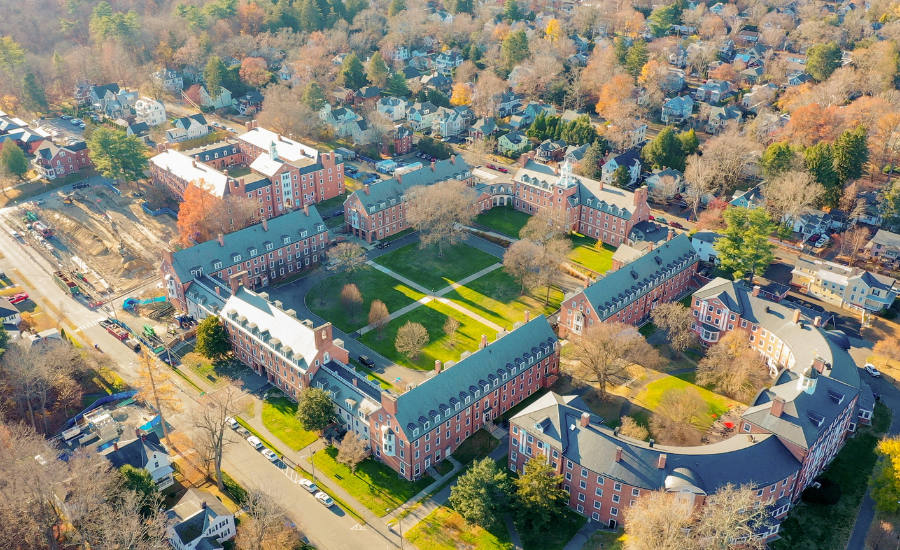
The college’s decision to use spray foam reflects broader decarbonization goals. SPF’s ability to create a continuous air and thermal barrier allows for better control over heating and cooling loads, a critical factor in the success of a geothermal system that depends on tight building shells to reduce demand on mechanical systems. In addition to reducing energy waste, a tighter envelope also improves interior comfort and indoor air quality.
The crews from Cozy Home Performance, a licensed Enverge insulator, were challenged by a mix of historic and contemporary structures with varying conditions. In several buildings, they encountered aging materials, irregular framing, and limited access to critical cavities. Spray foam was selected for its ability to conform to uneven surfaces, self-adhering to substrates and forming a seamless layer that seals gaps and air leaks.
For this portion of the project, Cozy Home Performance applied Enverge OnePass closed cell spray in walls to maximize thermal resistance and structural stability, while open-cell foam was used to fill deep roof cavities and provide effective sound attenuation. This hybrid approach, pairing high R-value materials in mission-critical areas with more expansive, cost-effective foam in larger cavities, balanced performance with practicality.
The insulation team also had to account for safe handling near sensitive mechanical equipment and ductwork, ensuring all thermal barriers met both project specifications and health and safety guidelines for future occupancy.
Artemis Living: Designing for Comfort and Control in Senior Communities
Roughly two hours north, Artemis Living in Littleton, New Hampshire, is setting a design standard for facilities occupied by aging populations. As a “longevity community,” Artemis is focused on holistic wellness, a mission that demands high indoor air quality, thermal consistency, and acoustical control, particularly across assisted living and memory care units.
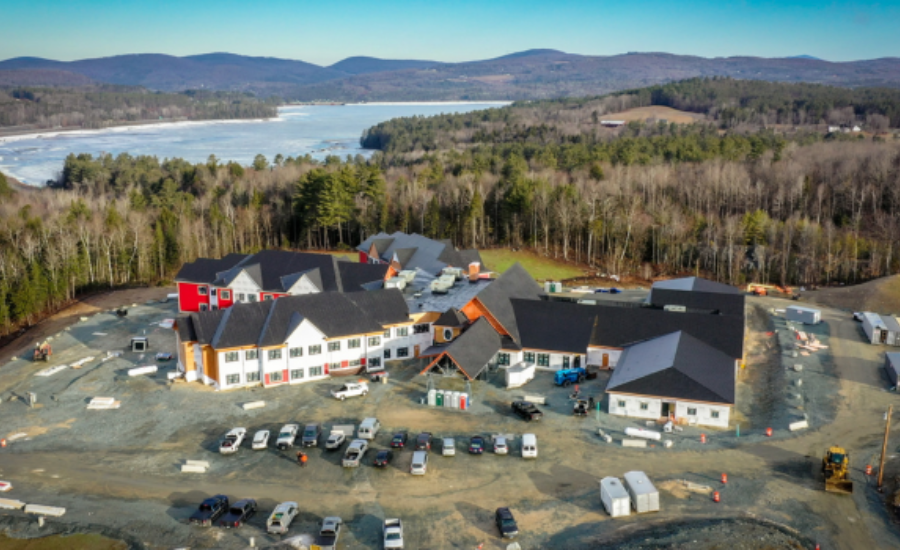
The first phase, opening in Spring 2026, includes senior housing and community spaces designed around performance metrics that exceed code minimums. Insulation decisions were guided by goals for air tightness, thermal control, moisture management, and operational cost efficiency.
Blue Lodge Insulation, a licensed Enverge insulator, used a hybrid spray foam system to meet these needs. Below the slab, two inches of Enverge One Pass closed-cell spray foam were used to create a continuous thermal break, helping prevent heat loss to the ground. The foam also acts as a barrier against ground moisture and soil gases while maintaining its shape under load-bearing conditions.
Three inches of Enverge One Pass were applied to exterior walls to create a rigid air barrier that also offers moisture resistance. In addition to boosting thermal performance, this application contributed to the structural rigidity of the wall assembly, particularly important in a region that experiences significant freeze-thaw cycles.
In the roof deck, fourteen inches of Enverge EasySeal open-cell spray foam were applied to fill deep cavities in a single continuous pass. This provided an R-value exceeding 50, while also delivering sound attenuation benefits. The open-cell formulation expands to fill irregular cavities and tight spaces, eliminating voids that might otherwise compromise air control or acoustical integrity.
One of the key lessons from Artemis is how material selection supports performance not just in isolation, but across the whole building system. Air sealing the roofline, for instance, helps reduce stack effect and prevent unconditioned air from entering or exiting at key pressure boundaries. This detail matters for energy efficiency and resident comfort alike.
Blue Lodge Insulation is a regional contractor with experience in spray foam application across senior living and medical environments. This level of specialization proved essential for tailoring insulation approaches to different areas of the building without sacrificing cohesion or continuity across systems.
Project leaders have committed to using spray foam in future phases, including a 57,000-square-foot medical facility, a daycare center, and over 20 new residential buildings. These expansions demonstrate the long-term confidence in SPF as a strategy not just for performance, but for delivering healthier environments across multiple building types.
Regional Themes and Shared Takeaways
While Smith College and Artemis Living represent very different facility types, both projects demonstrate the increasing value placed on building envelope performance as a means of achieving sustainability, resiliency, and health-related outcomes. Spray foam insulation plays a supporting but essential role in that effort.
In the context of rising energy costs, aging infrastructure, and more frequent climate-related events, building owners and developers are rethinking how insulation decisions affect not just initial performance but also long-term return on investment and operational reliability. As energy codes evolve and programs like LEED and state-based incentives push for tighter and better-performing envelopes, strategies like hybrid spray foam systems, applied thoughtfully, emerge as ideal solutions.
For large-scale facilities, the ability to reduce mechanical loads through better air sealing means that future system upgrades such as geothermal or VRF can be scaled appropriately, minimizing overinvestment in oversized HVAC.
Both projects also highlight the importance of collaboration between insulation contractors, project managers, and material manufacturers, not simply in product selection, but in sequencing, system compatibility, and meeting long-term performance goals.
Looking for a reprint of this article?
From high-res PDFs to custom plaques, order your copy today!
.webp?height=740&t=1767036885&width=auto "Header - BE 1170x658 (002).png")

.webp?height=740&t=1755781744&width=auto "KEE(2).png")

.webp?height=200&t=1741113237&width=200 "Sto(4).png")


