Trade War Fallout: Delaying Projects and Cutting Crews
A new survey by Plant-Tours offers a bleak outlook for 2025 with recession worries looking on the horizon
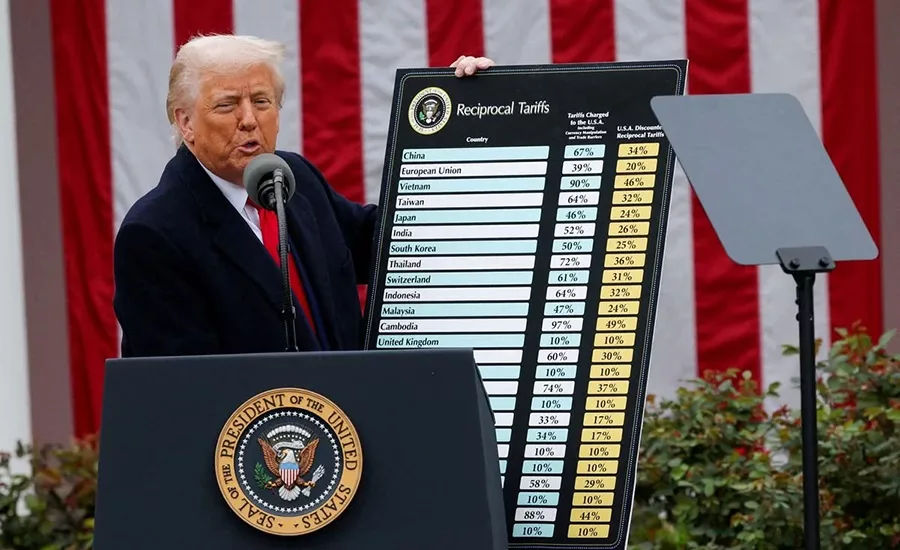
“Our data reveals how tariffs are really playing out on the ground across U.S. manufacturing, construction, transportation, and warehousing in 2025,” writes Rick Farrell, president of Plant-Tours. “These aren’t economists or lobbyists — this is the front line: plant managers, logistics leads, and business owners navigating price hikes, project delays, and workforce strain.”
— Image courtesy of Reddit
A new survey of industrial professionals highlights the significant impact of President Trump’s tariffs and immigration policies on the building envelope and related manufacturing.
Conducted by Plant-Tours, a communications equipment manufacturer, the survey's findings, published earlier this month, offer the clearest picture yet of the effects that the tariffs are having on businesses throughout the building envelope.
This includes reduced profit margins, delayed projects, and workforce cuts in construction — effects particularly felt by roofing and exterior contractors amid tight labor markets and rising material costs.
Industry data show that tariffs on steel, aluminum and lumber have driven up input prices by double-digit percentages, delayed deliveries on job sites, and added roughly $9,000 – $10,000 to the cost of a typical single-family home.
At the same time, stricter immigration enforcement has reduced the pool of experienced installers — nearly one-quarter of construction workers are foreign-born, which puts further upward pressure on wages and project timelines.
Survey Findings: Tariff Effects on Construction and Roofing
Plant-Tours’ April 2025 survey of 500 managers and executives in manufacturing, construction and related sectors found that 59% of construction professionals cited product-cost increases as the top unexpected impact of tariffs, while 52% have delayed or canceled projects due to pricing uncertainty.
Among all respondents, 75% stated that they passed tariff-driven cost increases directly to customers, 45.2% by raising prices, and another 41% by temporarily absorbing the costs, leading to strained client relationships and customer loss in 16% of the responding construction firms.
Nearly half (45%) of companies reported workforce reductions of 5–10% tied to tariff pressures, which cut into labor capacity as many contractors struggle to fill their crews.
“We’ve had to renegotiate contracts mid-project,” one construction professional in the Southern U.S. told the survey team. “Steel prices alone blew our estimates out of the water.”
* * *
The five key takeaways the authors cite from the survey include:
- Less than 10% of companies have reshored production despite tariff incentives
- 55% of manufacturing professionals say tariffs have reduced their profit margins by 10–15%
- 75% of industrial businesses are passing tariff-related cost increases directly to consumers
- 45% of companies have reduced their workforce due to tariff-related cost pressures
- Nearly 60% of respondents believe the media misses the mark about the impact of tariffs
* * *
RELATED
ABC Analysis: Tariffs Drive Surge in March Construction Prices
Material-Specific Impacts on Roofing Inputs
Steel Tariffs
In March 2025, Trump restored 25% tariffs on steel imports from all countries, including Canada and Mexico, up from the prior 10% rate. Analysts at Rystad Energy estimate that these levies will push hot-rolled coil (HRC) prices to about $890 per short ton in 2025 — a roughly 15% jump year-on-year — while oil country tubular goods (OCTG) costs may surge by 15% as well.
Roofing contractors using metal panels and fasteners now face significantly higher input costs, compounding a 46% material-cost increase since 2020, as documented by the National Roofing Contractors Association.
Aluminum Tariffs
U.S. Midwest duty-paid aluminum premiums have increased by nearly 60% since early 2025, reaching more than 40 cents per pound (nearly $900 per metric ton) as 25% tariffs on Canadian aluminum took effect, according to a Reuters report.
The strain is felt in metal-roof repair and installation, where aluminum gutters, flashing, and specialty trim incur new markups that many contractors reluctantly pass on to property owners.
Lumber Tariffs
Softwood lumber from Canada has faced combined duties reaching nearly 40% — including an existing 14.54% levy plus Trump’s new 25% surcharge — though some USMCA-compliant shipments saw a brief pause through April 2.
The National Association of Home Builders estimates that tariffs on Canadian lumber and other imported goods have increased the cost of building a single-family home by roughly $9,200.
For roofing contractors reliant on plywood, engineered wood and wood-shake shingles, these levies translate directly into thinner margins or higher bids for homeowners.
Broader Economic Context
The Federal Reserve’s April Beige Book reports widespread uncertainty in construction, citing cost-driven slowdowns and delayed investments as firms grapple with erratic tariff policy.
In March, the NAHB/Wells Fargo Housing Market Index fell to a seven-month low of 39, with builders explicitly pointing to tariffs on steel, aluminum and lumber as key drivers of rising per-home costs—estimated at $9,200 each — and dampened buyer traffic.
Despite these headwinds, inflation (38%) and labor shortages (16.4%) often outrank tariffs (18.6%) as top business concerns in Plant-Tours’ survey, reflecting overlapping pressures on the industry.
Immigration Policy and Labor Shortages
Stricter immigration enforcement under the Trump administration has thinned the pool of construction labor — foreign-born workers account for about 26% of the sector, with an estimated 13% undocumented, as Axios first reported.
The Urban Institute and Associated Builders and Contractors report that the industry will need to add approximately 454,000 new workers in 2025 to keep pace with demand.
Yet, tighter border controls and deportations have wiped out as much as 20% of some firms’ crews overnight, according to reporting by Commercial Observer, a trade publication.
“Stricter immigration policies may worsen labor shortages in construction,” warned the Florida Building Material Association, noting that migrants have traditionally filled many entry-level roofing positions.
Impacts on Forecasts
Since the rollout and subsequent retraction of the White House’s Liberation Day tariffs earlier this month, long-term forecasts for the U.S. roofing sector have remained unchanged. Still, early warning signs suggest they may be revised downward when subsequent reports are released.
IBISWorld’s April 2025 update still pegs roofing-contractor revenue at $76.4 billion with just 0.8% growth in 2025, and Mordor Intelligence’s 6.17% five-year CAGR through 2030 is intact.
However, contractor sentiment, housing starts and builder confidence have all weakened in direct response to the new levies, implying that future outlooks could be tempered once these impacts are fully incorporated.
Roofing firms report that unpredictable material pricing has led to 52% of them delaying or canceling jobs, mirroring broader construction trends. According to Plant-Tours, projects require an extra week for cost reevaluation and supplier negotiations.
With labor being tight and material costs volatile, profit margins on reroofing and new-build roofing projects are being squeezed, forcing some contractors to pass on surcharges or risk undertaking unprofitable work.
The Associated Builders and Contractors Construction Confidence Index showed profit-margin expectations falling from 54.8 in February to 52.7 in March, despite remaining above the 50-break-even line.
Among firms surveyed after the April 2 tariffs, fewer than 26% expected margins to expand over the next six months, while over 40% foresaw contractions — a clear signal of growing caution.
The NAHB/Wells Fargo Housing Market Index dropped to 42 in February — a five-month low — citing tariff-driven cost hikes as a key drag on builder optimism and buyer traffic.
U.S. single-family housing starts fell 14.2% in March to a seasonally adjusted annual rate of 940,000 units, the lowest since July 2024.
The Commerce Department directly linked the drop to higher material costs from import tariffs, estimating an average increase of $10,900 per home.
Quick Read: 5 Takeaways
- Tariffs Drive Up Costs: Trump’s 2025 tariffs on steel, aluminum, and lumber have raised material costs by double digits, adding an average of $9,200–$10,900 to each single-family home.
- Projects Delayed or Canceled: Over half (52%) of construction firms have postponed or dropped projects due to pricing uncertainty and supply chain disruptions linked to the tariffs.
- Profit Margins Squeezed: Roofing contractors report tighter margins, with 45% of companies reducing their workforce by 5–10% and only 26% expecting margin expansion over the next six months.
- Labor Shortages Worsen: Stricter immigration policies have reduced the construction labor pool, with some firms losing up to 20% of their crews, compounding project delays and wage pressures.
- Market Outlook Dimming: Despite unchanged long-term forecasts, real-time indicators such as builder confidence, housing starts, and contractor sentiment have declined, signaling a possible sector contraction by Q3 2025.
Looking for a reprint of this article?
From high-res PDFs to custom plaques, order your copy today!
.webp?height=740&t=1767036885&width=auto "Header - BE 1170x658 (002).png")

.webp?height=740&t=1755781744&width=auto "KEE(2).png")
.webp?height=200&t=1747405760&width=200 "ACA(1).png")