Building Enclosure logo
search
cart
facebook twitter linkedin youtube instagram Spotify Podcasts Apple Podcasts Spotify Podcasts Apple Podcasts
  • Sign In
  • Create Account
  • Sign Out
  • My Account
Building Enclosure logo
  • NEWS
    • Breaking News
  • SECTIONS
    • Columns
    • Project Profiles
    • Trade Shows
    • Sponsor Insights
  • SYSTEM DESIGNS
    • Low-Slope Roofs
    • Pitched Roofs
    • Metal Roofing Materials
    • Waterproofing
    • Sustainability
    • Insulation
    • Exterior Claddings
    • Wall Systems
    • Building Envelope
  • BLOG
    • The BE Blog
  • MEDIA
    • Podcasts
    • Webinars
    • Quiz
    • Videos
    • Polls
    • Interactive Spotlights
    • Newsletter
    • Photo Galleries
  • DIRECTORIES
    • Directory: Blue Book
    • Directory: Roofing Resource
  • PRODUCTS
  • TECHNICAL
    • Codes
      • Waterproofing
      • Roofing
    • Details
      • Waterproofing
      • Roofing
  • CONTINUING ED
  • ABOUT
    • Advertise
      • Editorial Calendar
    • Contact
    • eMag Archive Issues
  • SIGN UP!
Breaking NewsTrade Shows

METALCON Presentations Focus on "Building Performance"
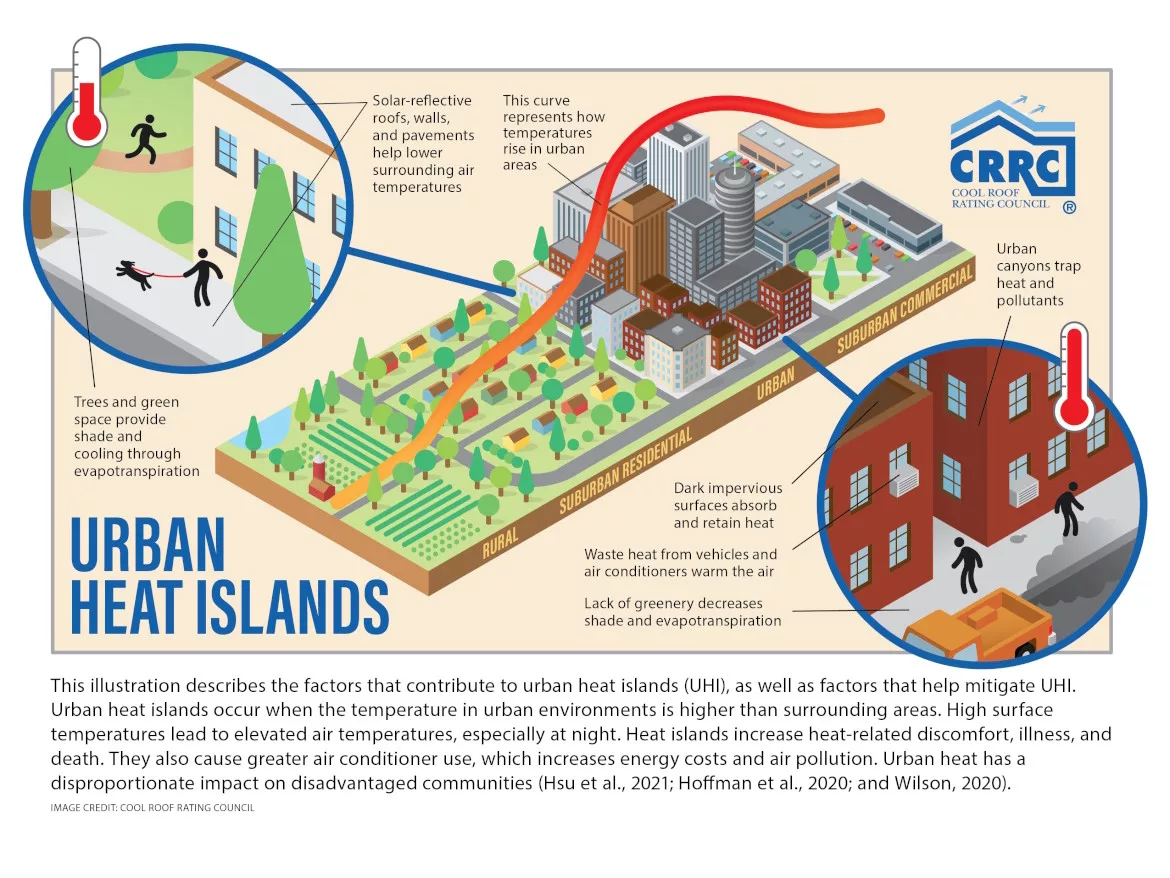
CRRC_UHI illo FINAL.jpg
June 5, 2024

For any construction project, the goal has always been using top quality building materials for the best price. It’s all about “building performance.”

“Providing education on building performance at METALCON is essential,” says Judy Geller, Vice President, METALCON. “It will help building and design professionals address performance challenges, mitigate risks and enhance resilience leading to cost savings over the lifespan of the building. Standards and codes specific to the building site provide a helpful path to improving building performance. Understanding the performance capabilities of products used in construction will certainly help building and design professionals erect higher-performing buildings.” 

Several upcoming METALCON presentations look at building performance, aimed at educating builders, roofers and architects on making the best decisions for their customers. METALCON is scheduled for October 30 through November 1 at the Georgia World Congress Center in Atlanta.

“Designing for building performance is fundamental as the building industry strives to improve energy efficiency and decrease greenhouse gas emissions originating from the built environment,” says Audrey McGarrell, Project Manager for the Cool Roof Rating Council. “Understandably, most conversations around building performance focus on systems within the building itself, but cool roofs and walls offer an opportunity to think about how the building impacts its surroundings, too. While cool surfaces help decrease cooling energy use and resulting greenhouse gas emissions, they also help mitigate the urban heat island effect in the larger community, a growing concern as cities across the U.S. get hotter.”

McGarrell’s presentation, Advancements in Cool Roof and Wall Evaluation and Compliance, is scheduled for 10:15 a.m., Oct. 31 in the Building Performance Learning Center on the METALCON show floor.

“Cool surfaces are low hanging fruit when it comes to improving energy efficiency in many climates and improving resilience to extreme heat across the entire country,” she says. “With heat waves growing longer, more frequent and more intense with each year, it’s important to consider every tool that’s available to keep buildings and their surroundings cooler. Comparing the solar reflectance and thermal emittance of different product options is easy with the CRRC’s free, publicly available Rated Products Directories.” 

Alan Scott, Director of Sustainability Building Science Solutions Building & Construction at Intertek, is presenting, Resilient Buildings: Disaster is a Hazard You Didn’t Pay For, at 10:15 a.m., Oct. 30 at the Building Performance Learning Center.

“Broadly, building performance refers to how efficiently, and most importantly, effectively a building serves its purpose and meets standards,” Scott says. “This includes reduced energy and water use, limiting greenhouse gas emissions, durability, longevity and reduced maintenance, support for human health, wellbeing and productivity (cognitive performance) and its ability to resist and recover from hazard events.”

Scott says building professionals and architects need to identify and consider current and emerging hazard risks and vulnerabilities for the building location and consider appropriate design, specification and construction options to go beyond code minimums and industry standards to create resilience and mitigate hazard vulnerabilities.

“This could mean big design moves like the location and elevation of the building site to reduce flood risks or small installation decisions like reducing the spacing of roofing and flashing fasteners in roof areas subject to the highest wind forces,” Scott says. “Minimizing hazard risk starts with hazard and vulnerability assessment, which consider natural hazards like flooding, high winds, earthquakes, tsunamis and wildfire, as well as future hazards due to climate change, such as sea level rise, extreme heat, drought and extreme rainfall.”

Bill Beals, District Manager for Therm-All, will be presenting IECC 2021 / ASHRAE 90.1-2019 Building Envelope Requirements at METALCON, taking a look at the major governing councils that mandate today’s energy codes and by differentiating various metal building insulation systems that satisfy the building requirements.

“Building performance is a compliance path to the energy codes that use modeling to determine energy usage,” Beals says. “This is compared to the standard baseline of energy usage set by the ASHRAE 90.1 Standard and or International Energy Conservation Code (IECC). This path permits a tradeoff between higher performing areas of the envelope, lighting and mechanicals, to lesser performing areas. In other words, the building performance method allows the higher performing areas to ‘pick up the slack’ for the lesser performing areas of the entire building.”

Beals says the simple version uses COMcheckTM as a tool for the building envelope, lighting and mechanical systems. The more complex version of Total Building Performance uses various computer software tools and includes the entire building. It takes into account building usage as well.

“Overall, the biggest improvements in energy efficiency and building performance stem from the building envelope,” Beals says. “Lighting and mechanicals have had an impact as well, but the increase in insulation requirements has made the most substantial contribution to building performance. Combined with the progression of air barrier requirements in each energy code cycle, the building envelope leads the charge in greatest energy savings in the overall performance of buildings.”

Energy code requirements have driven innovation, according to Beals, and through this, many proprietary systems have been introduced to the market. Each three-year energy code cycle has increased energy efficiency over previous versions from 2 to 10 percent overall. Obviously, it’s important to do your best to stay up to date.

KEYWORDS: construction metal presentations resiliency

Share This Story

Looking for a reprint of this article?
From high-res PDFs to custom plaques, order your copy today!


Recommended Content

JOIN TODAY
to unlock your recommendations.

Already have an account? Sign In

  • bar graph shows LEED v4/LEED v5/LEED v6 in various colors

    When Will LEED v4 / v4.1 and LEED v5 Expire?

    The latest version of the LEED rating system, LEED v5, is...
    Sustainability
    By: Daniel Overbey
  • Celebrating Women In AEC-2026

    Celebrating Women in The AEC Industry Part 1

    A round-up of women in the design, engineering and...
    Sustainability
    By: Lindsay Lewis
  • KEE membrane application on a roof

    A Beginner’s Guide to Single-Ply Roofing Membranes

    While PVC and TPO appear extremely similar, the chemistry...
    Low-Slope Roofs
    By: Peter Gross
Manage My Account
  • Sign up for the Newsletter
  • Online Registration
  • Manage My Preferences
  • Registration Customer Service

More Videos

Sponsored Content

Sponsored Content is a special paid section where industry companies provide high quality, objective, non-commercial content around topics of interest to the Building Enclosure audience. All Sponsored Content is supplied by the advertising company and any opinions expressed in this article are those of the author and not necessarily reflect the views of Building Enclosure or its parent company, BNP Media. Interested in participating in our Sponsored Content section? Contact your local rep!

close
  • 2 construction workers and a DEXcell panel
    Sponsored byDEXcell Roof Boards

    Designing Low-Slope Roofs for Resilience

  • Bell Bank headquarters in Fargo, North Dakota
    Sponsored bySto Corp.

    Drained and Back-Ventilated Rainscreens vs Pressurized-Equalized Rainscreens

  • A construction worker using DEXcell roof boards
    Sponsored byDEXcell Roof Boards

    The Hidden Strength of Low-Slope Roof Systems: Why Roof Cover Boards Matter

Popular Stories

construction industry workers in hard hats stand around a city scape

Construction Industry Revolts Over New CSI Licensing Plan

a man wearing a mask installs insulation into a wall system

Quiet Rooms and Healthier Air: A Second Look at What Goes Inside the Wall Cavity

Canalino Elementary School and Canalino Family School exterior

Daylighting Design to Support Rapidly Growing Trend in Modular Building Construction

Building Enclosure Newsletter

BE Poll

Events

June 17, 2025

Addressing Condensation in Low-Slope Roof Assemblies

Credits: 1 AIA LU/HSW; 0.1 ICC CEU; 1 IIBEC CEH; 0.1 IACET CEU

On Demand In modern roofing systems, vapor retarders and air barriers do more than just minimize air leakage—they’re essential to maximizing performance and longevity. This engaging course dives into the next generation of moisture control: permeable vapor retarders and air barriers. Discover how these cutting-edge technologies are transforming low-slope roofing assemblies by improving energy efficiency, managing moisture, and boosting wind uplift resistance.

April 9, 2026

Strategies for High-Performance Below-Grade Waterproofing

Credits: 1 AIA LU/HSW ; 1 IIBEC CEH; 0.1 IACET CEU

On-Demand Designing a high-performance building enclosure requires more than just surface-level protection; it demands a rigorous, performance-based mastery of below-grade water and gas mitigation. This discussion will provide an expert-level analysis of below-grade waterproofing within the comprehensive framework of the high-performance building enclosure.

View All Submit An Event

Products

Plaster and Drywall Assemblies Manual

Plaster and Drywall Assemblies Manual

This is a comprehensive manual that goes beyond codes and standards, providing expert guidance in design, detailing, material selection and troubleshooting for plaster and drywall.

See More Products

Related Articles

  • Firestone Building Products Announce Promotions to Focus on Building Envelope

    See More
  • 4.jpg

    Building Safety Month Continues with Focus on Careers in Building Safety

    See More
  • A test demonstrating the wrap’s ability to withstand moisture intrusion after surfactant exposure.

    Surfactants and Their Impact on Building Wrap Performance

    See More

Related Products

See More Products
  • studentguidebook.jpg

    Integrating Building Performance with Design: An Architecture Student’s Guidebook

  • 1118458605.jpg

    Sustainable Facades: Design Methods for High-Performance Building Envelopes

  • building codes illustated.jpg

    Building Codes Illustrated: A Guide to Understanding the 2021 International Building Code, 7th Edition

See More Products

Events

View AllSubmit An Event
  • May 13, 2025

    Unlock Enhanced Building Performance: Improved Durability and Efficiency Using Air Barriers and Vapor Retarders

    Credits: 1 AIA LU/HSW; 0.1 ICC CEU; 1 IIBEC CEH; 0.1 IACET CEUOn-Demand This presentation will uncover the differences between air barriers and vapor retarders and the benefits of each to improving the durability and efficiency of your building enclosure. Additionally, it will discuss critical installation details as it relates to the roof and roof/wall interface. 
View AllSubmit An Event
×

Enhance your expertise with unparalleled insights.

Join thousands of building professionals today. Shouldn’t you know what they know?

SUBSCRIBE TODAY!
  • RESOURCES
    • Advertise
    • Contact Us
    • Store
    • Want More
  • SIGN UP TODAY
    • Create Account
    • Newsletter
    • Customer Service
    • Manage Preferences
  • SERVICES
    • Marketing Services
    • Reprints
    • Market Research
    • List Rental
    • Survey/Respondent Access
  • STAY CONNECTED
    • LinkedIn
    • Facebook
    • Instagram
    • YouTube
    • X
  • PRIVACY
    • PRIVACY POLICY
    • TERMS & CONDITIONS
    • DO NOT SELL MY PERSONAL INFORMATION
    • PRIVACY REQUEST
    • ACCESSIBILITY

Copyright ©2026. All Rights Reserved BNP Media, Inc. and BNP Media II, LLC.

Design, CMS, Hosting & Web Development :: ePublishing