Sponsored by Owens Corning
Cellular Glass Insulation: Making the Grade in Mission Critical Buildings
Pop quiz: Which of the following commercial structures represents a “mission critical” building?
- A data center housing immense servers requiring extensive cooling systems
- A European museum housing ancient artifacts dating back to the Bronze Age
- A water treatment plant processing a billion gallons of water each day
- A paper mill housing one of the world’s largest newsprint machines
- All the above
Kudos if you selected answer “e.” When it comes to specifying building materials for the commercial roof, mission critical facilities present some unique challenges. Yet while the term “mission critical” is often thought of in terms of data center facilities, the phrase applies to a much broader range of structures.
Although mission critical buildings represent a swath of structures, house various contents and carry out different processes, they all demand critical performance attributes when it comes to materials installed in a crucial part of the structure—the roof. As a first line of defense from the elements, the commercial roof demands impermeability, dimensional stability, redundancy and compressive strength. In the U.S. and around the globe, cellular glass insulation is trusted by specifiers to deliver on these performance criteria. Below, we consider how cellular glass insulation makes the grade in some high-profile mission critical buildings.
Mission Critical Roof Consideration 1: Redundancy
Redundant systems provide a back-up level of protection against failure. In mission critical buildings, the financial consequences of failure can be extreme. And when it comes to precious contents housed in museums, archives and libraries losses may be irreplaceable. A 2013 report published by the Ponemon Institute places the average cost of a data center outage at $690,204 per incident.1 However, a lightning strike on the Moody Music Building at the University of Alabama, ignited the roof insulation and the resulting fire lasted more than 12 hours and required over 1 million gallons of water to extinguish. The building required a complete renovation with no back-up in the interim.
Redundancy is especially important for commercial roofs where any penetration in the membrane could allow water or vapor to infiltrate. Fire and rain are naturally occurring events that threaten roofs, but so is the invisible passage of time. Over the years, time will eventually stress a roofing membrane. Cellular glass insulation provides a redundant level of protection. Even if a rupture in the membrane occurs, the impermeable nature of cellular glass insulation provides a barrier that keeps water from penetrating. And because cellular glass delivers a high level of dimensional stability, it is not prone to shift over time.
Performance in action: Redundancy on the lakefront
The James W. Jardine Water Filtration Plant located on Chicago’s waterfront supplies the water needs of Chicago and its suburbs. When the building was originally constructed more than a half-century ago, Owens Corning® FOAMGLAS® cellular glass rigid foam insulation was installed in the roof. The roof withstood the elements for decades, but, eventually, the roofing membrane had to be replaced. The design team discovered that the roof’s cellular glass insulation layer had not deformed or deflected and maintained thermal performance even decades after its installation.
Mission Critical Roof Consideration 2: Compressive Strength and Dimensional Stability
Across the Atlantic, cellular glass has long been trusted in European buildings ranging from museums to industrial operations for its high compressive strength. The lowest compressive strength of cellular glass insulation is in the range of 50-70 PSI; however, the compressive strength can go much higher. The glass composition of cellular glass supports its dimensional stability and provides a low coefficient of thermal expansion, comparable to concrete and steel. Such stability means there is no warping, dishing or shrinking of the insulation, even as temperatures fluctuate over seasons. Cellular glass also provides a stable foundation for the roofing membrane, minimizing the stress arising from constant stretching that can allow a membrane to deteriorate over time.
Performance in action: Compressive strength in an industrial application
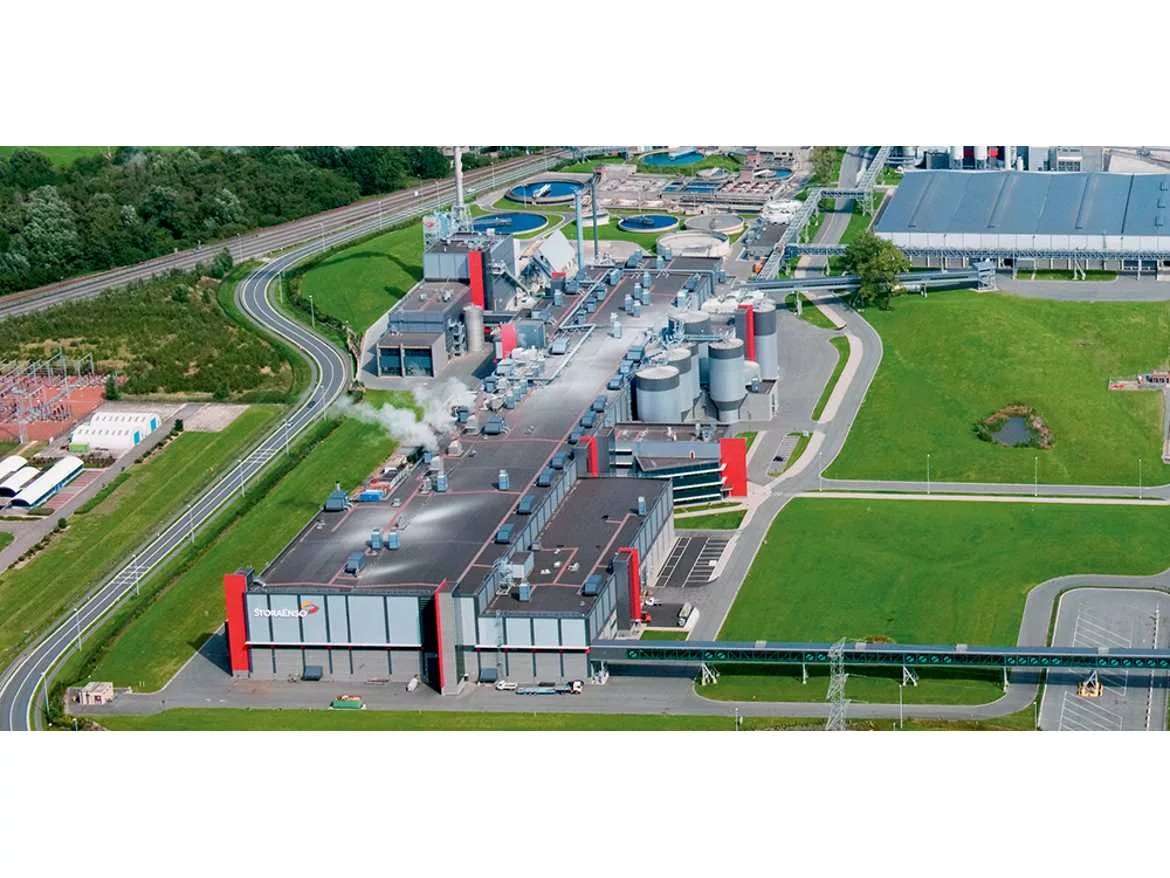
The Stora Enso facility in northwestern Belgium is one of Europe’s largest paper mills and includes Owens Corning® FOAMGLAS® insulation in its roof. While the insulation’s impermeability guards against vapor and water infiltration, it also delivers outstanding compressive strength. The roof is home to heavy mechanical and electrical equipment that demands extreme load-bearing capacity atop the 22,000 m2 (236,806 ft2) area of flat roof And as Stora Enso has been recognized as a leader for its sustainability initiatives, the composition of Owens Corning® FOAMGLAS® complements the building’s sustainability efforts.
A Critical Consideration for All Buildings: Ease of Handling
While mission critical buildings present special considerations, these structures also share challenges with non-mission critical buildings. Particularly in a tight labor market, building materials must be easy to handle on the jobsite. Owens Corning® FOAMGLAS® cellular glass insulation is rigid, easy to cut and can be tailored to fit multiple shapes. For example, a dome sitting atop the roof of the Qatar National Museum required cellular glass insulation to be precisely cut to accommodate the specific curvature. Workers at the New Acropolis Museum in Athens, Greece also found cellular glass insulation easy to install in the roof’s geometric design.
Across geographies, applications, and missions served, cellular glass insulation provides an impermeable insulating material offering exceptional compressive strength, dimensional stability and ease of use on the jobsite. These attributes allow it to stand up to the performance tests posed by buildings – regardless of their mission.
References
1. Ponemon Institute. (2013) 2013 Cost of Data Center Outages. Traverse City, Michigan: Author.
© 2021 Owens Corning. All Rights Reserved. For more information, visit https://www.owenscorning.com/en-us/insulation/foamglas

Looking for a reprint of this article?
From high-res PDFs to custom plaques, order your copy today!
.webp?height=740&t=1767036885&width=auto "Header - BE 1170x658 (002).png")

.webp?height=740&t=1755781744&width=auto "KEE(2).png")