Building Enclosure logo
search
cart
facebook twitter linkedin youtube instagram Spotify Podcasts Apple Podcasts Spotify Podcasts Apple Podcasts
  • Sign In
  • Create Account
  • Sign Out
  • My Account
Building Enclosure logo
  • NEWS
    • Breaking News
  • SECTIONS
    • Columns
    • Project Profiles
    • Trade Shows
    • Sponsor Insights
  • SYSTEM DESIGNS
    • Low-Slope Roofs
    • Pitched Roofs
    • Metal Roofing Materials
    • Waterproofing
    • Sustainability
    • Insulation
    • Exterior Claddings
    • Wall Systems
    • Building Envelope
  • BLOG
    • The BE Blog
  • MEDIA
    • Podcasts
    • Webinars
    • Quiz
    • Videos
    • Polls
    • Interactive Spotlights
    • Newsletter
    • Photo Galleries
  • DIRECTORIES
    • Directory: Blue Book
    • Directory: Roofing Resource
  • PRODUCTS
  • TECHNICAL
    • Codes
      • Waterproofing
      • Roofing
    • Details
      • Waterproofing
      • Roofing
  • CONTINUING ED
  • ABOUT
    • Advertise
      • Editorial Calendar
    • Contact
    • eMag Archive Issues
  • SIGN UP!
Insulation

Spray Foam's Move Toward Sustainability and Why It Matters
By Doug Kramer
spray foam
spray foam
spray foam
spray foam
spray foam
spray foam
October 15, 2016

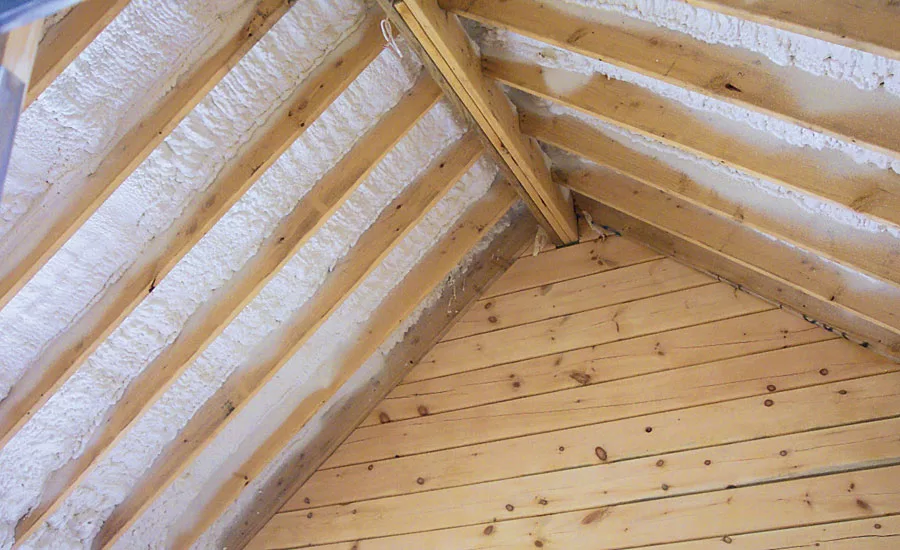
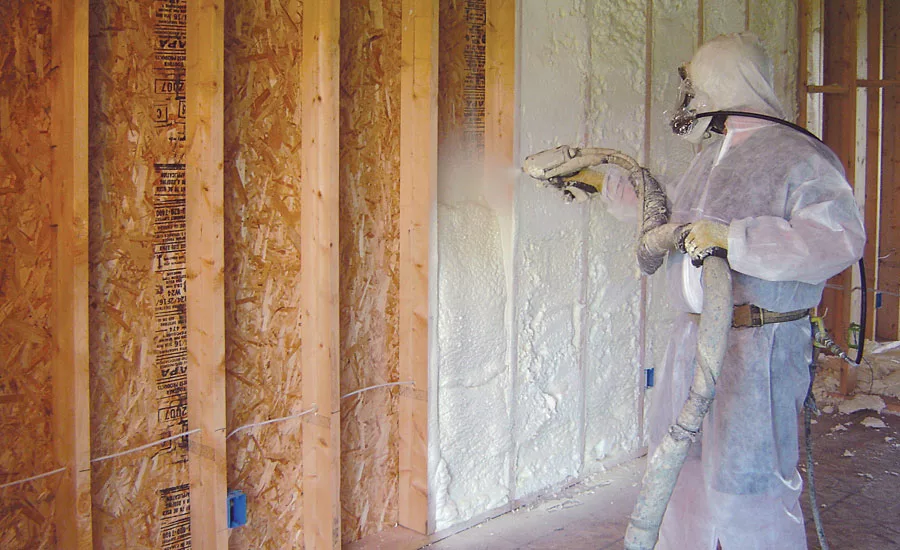
The spray polyurethane foam industry has been making notable strides in sustainability over the past few years. In part, a reflection of a sector growing in market share and sophistication, the industry’s move toward sustainability is also a result of significant, recent innovations in product chemistry. Nevertheless, these recent strides were spurred long before and are, in essence, the latest achievement on a continuum of green efforts that started more than three decades ago.

An International Impetus

In 1987, 20 global economic leading countries got together to raise awareness and create a commitment to the protection of the ozone over growing concerns of its depletion by greenhouse gasses created by vehicle exhaust and other ozone depleting gasses, some natural and some artificially generated. What resulted was an international treaty, structured around the phased elimination of several groups of halogenated hydrocarbons known to deplete stratospheric ozone.

Thought to be a remarkable example of international cooperation and policy making on a global scale, this initiative was eventually ratified by all 20 countries and, in 1989, entered into force as the Montreal Protocol on substances that deplete the ozone layer.

Despite the historical success of the Montreal Protocol, the initiative created hurdles for many industries, requiring a marked shift to more environmentally friendly methods. The treaty essentially mandated guidelines to transition each affected industry to employ a more sustainable technology and ensure a more eco-friendly future. Some of the industries most affected by the treaty, both then and now, include: refrigeration, air conditioning, fire protection, aerospace, electronics, agriculture, laboratory measurements, and foam.

The Impact to Spray Foam

At the time of the official enactment of the Montreal Protocol, the impact to the spray foam industry (much like the air conditioning industry, for example), was significant with a mandate to move toward lower ozone depleting technologies with lower global warming potential. The efforts over the years to achieve this have not been without challenge.

Specifically, chemical providers and manufacturers had to “retool,” finding alternative chemistry formulations and raw materials that achieved the mandated goals, while not compromising the performance value of the spray foam end product. This challenge essentially boiled down to maintaining both performance and cost to retain the class of products’ market potential and ultimate value to the consumer.

As part of the industry’s response to the treaty, it successfully phased out chlorofluorocarbons, and followed that with freezing the consumption and production of hydrochlorofluorocarbons. The industry over time has transitioned from CFCs to HCFCs to HFCs to HFOs, or hydrofluoroolefins, with the latter reflecting the industry’s most significant move yet toward a sustainable chemistry that is non-ozone-depleting and has a low global warming potential.

Where Are We Now?

The spray foam industry made its official move to HFO’s in 2014, with the introduction of a fourth generation blowing agent, HFO-1233zd(E). Honeywell led the industry as the first to commercialize the new blowing agent, which boasts an ultra-low global warming potential value of less than one and zero ozone depletion potential. The first product industry-wide to incorporate the new blowing agent was Lapolla Industries’ high performance FOAM-LOK 2000-4G closed-cell spray foam insulation system.

“The fourth generation blowing agent represents Honeywell’s continued commitment to the delivery of low environmental impact technology that enhances the industry’s ability to deliver effective and safe energy saving spray polyurethane foam products,” says Laura Reinhard, global business manager, Spray Foam for Honeywell. “This blowing agent represents our industry’s greatest achievement to date in meeting the goals set forth by the Montreal Protocol.”

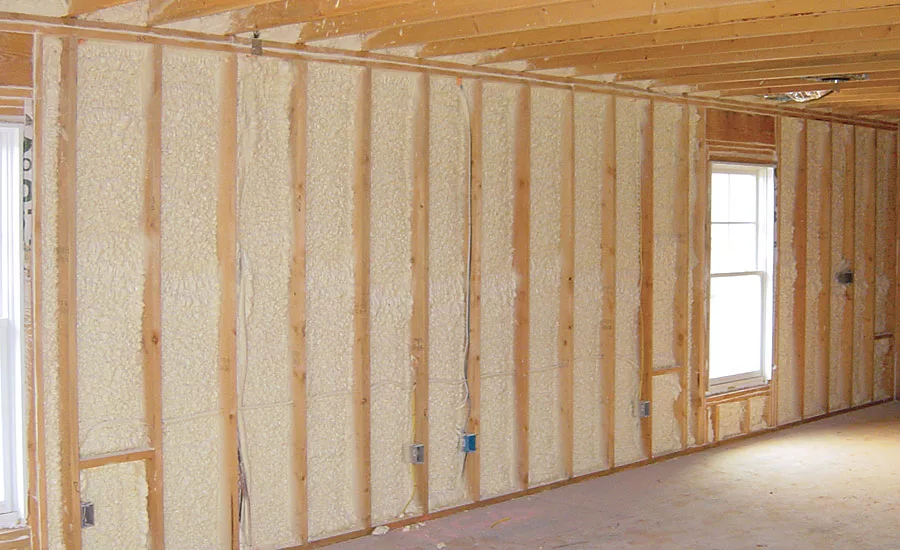
The global requirement brought forth by the Montreal Protocol is now not only achievable but is resulting in better product performance. Spray foam incorporating the new blowing agent technology achieves higher R-values and enhanced consumer value via lower in-place costs. These benefits run alongside the net positive ecological value provided with reduced carbon footprint, low global warming potential  and non-ozone-depleting properties.

Interestingly, sustainability in the spray polyurethane foam market comes in a few different forms. The improved blowing agent technology is significant. The product also achieves an unmatched reduction in the structure’s energy consumption. This energy conservation by dramatically reducing the demand for energy required to heat or cool the building. This reduces the use of fossil fuel for electricity as well as the consumer’s carbon footprint.

The exceptional performance of spray foam in energy efficiency makes it an ideal solution for all construction methods aimed at energy conservation. With zero net energy construction being pushed by the state of California, Texas’ recent move to the International Energy Conservation Code, and many other states and municipalities following suit in the push toward energy conservation in the built environment, spray polyurethane foam is poised as an insulation material of choice.

However, with spray foam as an ideal materials solution for the energy conserving structures that meet increasingly stringent building codes, it is imperative that the industry continues to identify and employ sustainability in the products it creates—much like it has with the adoption of the fourth generation blowing agent. This drive toward sustainability will not only reduce the industry’s impact to the environment, but will ensure that spray foam is included in future environmental certification programs and, ultimately, that the industry continues to grow in market share.

KEYWORDS: energy efficiency spray foam spray polyurethane foam

Share This Story

Looking for a reprint of this article?
From high-res PDFs to custom plaques, order your copy today!


Doug Kramer is president of Icynene-Lapolla, the global manufacturer, supplier and leader in spray polyurethane foam. The company’s products, including those installed in this retrofit project, are recognized for optimizing energy efficiency and performance in the envelope. Kramer may be reached at dkramer@icynene-lapolla.com.

Recommended Content

JOIN TODAY
to unlock your recommendations.

Already have an account? Sign In

  • bar graph shows LEED v4/LEED v5/LEED v6 in various colors

    When Will LEED v4 / v4.1 and LEED v5 Expire?

    The latest version of the LEED rating system, LEED v5, is...
    Sustainability
    By: Daniel Overbey
  • Celebrating Women In AEC-2026

    Celebrating Women in The AEC Industry Part 1

    A round-up of women in the design, engineering and...
    Building Envelope
    By: Lindsay Lewis
  • KEE membrane application on a roof

    A Beginner’s Guide to Single-Ply Roofing Membranes

    While PVC and TPO appear extremely similar, the chemistry...
    Low-Slope Roofs
    By: Peter Gross
Manage My Account
  • Sign up for the Newsletter
  • Online Registration
  • Manage My Preferences
  • Registration Customer Service

More Videos

Sponsored Content

Sponsored Content is a special paid section where industry companies provide high quality, objective, non-commercial content around topics of interest to the Building Enclosure audience. All Sponsored Content is supplied by the advertising company and any opinions expressed in this article are those of the author and not necessarily reflect the views of Building Enclosure or its parent company, BNP Media. Interested in participating in our Sponsored Content section? Contact your local rep!

close
  • 2 construction workers and a DEXcell panel
    Sponsored byDEXcell Roof Boards

    Designing Low-Slope Roofs for Resilience

  • Bell Bank headquarters in Fargo, North Dakota
    Sponsored bySto Corp.

    Drained and Back-Ventilated Rainscreens vs Pressurized-Equalized Rainscreens

  • A construction worker using DEXcell roof boards
    Sponsored byDEXcell Roof Boards

    The Hidden Strength of Low-Slope Roof Systems: Why Roof Cover Boards Matter

Popular Stories

a man wearing a mask installs insulation into a wall system

Quiet Rooms and Healthier Air: A Second Look at What Goes Inside the Wall Cavity

Canalino Elementary School and Canalino Family School exterior

Daylighting Design to Support Rapidly Growing Trend in Modular Building Construction

construction workers on a roof, plane flies in background

Why Specifications Are Becoming the Next Critical Layer of Construction Compliance

Building Enclosure Newsletter

BE Poll

Events

June 17, 2025

Addressing Condensation in Low-Slope Roof Assemblies

Credits: 1 AIA LU/HSW; 0.1 ICC CEU; 1 IIBEC CEH; 0.1 IACET CEU

On Demand In modern roofing systems, vapor retarders and air barriers do more than just minimize air leakage—they’re essential to maximizing performance and longevity. This engaging course dives into the next generation of moisture control: permeable vapor retarders and air barriers. Discover how these cutting-edge technologies are transforming low-slope roofing assemblies by improving energy efficiency, managing moisture, and boosting wind uplift resistance.

April 9, 2026

Strategies for High-Performance Below-Grade Waterproofing

Credits: 1 AIA LU/HSW ; 1 IIBEC CEH; 0.1 IACET CEU

On-Demand Designing a high-performance building enclosure requires more than just surface-level protection; it demands a rigorous, performance-based mastery of below-grade water and gas mitigation. This discussion will provide an expert-level analysis of below-grade waterproofing within the comprehensive framework of the high-performance building enclosure.

View All Submit An Event

Products

Plaster and Drywall Assemblies Manual

Plaster and Drywall Assemblies Manual

This is a comprehensive manual that goes beyond codes and standards, providing expert guidance in design, detailing, material selection and troubleshooting for plaster and drywall.

See More Products

Related Articles

  • Polycon CEO Discusses Spray Foam Innovation

    Doug Kramer: Polycon Expands Spray Foam Solutions

    See More
  • Spray Foam Efficiency

    Spray Foam's Efficiency Solution

    See More
  • Breaking News 4

    Accella Polyurethane Systems’ Spray Foam Now Carlisle Spray Foam Insulation

    See More

Related Products

See More Products
  • smo-blue-expanded-edition-log-book.png

    Log Book - Blue Expanded Edition

  • smo-green-standard-edition-log-book.png

    Log Book - Green Standard Edition

  • 0071489738.jpeg

    Construction Waterproofing Handbook Second Edition

See More Products
×

Enhance your expertise with unparalleled insights.

Join thousands of building professionals today. Shouldn’t you know what they know?

SUBSCRIBE TODAY!
  • RESOURCES
    • Advertise
    • Contact Us
    • Store
    • Want More
  • SIGN UP TODAY
    • Create Account
    • Newsletter
    • Customer Service
    • Manage Preferences
  • SERVICES
    • Marketing Services
    • Reprints
    • Market Research
    • List Rental
    • Survey/Respondent Access
  • STAY CONNECTED
    • LinkedIn
    • Facebook
    • Instagram
    • YouTube
    • X
  • PRIVACY
    • PRIVACY POLICY
    • TERMS & CONDITIONS
    • DO NOT SELL MY PERSONAL INFORMATION
    • PRIVACY REQUEST
    • ACCESSIBILITY

Copyright ©2026. All Rights Reserved BNP Media, Inc. and BNP Media II, LLC.

Design, CMS, Hosting & Web Development :: ePublishing