Building Enclosure logo
search
cart
facebook twitter linkedin youtube instagram Spotify Podcasts Apple Podcasts Spotify Podcasts Apple Podcasts
  • Sign In
  • Create Account
  • Sign Out
  • My Account
Building Enclosure logo
  • NEWS
    • Breaking News
  • SECTIONS
    • Columns
    • Project Profiles
    • Trade Shows
    • Sponsor Insights
  • SYSTEM DESIGNS
    • Low-Slope Roofs
    • Pitched Roofs
    • Metal Roofing Materials
    • Waterproofing
    • Sustainability
    • Insulation
    • Exterior Claddings
    • Wall Systems
    • Building Envelope
  • BLOG
    • The BE Blog
  • MEDIA
    • Podcasts
    • Webinars
    • Quiz
    • Videos
    • Polls
    • Interactive Spotlights
    • Newsletter
    • Photo Galleries
  • DIRECTORIES
    • Directory: Blue Book
    • Directory: Roofing Resource
  • PRODUCTS
  • TECHNICAL
    • Codes
      • Waterproofing
      • Roofing
    • Details
      • Waterproofing
      • Roofing
  • CONTINUING ED
  • ABOUT
    • Advertise
      • Editorial Calendar
    • Contact
    • eMag Archive Issues
  • SIGN UP!
Building EnvelopeInsulation

Spray Foam's Efficiency Solution

By Doug Kramer
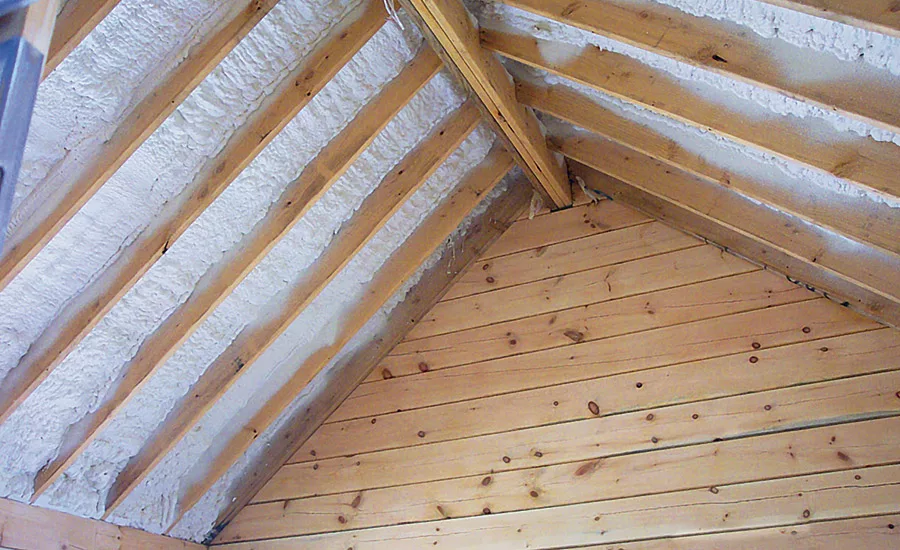
Spray Foam Efficiency
Doug Kramer, CEO, talking with left to right: Gina McCarthy, Administrator of the EPA; Dr. Ernest Moniz, US Secretary of Energy; and Dan Utech, Assistant Secretary of Defense
Spray Foam Efficiency
February 9, 2016

As we all know, construction methods are very slow to change. Although products have evolved and overall performance has been enhanced, very few have actually altered the way in which we build. Many of the standards have been used for decades and are based around best effort rather than best practices. Yes, in many cases, standards were established by do-gooders who were willing to benchmark a value and stand behind its logic. Building science has come a long way and has provided more scientific gauges for new standards, but the greatest change and impact on the way we build is coming from new technologies. New technologies and methods are being applied to all types of construction both new and retrofit in residential and commercial construction. The goals of new technology often focus on lower cost, or faster payback and higher performance. Performance is a general description that can relate to longevity, aesthetics or offer some additional value to the building owner or tenant.

Homes that Breathe

Historically, homes have been built to “breath” primarily due to concern for trapping moisture within the structure. This approach leads to greater energy expense, poor air quality, and compromises the comfort of the occupants through drafts and other temperature related fluctuations. One product that has gained significant momentum in construction, especially over the last decade, is spray polyurethane foam.

The primary performance characteristics of foam change the breathability of a structure, therefore creating control of unwanted and uncontrolled airflow. Uncontrolled airflow is responsible for homeowner and building owner challenges to energy bills, air quality and tenant comfort. Spray foam has gone from an almost immeasurable percentage of market share to an estimated 20 percent or more of the insulation market in recent years with the greatest growth coming in the new and retrofit residential segment.

There are many reasons for this mainstream and explosive growth. First, spray foam has offered a great solution to growing code regulations pertaining to limitations in air infiltration and increasingly stringent insulation minimums particularly is northern climate zones. In some cases, the new codes are arguably impossible to meet, in lieu of spray foam, without resorting to drastic measures such as 2-inch by 12-inch construction. Homebuilders are currently faced with a decision on how best to address these new code requirements. Do they increase costs and reduce sellable square footage by going to larger framing? For those who haven’t considered spray foam, there are better solutions that bring greater value and high performance.

Looking Past the Wallpaper

Spray foam is approximately two times the cost of more traditional insulation materials but the positive impact to the value chain must be considered. Builders are being challenged to provide high performance and differentiation in a recovering and competitive market. Additionally, the code requirements continue to stiffen and add costs to construction. If thicker walls are required to meet new code standards, the costs to the builder including more insulation, more framing, more freight costs for delivery of these materials, added installation costs and a loss of living space (approximately 30 square feet in an average sized home) can add up to thousands of dollars of lost profit.

Consumers are demanding high performance and are looking past the wallpaper; it’s no longer just about wood floors, granite counter tops and stainless appliances. Homeowners understand the volatile costs of energy will remain a factor for the foreseeable future. Further, there is much more awareness today about air quality in our homes, largely driven by a startling increase in the prevalence of asthma. Spray foam is particularly known for controlling unwanted airflow and eliminating unconditioned air from the home. This reduces airborne pollutants and contaminants, all the while reducing uncontrolled air leakage which can be up to 40 percent of energy loss.

Green Chemistry

Spray foam is not new but the technology continues to evolve. As the CEO of one of the largest spray foam manufacturers in the business, I was invited to the White House twice to participate in an Executive Roundtable discussion about the President’s Climate Action Plan. The goal of these discussions is to reduce CFCs from the environment, which is believed to contribute to global warming. Coolants or blowing agents used to limit thermal conductivity are common applications, such as refrigerators and air conditioners. In spray foam, the blowing agent is used to make the foam rise and create one of the most efficient insulations with the highest R-value, available today. As an advocate for technology and the first in the world to commercialize HFO (non-CFC) spray foam, Lapolla was invited to participate in the discussions on this important topic. But this focus only lends itself to green chemistry. The overriding value of spray foam is the in-situ, or installed value. By significantly reducing the growing demand for energy, there is a meaningful reduction on the carbon footprint. It is generally believed that in the United States, 20 percent of greenhouse gas emissions come from home energy use. Broad acceptance of spray foam will significantly reduce this impact.

There is a clear transition occurring in the general markets around high performance insulation. The market share of spray foam is growing on an international basis. In fact, North America is not the only place where spray foam is mainstreaming. There has been a significant move over the last few years in the United Kingdom, Europe, Scandinavia and Japan toward spray foam, among others. The demand from consumers is largely the same around the world. Spray foam provides a solution to the growing demand for high performance structures, by reducing energy consumption, providing better air quality and comfort in extreme and changing climatic conditions. 

KEYWORDS: energy efficiency spray foam spray polyurethane foam

Share This Story

Looking for a reprint of this article?
From high-res PDFs to custom plaques, order your copy today!


Doug Kramer is president of Icynene-Lapolla, the global manufacturer, supplier and leader in spray polyurethane foam. The company’s products, including those installed in this retrofit project, are recognized for optimizing energy efficiency and performance in the envelope. Kramer may be reached at dkramer@icynene-lapolla.com.

Recommended Content

JOIN TODAY
to unlock your recommendations.

Already have an account? Sign In

  • bar graph shows LEED v4/LEED v5/LEED v6 in various colors

    When Will LEED v4 / v4.1 and LEED v5 Expire?

    The latest version of the LEED rating system, LEED v5, is...
    Sustainability
    By: Daniel Overbey
  • Celebrating Women In AEC-2026

    Celebrating Women in The AEC Industry Part 1

    A round-up of women in the design, engineering and...
    Sustainability
    By: Lindsay Lewis
  • KEE membrane application on a roof

    A Beginner’s Guide to Single-Ply Roofing Membranes

    While PVC and TPO appear extremely similar, the chemistry...
    Low-Slope Roofs
    By: Peter Gross
Manage My Account
  • Sign up for the Newsletter
  • Online Registration
  • Manage My Preferences
  • Registration Customer Service

More Videos

Sponsored Content

Sponsored Content is a special paid section where industry companies provide high quality, objective, non-commercial content around topics of interest to the Building Enclosure audience. All Sponsored Content is supplied by the advertising company and any opinions expressed in this article are those of the author and not necessarily reflect the views of Building Enclosure or its parent company, BNP Media. Interested in participating in our Sponsored Content section? Contact your local rep!

close
  • 2 construction workers and a DEXcell panel
    Sponsored byDEXcell Roof Boards

    Designing Low-Slope Roofs for Resilience

  • Bell Bank headquarters in Fargo, North Dakota
    Sponsored bySto Corp.

    Drained and Back-Ventilated Rainscreens vs Pressurized-Equalized Rainscreens

  • A construction worker using DEXcell roof boards
    Sponsored byDEXcell Roof Boards

    The Hidden Strength of Low-Slope Roof Systems: Why Roof Cover Boards Matter

Popular Stories

construction industry workers in hard hats stand around a city scape

Construction Industry Revolts Over New CSI Licensing Plan

a man wearing a mask installs insulation into a wall system

Quiet Rooms and Healthier Air: A Second Look at What Goes Inside the Wall Cavity

Canalino Elementary School and Canalino Family School exterior

Daylighting Design to Support Rapidly Growing Trend in Modular Building Construction

Building Enclosure Newsletter

BE Poll

Events

June 17, 2025

Addressing Condensation in Low-Slope Roof Assemblies

Credits: 1 AIA LU/HSW; 0.1 ICC CEU; 1 IIBEC CEH; 0.1 IACET CEU

On Demand In modern roofing systems, vapor retarders and air barriers do more than just minimize air leakage—they’re essential to maximizing performance and longevity. This engaging course dives into the next generation of moisture control: permeable vapor retarders and air barriers. Discover how these cutting-edge technologies are transforming low-slope roofing assemblies by improving energy efficiency, managing moisture, and boosting wind uplift resistance.

April 9, 2026

Strategies for High-Performance Below-Grade Waterproofing

Credits: 1 AIA LU/HSW ; 1 IIBEC CEH; 0.1 IACET CEU

On-Demand Designing a high-performance building enclosure requires more than just surface-level protection; it demands a rigorous, performance-based mastery of below-grade water and gas mitigation. This discussion will provide an expert-level analysis of below-grade waterproofing within the comprehensive framework of the high-performance building enclosure.

View All Submit An Event

Products

Plaster and Drywall Assemblies Manual

Plaster and Drywall Assemblies Manual

This is a comprehensive manual that goes beyond codes and standards, providing expert guidance in design, detailing, material selection and troubleshooting for plaster and drywall.

See More Products

Related Articles

  • Polycon CEO Discusses Spray Foam Innovation

    Doug Kramer: Polycon Expands Spray Foam Solutions

    See More
  • spray foam

    Spray Foam's Move Toward Sustainability and Why It Matters

    See More
  • sprayfoam

    Open-Cell Spray Foam Solution

    See More

Related Products

See More Products
  • heating cooling.jpg

    Heating, Cooling, Lighting: Sustainable Design Strategies Towards Net Zero Architecture, 5th Edition

  • buildings.jpg

    Mechanical and Electrical Equipment for Buildings, 13th Edition

See More Products
×

Enhance your expertise with unparalleled insights.

Join thousands of building professionals today. Shouldn’t you know what they know?

SUBSCRIBE TODAY!
  • RESOURCES
    • Advertise
    • Contact Us
    • Store
    • Want More
  • SIGN UP TODAY
    • Create Account
    • Newsletter
    • Customer Service
    • Manage Preferences
  • SERVICES
    • Marketing Services
    • Reprints
    • Market Research
    • List Rental
    • Survey/Respondent Access
  • STAY CONNECTED
    • LinkedIn
    • Facebook
    • Instagram
    • YouTube
    • X
  • PRIVACY
    • PRIVACY POLICY
    • TERMS & CONDITIONS
    • DO NOT SELL MY PERSONAL INFORMATION
    • PRIVACY REQUEST
    • ACCESSIBILITY

Copyright ©2026. All Rights Reserved BNP Media, Inc. and BNP Media II, LLC.

Design, CMS, Hosting & Web Development :: ePublishing