Innovation Through the Building Code Process
Provisions Allowing Tall Mass Timber Buildings Coming to 2021 Codes
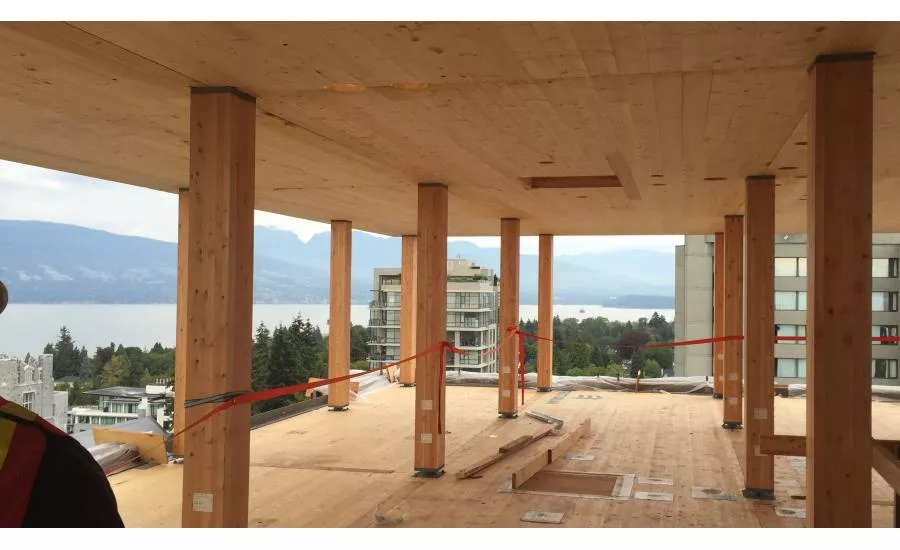
The development process for U.S. building codes is rigorous and deliberative. Because the process results in the best thinking of a large group of experts, building codes can help drive innovation in design and construction. Perhaps one of the best examples of this is the Tall Mass Timber (TMT) code provisions that will be included in the 2021 International Building Code (IBC).
The TMT provisions will allow buildings up to 18 stories. Following three years of study and testing by an International Code Council (ICC) Ad Hoc Committee that included building and fire officials, architects, engineers, and representatives of building materials, ICC recently approved a set of historic proposals that creates the opportunity for building designers to use this innovative and carbon-sequestering building system.
Why These Codes Were Necessary
Tall mass timber buildings are already being proposed, and built, across the country. Constructed of a new and innovative class of building materials, mass timber has caught on around the world as a safe, carbon-sequestering alternative to traditional buildings. As of of June 2019, almost 600 had been built or were in the design phase in the U.S.1 and globally over 40 had been built over seven stories2. Portland, Oregon, has an eight-story condominium building, Carbon 12, made of mass timber. It is currently the tallest mass timber building in the country. Minneapolis’ T3 Building is a seven-story mass timber office building. Two new tall mass timber buildings have been proposed by New Land Enterprises in Milwaukee, one an office building the other residential3. More have been proposed in Cleveland4, Newark5, and other cities.
With mass timber becoming more common across the U.S., and many jurisdictions seeking more mass timber construction to take advantage of its environmental benefits, building officials needed science-based and well-crafted code provisions to guide their plans review and approval process.
Summary of the ICC Tall Mass Timber Code Changes
IBC 602.4: New types of construction: This section creates three new construction types: Mass Timber Type IV-A, Type IV-B, and Type IV-C. These construction types mirror the fire resistance ratings in non-combustible Type I-A and Type I-B, but Types IV-A and IV-B contain additional criteria for protection of mass timber by non-combustible materials.
IBC 703.8: Performance-based noncombustible protection: This section provides a performance path to determine the additional contribution to the fire resistance rating provided by noncombustible protection. The fire-resistance rating of mass timber structural systems consists of the inherent (calculated) fire resistance rating of the mass timber and the additional fire-resistance time for gypsum wall board as provided in the code. This section prescribes the test method for determining the time assigned to non-combustible material that contribute to increasing the fire resistance rating of the system.
IBC 703.9: Sealants at edges: Sealant or adhesive is required to resist the passage of air at abutting edges and intersections of mass timber building elements and intersections of mass timber and other building elements required to be fire resistance-rated. Sealants and adhesives must meet the requirements of ASTM C920 and ASTM D3498, respectively
IBC 718.2.1: Mass timber as fire blocking: The purpose of this code change is to recognize that mass timber is a suitable fire-blocking material, similar to nominal dimension lumber. However, it should be noted that exposed mass timber in concealed spaces is required to be protected by non-combustible materials in other code sections.
IBC 403.3.2: Redundant water supply: Fire pumps in Type IV-A and IV-B buildings more than 120 feet in height are required to be supplied by at least two water mains located in different streets, with separate supply piping sized to supply the flow and pressure required for the pumps to operate. While this is required for Types I and II buildings above 420 feet, this section requires it above 120 feet for mass timber buildings.
IFC 701.6: Owner’s responsibility: Passive fire protection is currently required to be inspected and maintained by the building owner at least annually, with documentation. This section adds a requirement for the owner to include inspection of required non-combustible protection provided on mass timber building elements and repair it if necessary.
IFC 3308.4: Fire safety during construction: Mass timber construction greater than six stories above grade must comply with the following requirements during construction unless otherwise approved by the fire code official: Standpipes per existing code provisions and a water supply for fire department operations, as approved by the fire chief; at least one layer of the noncombustible protection required by Section 602.4 must be installed on all building elements more than 4 floor levels, including mezzanines, below active mass timber construction, before erecting additional floor levels; required exterior wall coverings must be installed on all floor levels more than 4 floor levels, including mezzanines, below active mass timber construction, before erecting additional floor levels.
IBC Table 504.3: Height in feet, IBC Table 504.4: Height in stories: IBC Table 506.2: Allowable areas per floor: This section amends the tables for allowable building area, height in stories, and height in feet.
General Information on Type IV Construction stories and area sections:
Type IV-C:
- Maximum 9 stories (only in Group B occupancies, all other are less), with no increase in height in feet above grade compared to traditional Heavy Timber
- Exposed mass timber permitted, except in concealed spaces, shafts, hoist ways, interior exit enclosures, and outside of exterior walls
- Fully sprinklered
- Two-hour fire resistance rating throughout
- Allowable area is limited to 1.25 times the allowable area of traditional Heavy Timber (Type IV)
- Conventional wood framing (light framing) is not permitted
Type IV-B:
- Maximum 12 stories (but some occupancies such as Mercantile and Storage are limited to fewer stories)
- Exposed interior mass timber cannot exceed 20% of the floor area for ceilings or 40% of the floor area for walls, but must be reduced when combined; all other mass timber protected with noncombustible materials equaling 2/3 the required rating, including concealed spaces, shafts, hoist ways, and interior exit enclosures; 40 minutes noncombustible protection required on the outside of exterior walls
- Fully sprinklered
- Two-hour fire resistance rating throughout
- Allowable area is limited to 2.0 times the allowable area of traditional Heavy Timber (Type IV)
- Conventional wood framing (light framing) is not permitted
- Combustible building cores permitted up to 120’ in height.
Type IV-A:
- Maximum 18 stories (but some occupancies such as Mercantile and Storage are limited to fewer stories)
- Exposed mass timber is not permitted (all interior mass timber must be protected with noncombustible protection which provides 2/3 of the required fire resistance rating), including concealed spaces, shafts, hoist ways, and interior exit enclosures; 40 minutes of noncombustible protection required on the outside of exterior walls
- Fully sprinklered with redundant water supply when exceeding 120 feet
- Two-hour (floors) and three-hour (primary structural frame and walls) fire resistance rating throughout
- Allowable area is limited to 3.0 times the allowable area of traditional Heavy Timber (Type IV)
- Conventional wood framing (light framing) not permitted
- Combustible building cores permitted up to 120’ in height
IBC 722.7: Prescriptive noncombustible protection: This section provides a prescriptive solution for achieving the required fire-resistance of mass timber elements. The fire resistance rating of a protected wood system is determined by adding the calculated fire-resistance rating of the unprotected wood member to the additional time provided by noncombustible protection applied to the exposed wood. Two-thirds of the required fire resistance rating must be provided by the non-combustible protection. Details such as required attachment are specified and required test protocol for measuring the fire resistance afforded by the noncombustible protection is set out.
IBC 508.4 and 509.4: Fire barriers: Mass timber elements serving as fire barriers or a horizontal assembly in Type IV-B or IV-C construction must be separated from the interior of the building with an approved thermal barrier consisting of a minimum of ½ gypsum wallboard or a noncombustible equivalent, when not already required to be protected. Most elements in Type IV-B require much more protection by virtue of other code sections.
Conclusion
Tall mass timber buildings, while not a new phenomenon in other parts of the world, are relatively new to the United States. That is why the TMT code changes built in redundant and robust fire protection features. A combination of active and passive fire protection measures meet or exceed the level of performance established by the ICC Ad Hoc committee.
It is critical that building occupants be provided with the latest, most innovative, and safest sustainable buildings. ICC recognized early on that mass timber buildings would quickly become part of the future building landscape and proactively moved forward to provide appropriate regulations and conditions for its use, ensuring that building officials would have these in place in a timely manner. The rigorous processes used by ICC help ensure codes, standards, and building regulations are at the vanguard of those found worldwide, and, at the same time, drive innovation in building safety.
1. WoodWorks, Building Trends: Mass Timber, https://www.woodworks.org/publications-media/building-trends-mass-timber/, accessed July 23, 2019.
2. Think Wood, Timber is Looking Up, https://www.thinkwood.com/wp-content/uploads/2019/06/Think-Wood-Tall-Wood-Building-Poster_2019_web.pdf, accessed July 23, 2019.
3. Hughes, C.J., Log Cabins? No, These Wooden Buildings Are High Rises, https://www.nytimes.com/2019/01/01/business/timber-wood-construction-real-estate.html, appeared January 1, 2019.
4. Steven Litt, Ohio City could score tallest timber frame building in U.S. in 2021, https://expo.cleveland.com/life-and-culture/g66l-2019/02/ea4f5aa50a3112/ohio-city-could-score-tallest-timber-frame-building-in-us-in-2021.html, appeared February 24, 2019.
5. Jonathan Hilburg, Michael Green Architecture brings mass timber to New Jersey, https://archpaper.com/2018/02/michael-green-architecture-mass-timber-tower-new-jersey/#gallery-0-slide-0, appeared February 7, 2019.
