A neglected 1960s concrete office tower was recently transformed into The Cosmopolitan, a modern architectural landmark in the “EU capital” of Brussels.
As some of us make the shift from working from home to heading back to an office space, it leads me to wonder what the offices of the future will look like. There’s no doubt that the COVID-19 pandemic has altered our entire way of life. It’s definitely altered how we’ll design public places too.
The COVID-19 pandemic has had a well-documented impact on the US economy, the construction industry, and real estate. But what impact has the COVID-19 pandemic had on the momentum of green building projects in the Unite State over the past two years?
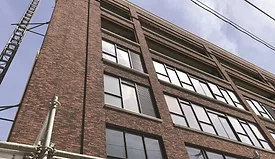
A mixed-use, midrise building at 109 King Street in Newcastle, Ontario, was planned with the design intent to match the look and feel of the heritage brick facades on nearby historical buildings. Large windows with very little panel surface area created unusual design challenges.
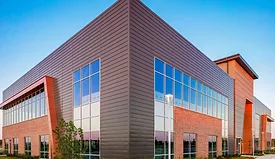
Designers of this forward-looking facility faced the challenge of highlighting its unique functionality while also supporting visual continuity of its exterior with the rapidly growing collection of surrounding buildings.
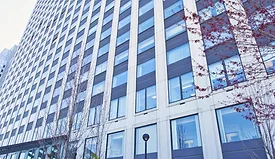
Originally constructed in 1964 as a luxury apartment building, Gateway Towers in downtown Pittsburgh was converted to high-end condominiums in the late 1970s.
Building Enclosure was joined by with Ryan Colker, Vice President of Innovation for the International Code Council, to talk about the ICC’s new International Green Construction Code certification, Commercial Green Construction Professional.
Maintaining the simple, rectilinear gabled form and dark brown hue of the Woodinville distillery, located 160 miles away (in Woodinville), the new complex’s structures are clad in dark metal siding and modified wood.
 RSS
RSS