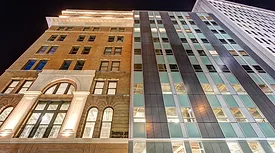
Unlike anything offered on campus before, the project thoughtfully employs design features and amenities reflecting the character of the district, while the building form and interior elements pull inspiration from the energy and dynamic nature of ice hockey.
Among myriad strategies to help make buildings healthier for occupants, one of the most potent ways to improve their psychological and physiological responses to a built space is to appeal to our hardwired affinity for the natural environment.
Eleven construction projects from across the United States were chosen to showcase the broad applications of slag cement and its impact on creating more durable and sustainable concrete.
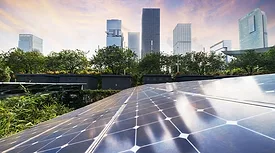
Early planning ensures compliance with ever-stricter environmental regulations. It allows time for devising the most efficient building processes, reduces waste generation and minimizes a project’s overall carbon footprint.
While much attention has historically been focused on operational carbon emissions generated during a building's lifecycle, the significance of embodied carbon cannot be overstated.
In our Winter 2024 issue, we go over plenty of roofing aspects including lightning protection systems, architectural considerations for the roof, low-slope roofing and new insights challenging established roof color paradigms.
The Building Code Effectiveness Grading Schedule serves as a tool for insurance companies to assess the effectiveness of building codes in mitigating risks associated with natural disasters, such as earthquakes, hurricanes, floods, and other natural disasters.
Statewide energy codes are important for several reasons—not the least of which are reduced energy consumption, mitigated greenhouse gas emissions, minimized building operational costs, and improved climate resilience. Yet, at the time of this writing, ten states do not have a statewide commercial energy code.
 RSS
RSS




.webp?height=168&t=1711279082&width=275 "early planning can reduce environmental impact in construction projects (002).jpg")