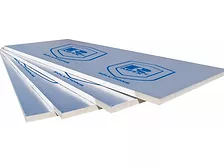
Matt Stevens, Building Envelope & Architectural Consultant for Rmax, joined us recently to discuss his webinar, “Polyiso CI: The Next Generation Air & Water Barrier Solution.” Listen in as Matt discusses what makes polyiso CI a great air and water barrier solution.
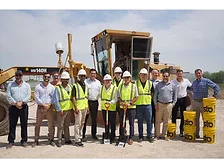
Sto Corp. has broken ground on a new manufacturing facility in Muncipio de Dalina, Victoria, Nuevo Leon. Located just minutes outside Monterrey, Mexico, the new facility is scheduled for completion in June 2025.
ECOMAXci® FR Air Barrier allows for optimum efficiency through multiple design options, ease of construction, a better building envelope and reduced energy usage.
With over 32 exhibitors attending from a range of organizations including associations and manufacturers, the trade show aspect of ABAA’s Building Enclosure Conference allows for a more intimate setting to network with and learn from those who have experienced both successes and failures.
LATICRETE will debut their new color-coordinated profiles and trims while also providing insight and perspective on the state of the tile and stone market, finishes, and more as an exhibitor at Coverings 2024.
The common denominator for today’s design is that one type of material is no longer good enough. Combining multiple aesthetics into the design of a building is the standard rather than the exception. Because the days of monolithic design are long gone, architects are pushing the limits seeking to integrate materials for a modern, sophisticated look.
Dörken Systems Inc. introduced DELTA®-TERRAXX and DELTA®-TERRAXX PLUS, new drainboard systems for horizontal, vertical, and blindside drainage requirements.
To efficiently future-proof the building envelope in light of the new climate reality, taking both into consideration is critical. One vital tool in this effort, though often overlooked, is air and water-resistive barriers (AWBs).
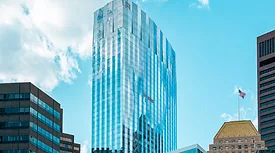
A typical building loses up to 25 percent of its heat through the roof. Industry-leading Elevate roofing and insulation systems by Holcim were thus instrumental in the construction of the world’s largest Passive House-certified office building: the Winthrop Center in Boston.