Debuting at GlassBuild America, the largest event for the glass, window and door industry in the Western Hemisphere, new SunGuardSNX 70+ coated glass helps meet the architectural community’s desire for glass that combines high visible light transmission, a neutral aesthetic and strong thermal performance.
Barricade Building Products unveiled its latest offering, the ThermoPro Rigid Insulation System, now available in two variations: the metallic reflective facer and the poly facer with a clear facer on the back.
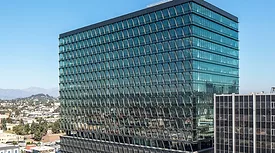
With a focus on energy efficiency and sustainability for this innovative design, Architect Gensler Los Angeles specified 156,000 square feet of Solarban 70 glass because of its superior solar control and thermal insulation properties.
One of the more subtle ways to make a building temperature controlled while considering the planet is ventilated facade systems. This cladding system changes a building’s envelope, improving the building’s efficiency and impact.
Together, federal agency representatives, NEU members and allied industry association representatives discussed industry needs, current initiatives, and how all parties can work together to reach carbon neutrality throughout the cement-concrete value chain by 2050.
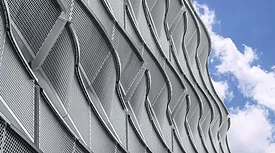
Metalwërks announced the inclusion of its Sculpted 3D on the recently constructed parking garage of Connecticut’s historic Stamford Station, part of a massive overhaul of this key link in rail traffic in the region.
The American Institute of Architects published the newest edition of its annual 'By the Numbers' report, providing a detailed analysis of the energy performance of architecture and design firm signatories of the 2030 Commitment.
In recognition of the carbon intensity of our landscape, the American Society of Landscape Architects (ASLA) have made several recent moves toward deeper climate action.
Around 40 participants at the Fenestration and Glazing Industry Alliance Fall Conference had the opportunity to tour the 327-acre National Renewable Energy Laboratory campus in Golden, CO.


.webp?height=168&t=1696866447&width=275 "NEUSummit2023 (002).jpg")