Building Enclosure logo
search
cart
facebook twitter linkedin youtube instagram Spotify Podcasts Apple Podcasts Spotify Podcasts Apple Podcasts
  • Sign In
  • Create Account
  • Sign Out
  • My Account
Building Enclosure logo
  • NEWS
    • Breaking News
  • SECTIONS
    • Columns
    • Project Profiles
    • Trade Shows
    • Sponsor Insights
  • SYSTEM DESIGNS
    • Low-Slope Roofs
    • Pitched Roofs
    • Metal Roofing Materials
    • Waterproofing
    • Sustainability
    • Insulation
    • Exterior Claddings
    • Wall Systems
    • Building Envelope
  • BLOG
    • The BE Blog
  • MEDIA
    • Podcasts
    • Webinars
    • Quiz
    • Videos
    • Polls
    • Interactive Spotlights
    • Newsletter
    • Photo Galleries
  • DIRECTORIES
    • Directory: Blue Book
    • Directory: Roofing Resource
  • PRODUCTS
  • TECHNICAL
    • Codes
      • Waterproofing
      • Roofing
    • Details
      • Waterproofing
      • Roofing
  • CONTINUING ED
  • ABOUT
    • Advertise
      • Editorial Calendar
    • Contact
    • eMag Archive Issues
  • SIGN UP!
Breaking News

gmp Architects Revives a Modernist German Concert Hall

The Concert Hall at Kiel Castle Renovation

Concert Hall at Kiel Castle exterior
gmp Architects
March 4, 2026

Between 2019 and 2025, a design team comprising gmp · Architects von Gerkan, Marg and Partners and bbp : architekten developed the project as a conceptual continuation of the existing building. The aim of the design was to integrate a wide range of new requirements into an existing structure whose quality derives largely from the clarity and formal restraint of its architecture.

The concert hall was built between 1961 and 1965 based on designs by the Hamburg architecture firm Sprotte & Neve. Together with the adjacent Kiel Castle it formed a new cultural center on the northern edge of Kiel’s historic old town. Enclosing a bright, prismatically shaped auditorium within its natural stone volume, the building was originally conceived as a multifunctional venue, with the Philharmonic Orchestra of Kiel as its primary user.

The auditorium, with its centrally located, nearly level orchestra platform, is surrounded by tiered audience terraces, creating a close spatial relationship between orchestra and audience. Subsequent conversions, technical upgrades, and additions gradually altered the building’s architectural character and overlaid key elements of the original design.

The core objective of the conversion was to restore the building’s minimalist clarity and materiality while integrating contemporary technology. Nearly sixty years after its completion, age-related deficiencies, damage from earlier repairs, and increased operational demands made comprehensive renovation and upgrade unavoidable. A guiding principle of the project was the greatest possible preservation of the original fabric. Over the decades, the space—initially used as a multifunctional hall—had evolved into a dedicated concert hall with specific acoustic and technical requirements, which are now fully addressed. 

The design strategy relied on precise interventions, both visible and concealed, correcting later alterations as well as minor shortcomings in the original construction. This approach re-establishes the architectural order while optimizing functional flows for audiences, musicians, and operations. From an urban design perspective, the concert hall has also been opened up more toward the city and the Förde.

The energy-efficient renewal of the entire building envelope was a central focus of the conversion and renovation. The energy-optimized post-and-beam glass façade of the foyer reflects the delicate proportions of the original structure and enhances transparency along the main façade. New solar-control glazing improves energy performance and summer heat protection. The natural stone façades and foyer walls clad in Norwegian Alta quartzite were also restored, with approximately 70 percent of the interior and exterior stone panels retained and reused. The removal of the former cast bronze doors visually opens the entrance area toward the forecourt.

Drawing on many years of operational experience, the foyer interventions focused on functional improvements. By switching the locations of the bar and coat check, acoustic disturbances were reduced and circulation for both visitors and staff was reorganized. The elevator providing access to the upper tier, previously added in front of the south façade, was removed and integrated into the foyer. Another key objective was strengthening the building’s connection to the Kieler Förde. A new exit from the foyer now opens northward onto the Förde Terrace. 

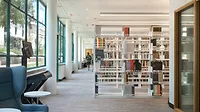
Access to the upper-level Förde Foyer, oriented toward the water, was significantly expanded. A newly integrated bar enhances the Förde Foyer, establishing it as a space for social interaction and communication. In addition, the provision of a grand piano opens the space to informal musical uses beyond the regular concert program. The building’s range of uses is expanded by a new multifunctional hall on the upper floor, which also offers views of the Kieler Förde. As part of the new interior design, lighting fixtures from the concert hall were reused. The lighting concept continues the idea of the glowing auditorium volume, with LED backlighting of Corian panels complementing the existing lighting.

In the concert hall itself, interventions focused on acoustics, the stage, and technical equipment. While the hall’s excellent concert acoustics were preserved, the audibility among orchestra members was specifically improved. Twelve height-adjustable acoustic reflectors above the stage enhance musicians’ communication through new sound-reflecting surfaces while integrating acoustics, stage lighting, and technical equipment. New lifting platforms replace the former manually operated stage elements, enabling faster changeovers and more flexible use of the hall. Modifications to selected terrace areas improve sightlines within the auditorium.

The character of the hall is retained through the refurbishment of the seating, flooring, and stair railings, while functional requirements are implemented in a contemporary manner. The material palette of the existing fabric was reduced, with new components added in black steel and perforated cladding. Building services were completely renewed. In addition, barrier-free accessibility measures were expanded: new vestibule doors and an elevator integrated into the building volume replace earlier additions and reorganize the building’s overall massing.

KEYWORDS: acoustics design firm exteriors lighting renovation stone

Share This Story

Looking for a reprint of this article?
From high-res PDFs to custom plaques, order your copy today!


Recommended Content

JOIN TODAY
to unlock your recommendations.

Already have an account? Sign In

  • bar graph shows LEED v4/LEED v5/LEED v6 in various colors

    When Will LEED v4 / v4.1 and LEED v5 Expire?

    The latest version of the LEED rating system, LEED v5, is...
    Sustainability
    By: Daniel Overbey
  • Celebrating Women In AEC-2026

    Celebrating Women in The AEC Industry Part 1

    A round-up of women in the design, engineering and...
    Sustainability
    By: Lindsay Lewis
  • KEE membrane application on a roof

    A Beginner’s Guide to Single-Ply Roofing Membranes

    While PVC and TPO appear extremely similar, the chemistry...
    Low-Slope Roofs
    By: Peter Gross
Manage My Account
  • Sign up for the Newsletter
  • Online Registration
  • Manage My Preferences
  • Registration Customer Service

More Videos

Sponsored Content

Sponsored Content is a special paid section where industry companies provide high quality, objective, non-commercial content around topics of interest to the Building Enclosure audience. All Sponsored Content is supplied by the advertising company and any opinions expressed in this article are those of the author and not necessarily reflect the views of Building Enclosure or its parent company, BNP Media. Interested in participating in our Sponsored Content section? Contact your local rep!

close
  • 2 construction workers and a DEXcell panel
    Sponsored byDEXcell Roof Boards

    Designing Low-Slope Roofs for Resilience

  • Bell Bank headquarters in Fargo, North Dakota
    Sponsored bySto Corp.

    Drained and Back-Ventilated Rainscreens vs Pressurized-Equalized Rainscreens

  • A construction worker using DEXcell roof boards
    Sponsored byDEXcell Roof Boards

    The Hidden Strength of Low-Slope Roof Systems: Why Roof Cover Boards Matter

Popular Stories

construction industry workers in hard hats stand around a city scape

Construction Industry Revolts Over New CSI Licensing Plan

a man wearing a mask installs insulation into a wall system

Quiet Rooms and Healthier Air: A Second Look at What Goes Inside the Wall Cavity

Canalino Elementary School and Canalino Family School exterior

Daylighting Design to Support Rapidly Growing Trend in Modular Building Construction

Building Enclosure Newsletter

BE Poll

Events

June 17, 2025

Addressing Condensation in Low-Slope Roof Assemblies

Credits: 1 AIA LU/HSW; 0.1 ICC CEU; 1 IIBEC CEH; 0.1 IACET CEU

On Demand In modern roofing systems, vapor retarders and air barriers do more than just minimize air leakage—they’re essential to maximizing performance and longevity. This engaging course dives into the next generation of moisture control: permeable vapor retarders and air barriers. Discover how these cutting-edge technologies are transforming low-slope roofing assemblies by improving energy efficiency, managing moisture, and boosting wind uplift resistance.

April 9, 2026

Strategies for High-Performance Below-Grade Waterproofing

Credits: 1 AIA LU/HSW ; 1 IIBEC CEH; 0.1 IACET CEU

On-Demand Designing a high-performance building enclosure requires more than just surface-level protection; it demands a rigorous, performance-based mastery of below-grade water and gas mitigation. This discussion will provide an expert-level analysis of below-grade waterproofing within the comprehensive framework of the high-performance building enclosure.

View All Submit An Event

Products

Plaster and Drywall Assemblies Manual

Plaster and Drywall Assemblies Manual

This is a comprehensive manual that goes beyond codes and standards, providing expert guidance in design, detailing, material selection and troubleshooting for plaster and drywall.

See More Products

Related Articles

  • Untitled design(138).png

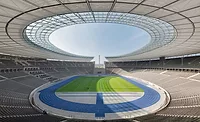
    1970s Montreal Olympic Stadium Roof Reinvented by gmp Architects

    See More
  • University of Arkansas Fine Arts Center library bookshelves

    Restoring a Modernist Landmark for a New Generation of Artists

    See More
  • Image courtesy of KWK Architects

    KWK Architects Encourages Student Input in Residence Hall Design

    See More

Related Products

See More Products
  • 71lmKx8brKL._SY385_.jpg

    A Visual Dictionary of Architecture, 2nd Edition

  • net zero.jpg

    Net Zero Energy Design: A Guide for Commercial Architecture

  • revisited.png

    Markup & Profit: A Contractor's Guide Revisited

See More Products

Events

View AllSubmit An Event
  • September 9, 2025

    The 60-Minute MBA for Architects

    Credits: 1 AIA LU/Elective; 0.1 ICC CEU; 0.1 IACET CEUOn-Demand In this session, we will learn the fundamentals of all successful AE firms and provide the basis for making well-grounded business decisions. We will learn how firms can transition from being professionals providing services, to highly tuned businesses that can identify the needs of the marketplace and create services and products that are appropriately priced and yield consistent and greater profits.
View AllSubmit An Event
×

Enhance your expertise with unparalleled insights.

Join thousands of building professionals today. Shouldn’t you know what they know?

SUBSCRIBE TODAY!
  • RESOURCES
    • Advertise
    • Contact Us
    • Store
    • Want More
  • SIGN UP TODAY
    • Create Account
    • Newsletter
    • Customer Service
    • Manage Preferences
  • SERVICES
    • Marketing Services
    • Reprints
    • Market Research
    • List Rental
    • Survey/Respondent Access
  • STAY CONNECTED
    • LinkedIn
    • Facebook
    • Instagram
    • YouTube
    • X
  • PRIVACY
    • PRIVACY POLICY
    • TERMS & CONDITIONS
    • DO NOT SELL MY PERSONAL INFORMATION
    • PRIVACY REQUEST
    • ACCESSIBILITY

Copyright ©2026. All Rights Reserved BNP Media, Inc. and BNP Media II, LLC.

Design, CMS, Hosting & Web Development :: ePublishing