Exterior Cladding Supports Long-Term Sustainability
Exterior cladding plays a critical role long after construction is complete

The staggered glass façade at 727 West Madison parking structure in Chicago by FitzGerald Associates features 8” spacing between panels to optimize natural ventilation.
Exterior cladding plays a critical role long after construction is complete. Cladding systems regulate energy, manage moisture, protect structural assemblies and quietly shape a building’s environmental performance for decades. Though its work is continuous, most people encounter a building’s exterior only in passing, noticing the way light shifts and reflects across a façade, the texture of materials at street level, the way a structure signals permanence or transparency within its surroundings.
Exterior cladding has traditionally been understood as a visual and protective layer, but its influence extends far beyond aesthetics. It is the primary interface between interior and exterior conditions, mediating heat, air, light and weather. As sustainability has become a central priority in architecture, cladding is increasingly recognized as one of the most consequential systems in building design, capable of aligning architectural intent with measurable environmental outcomes.
The materials chosen for the façade carry long-term implications throughout the life cycle of a building. This includes embodied carbon, which is the greenhouse gas emissions associated with material extraction, manufacturing, transportation and installation. High-performance cladding systems can reduce embodied carbon while also improving operational efficiency throughout the building’s life. When specified with intention, cladding offers a dual benefit, lowering upfront environmental impact while reducing energy demand over time. Few architectural elements exert influence at both ends of the carbon equation.
Designing for Performance and Sustainability
For architects and specifiers, the opportunity to influence sustainability outcomes is greatest early in the design process. Decisions made during conceptual and schematic phases determine not only how a building will look, but how it will perform for decades to come. At this stage, exterior cladding should be evaluated not as a finish, but as a system with measurable environmental consequences.
Working closely with design teams early allows sustainability performance to be assessed alongside aesthetics, cost and constructability. This early engagement helps architects understand how different cladding solutions perform in terms of durability, recycled content, embodied carbon and long-term lifecycle value. Rather than relying on assumptions or generalized claims, teams can compare options using third-party verified data and align material choices with broader sustainability goals.
Accessible product documentation plays an essential role in this process. Easy-to-read sustainability information based on extensive data allows architects to evaluate materials side by side and make informed decisions before specifications are locked in. Sustainability becomes a natural extension of good design practice when it is integrated into early conversations, rather than addressed after design intent is established.
EPDs, HPDs and RC
Reducing embodied carbon requires more than choosing materials labeled as “sustainable.” It requires verified data, life cycle analysis and an understanding of trade-offs. Third-party verified Environmental Product Declaration (EPDs) provide transparent, standardized data on a material’s environmental impacts throughout its life cycle, including global warming potential (GWP), energy use, water consumption and other indicators. These EPDs allow design teams to evaluate materials based on measurable performance rather than marketing claims.
Third-party verified Health Product Declarations (HPDs) offer transparency into material composition and potential health impacts. Together, these resources allow architects and specifiers to make informed decisions grounded in verified performance rather than assumptions.
Recycled content (RC) third-party certification can further reduce embodied carbon by lowering demand for virgin raw materials and reducing energy-intensive extraction processes. However, recycled content alone is not a sustainability guarantee. Transportation distances, processing methods and overall performance must be considered. The goal is not simply to maximize recycled content, but to select materials that achieve the lowest whole-life carbon impact without compromising durability or performance.
Reducing Greenwashing
Architects, designers and building owners need to prioritize credible and comparable environmental data to make responsible, low-carbon material choices and reduce the risk of greenwashing. Reliable information allows project teams to accurately assess environmental impacts, compare products fairly and select materials that genuinely support sustainability goals rather than relying on marketing claims. Self-declared environmental data, while easy to publish, is often unverified and inconsistent.
In contrast, product-specific third-party verified EPDs are developed according to standardized methodologies and independently verified by third parties, providing transparent, measurable, and comparable life-cycle impact data. Along with third-party verified HPDs and verified RC certifications, these independent transparency tools strengthen credibility, ensure consistency and support informed decisions that genuinely contribute to a lower carbon footprint.
Rethinking Performance Beyond Appearance
Exterior cladding is a continuously performing system that is exposed to environmental stressors every day. Wind loads, temperature fluctuations, moisture from the elements, and solar radiation all place demands on the building envelope. A well-designed cladding system stabilizes interior conditions, reduces energy consumption and protects the structure beneath from premature deterioration.
Thermal performance is one of the most direct ways cladding systems influence sustainability. By limiting heat loss in cold months and reducing heat gain in warmer months, high-performing façades decrease reliance on mechanical heating and cooling systems. According to a life cycle energy analysis of buildings study, operational energy can account for as much as 80 to 90 percent of a building’s lifetime energy use, making reductions in energy demand critical to long-term sustainability.
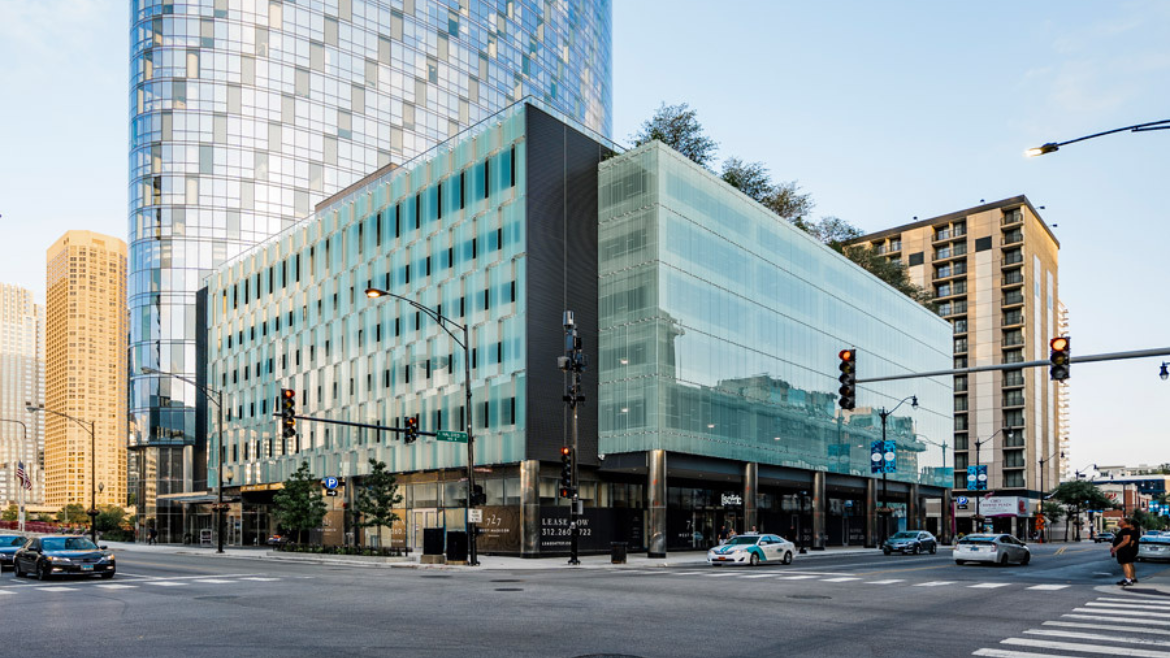 The ventilated glass façade at 727 West Madison Parking Structure in Chicago by FitzGerald Associates maximizes daylight, natural airflow and occupant comfort through flexible panel design. Photo by Tashio Martinez
Ventilated Façades and Energy Efficiency
Ventilated façade systems embody this performance-driven approach. These assemblies introduce a continuous air cavity between the cladding and building envelope, allowing air to circulate and dissipate heat. This is often described as a “chimney effect”. The airflow helps manage solar gain in summer months while reducing condensation risk in winter conditions.
Management of moisture from the elements is equally critical. Ventilated facades allow water vapor to escape which prevents moisture buildup. They further protect insulation, structural components and both exterior and interior surfaces. Over time, this protection reduces material degradation, limits mold growth and extends the service life of the building envelope.
Life Cycle Thinking
Life cycle thinking extends beyond embodied carbon to include end-of-life considerations. Materials designed for reuse or recycling support a more circular construction model, one that reduces waste and conserves resources over time. Exterior cladding systems that can be disassembled, reclaimed or recycled at the end of their service life help minimize future environmental impacts.
Durability is central to this approach. Materials that last longer require less maintenance and resist environmental degradation as they reduce emissions associated with repair and replacement. Over decades of use, these incremental savings add up, reinforcing the importance of long-term value over short-term goals.
Design-Driven Glass Cladding
Innovative cladding materials demonstrate how sustainability and design ambition can coexist. Channel glass, such as Lamberts® channel glass, carries natural light deep into building interiors while maintaining privacy and thermal performance. Increased daylighting reduces reliance on artificial lighting, lowering energy consumption and improving occupant experience.
In addition to the exceptional thermal performance of channel glass, its durability and low maintenance requirements contribute to a prolonged lifespan. Its reusability supports circular economic goals without compromising quality. When channel glass is supported by third-party verified EPDs, HPDs and recycled content verifications, it becomes a solid choice for architects seeking sustainable options without compromising aesthetics.
Digitally printed glass further expands the sustainability potential of façade systems. Custom graphics can be incorporated directly into the glass without secondary coatings or applied films, reducing chemical use and extending the lifespan of decorative elements. Because the design is integral to the material, it resists fading and wear, supporting long-term performance.
Other high-performance glass systems, including laminated and monolithic glass panels, can be engineered to include solar control, acoustic performance and enhanced insulation. Channel glass can offer fully engineered solutions that support design intent with performance and sustainability. Each specification decision contributes to the building’s overall energy profile, reinforcing the role of cladding as an active environmental system rather than a passive surface.
Moving Beyond Misconceptions
Misconceptions about sustainability documentation and performance persist despite increased awareness. Low embodied carbon or long-term performance is not guaranteed by certifications alone. Environmental impact depends on the full lifecycle of a material, including how it is manufactured, transported, installed and maintained.
Sustainability is not achieved through isolated decisions but through a cohesive design mindset. From material selection and assembly methods to site orientation and future maintenance, every element plays a role.
Early Collaboration
One of the most common challenges in sustainable cladding design is timing. Exterior materials are often selected while performance goals, budgets and envelope strategies are still taking shape. When sustainability is evaluated too late, opportunities to meaningfully reduce environmental impact can be missed.
Design assist helps address this. By engaging manufacturers during the conceptual and schematic phases, project teams can evaluate cladding systems alongside design intent, structural constraints, cost targets and long-term performance goals.
This approach was critical to the success of the ventilated glass façade at 727 West Madison in Chicago. Bendheim’s early collaboration with FitzGerald Associates and the glazing contractor to develop a custom solution resulted in a highly visible, aesthetically pleasing multi-story parking structure. Through modeling, engineering and value optimization, the team refined a ventilated glass system that delivered natural ventilation and daylight. The custom engineered steel supports eliminating a proposed steel substructure, reduced the project cost by close to $1 million. Early coordination allowed the façade to be tailored to code requirements and construction tolerances, advantages that would not have been possible without design assist.
The Future of Sustainable Cladding
As sustainability goals, codes and performance expectations continue to advance, emerging technologies, including advanced coatings and engineered systems components will offer new opportunities to reduce both embodied and operational carbon as they improve overall performance.
Bendheim’s Building a Clear Future program reflects this shift, reinforcing the company’s commitment to sustainability, material transparency and responsible manufacturing. Launched in August 2023, the initiative supports architects and designers with high-performance glass solutions that balance long-term environmental impact with design excellence.
Additionally, Bendheim advances its sustainability commitment by earning the JUST Label, from the International Living Future Institute, becoming the first and only glass manufacturer to openly share its values and practices. The label offers transparent disclosure of the company’s workplace policies, social justice and equity performance and community impact, supporting a broader, more inclusive definition of sustainability that extends beyond environmental performance alone.
By integrating life cycle thinking, verified data and performance-driven design, architects and specifiers can leverage cladding as a powerful tool for sustainability, quietly doing the work of increasing the longevity of buildings and protecting the environments they inhabit.
Looking for a reprint of this article?
From high-res PDFs to custom plaques, order your copy today!
.webp?height=96&t=1772732922&width=96)
.webp?height=740&t=1767036885&width=auto "Header - BE 1170x658 (002).png")

.webp?height=740&t=1755781744&width=auto "KEE(2).png")