Advanced Waterproofing: Polyurea Solutions for Complex Building Enclosures
Polyurea offers a reliable alternative suited to modern design and construction requirements
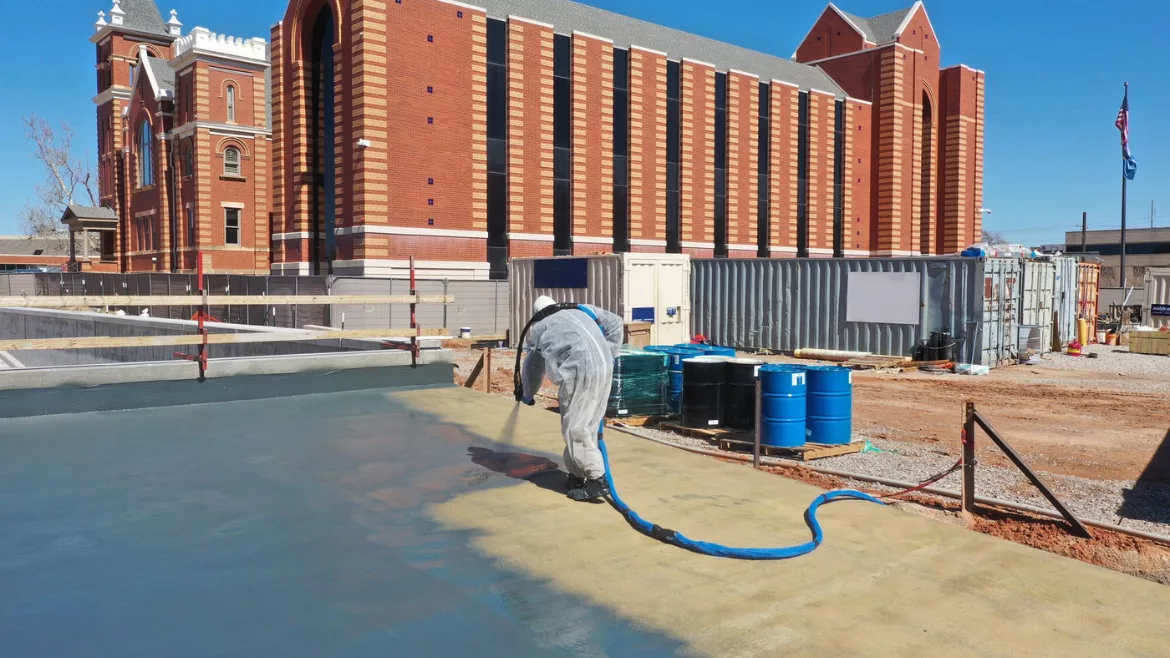
A spray-on polyurea system from Henry is being used to waterproof a concrete deck in Baltimore.
Across today’s commercial construction landscape, waterproofing systems are expected to perform under greater demands than ever. Designers face increasingly complex structures combining multiple horizontal and vertical waterproofing conditions—from podiums and split slabs to green roofs and water containment areas. These environments require systems that adapt to variable substrates, accommodate movement, and provide lasting protection against water intrusion and environmental stress.
Traditional solutions such as bituminous membranes, sheet goods, and liquid-applied membranes continue to serve many applications. However, advancements in fluid-applied technology have introduced another option: polyurea coating systems. Engineered for strength, flexibility, and installation efficiency, polyurea offers a reliable alternative suited to modern design and construction requirements.
Understanding Polyurea
Polyurea is a spray-applied elastomer created by the reaction of an isocyanate component with an amine-terminated resin. The chemistry forms a cross-linked, flexible, weld-free membrane that cures within minutes to create a seamless barrier resistant to cracking, puncture, and chemical attack. Because it bonds directly to the substrate, polyurea forms a fully bonded, continuous waterproofing layer that accommodates structural movement and detailing complexity.
First used in industrial coatings in the 1980s, polyurea has since expanded into commercial waterproofing through improved formulations and two-component spray equipment. Its rapid cure, flexibility, and chemical resistance make it a dependable choice for a wide range of above- and below-grade applications.
The Case for using Polyurea in Waterproofing
Labor shortages and rising project costs continue to challenge the construction industry. According to Associated Builders and Contractors, more than half a million additional workers will be needed to meet ongoing demand. Polyurea systems can help address these pressures. Their fast-curing properties and simplified application reduce installation time and labor requirements compared to traditional multi-step systems. Polyurea is commonly specified for plaza decks, terraces, split slabs, planters, and water containment structures where seamless, long-term waterproofing performance is critical.
At first glance, polyurea coatings may seem counterintuitive. Adopting polyurea over traditional coatings can mean an estimated 20 to 30 percent increase in initial costs due to the corresponding high-quality materials and specialized equipment. However, the investment provides long-term durability and reduces maintenance. Fewer repairs and less downtime over the life of the structure make polyurea a practical choice for owners focused on sustainable asset management.
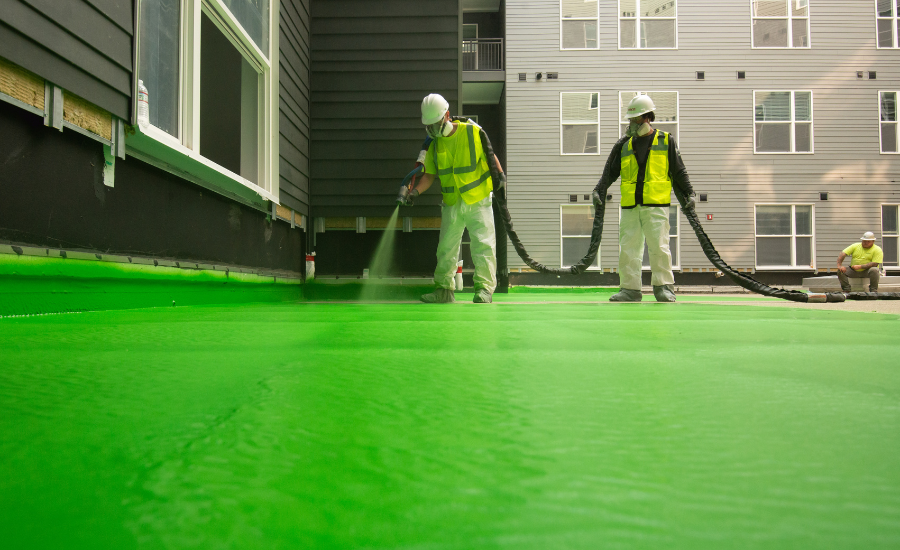 A construction crew waterproofs a plaza deck with Henry Prodeq, a polyurea-based membrane system that sets instantly. Photo courtesy of Henry
Performance in the Field
Polyurea’s benefits are proven in real-world conditions. For example, Tyler Brown, Vice President at Baltimore Waterproofing, has applied the Henry® Prodeq™ System on several large commercial projects. “The number one challenge on all projects is UV exposure and scheduling,” Brown said. “With Prodeq, we can get on a deck, spray it in a day, and not worry about UV exposure or possible damage. The Prodeq System keeps crews moving and makes application more efficient and cost-effective.”
His team has used Prodeq across five projects totaling nearly 70,000 square feet. “Getting the area waterproofed early and not having to work around other trades is a game changer,” he said. “The system’s reliability means we get little to no callbacks on follow-up repairs.”
Durability and Design Flexibility
Commercial enclosures are also subjected to constant stress from traffic, equipment and temperature changes. Polyurea systems respond to these conditions with a seamless, flexible waterproofing layer that resists damage. When specified as traffic coatings for plaza decks, loading docks, and parking areas, polyurea provides an abrasion-resistant surface that protects the structure while supporting vehicular and pedestrian loads. The membrane bridges cracks and joints, tolerates substrate movement, and maintains adhesion under harsh conditions.
Jordan Merritt, National Manager for Henry Advanced Waterproofing Systems, said flexibility is key when choosing polyurea systems. “There isn’t a one-size-fits-all solution in waterproofing,” Merritt said. “Every project has its own challenges, including substrate conditions, traffic loads, and construction sequencing. Because Henry offers a range of polyurea systems, we can tailor a solution that meets the specific performance and scheduling needs of each job.”
This project-specific approach distinguishes Henry within the commercial waterproofing market. “Historically, polyurea in commercial construction came from chemical companies,” said Todd Volz, Henry R&D Technical Director. “What differentiates us is that Henry delivers polyurea as part of a complete building-envelope approach.”
Polyurea’s durability and flexibility allow it to adapt to unique architectural configurations, vertical transitions, and irregular surfaces, making it suitable for both new construction and renovation projects where performance and efficiency are critical.
Sustainability and Efficiency
Polyurea coatings support sustainable design goals through low- and zero-VOC formulations and extended service life, reducing replacement frequency and material waste. Advances in spray equipment have improved precision and coverage consistency, allowing for faster installation and minimal disruption to other trades.
Looking Ahead
Polyurea has become an established solution for advanced waterproofing applications. It offers proven durability, construction efficiency, and versatility across complex building enclosures. As project demands continue to rise, polyurea remains a dependable option for protecting structures that require both performance and speed.
Looking for a reprint of this article?
From high-res PDFs to custom plaques, order your copy today!
.webp?height=740&t=1767036885&width=auto "Header - BE 1170x658 (002).png")

.webp?height=740&t=1755781744&width=auto "KEE(2).png")