Perkins&Will Hires Science and Technology Practice Leader in New York and Philadelphia
An architect and former life sciences developer, Matt Malone brings a unique market perspective to the firm
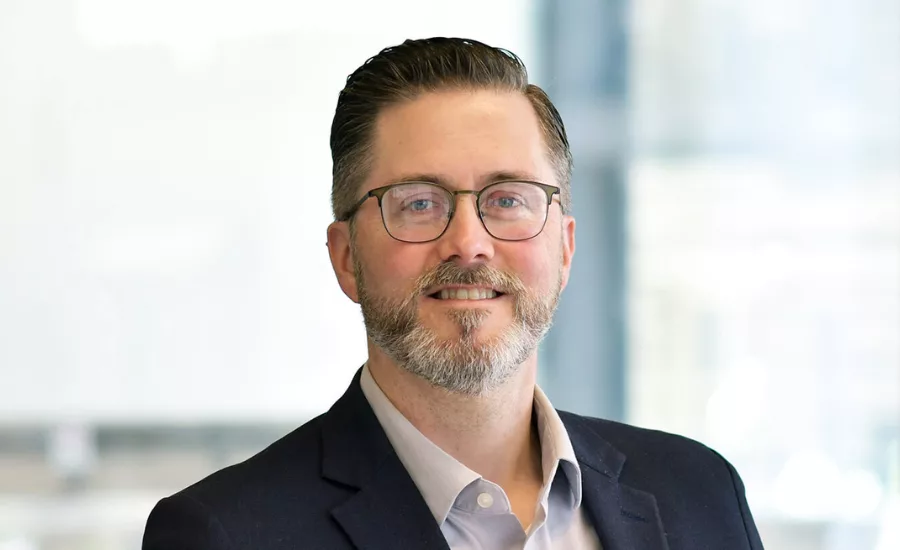
Image courtesy of Perkins&Will
Perkins&Will has welcomed back Matt Malone to lead the Science and Technology practice in its New York and Philadelphia studios. Malone returns to the firm after three years with Taconic Partners, where he served as Senior Vice President of Life Science at Elevate Research Properties.
In this new role, Malone will focus on growing Perkins&Will’s science and technology portfolio across the region, leading projects that support innovation, research, and discovery. His experience as both a designer and a developer equips him with a firsthand understanding of the opportunities and constraints shaping the future of life science environments.
“Coming back to Perkins&Will feels like a return to my roots—with a wider lens,” says Malone. “I’m returning with a sharper understanding of the economic, technical, and regulatory challenges that our clients are navigating. I’m excited to bring that perspective into design conversations, to help bridge vision with viability.”
While at Taconic Partners, Malone led projects like West End Labs, an award-winning office-to-lab conversion of a former auto facility on Manhattan’s West Side, designed in collaboration with Perkins&Will. Before his time in real estate, he spent nearly five years at Perkins&Will, shaping transformative research spaces such as Innolabs (NYC), the Hudson Research Center (NYC), and Georgia Tech’s Science Square (Atlanta), as well as the Changcheng Haina Incubator at Beijing Huairou Science City, a major science hub in China developed with Schmidt Hammer Lassen.
Adaptive reuse, market pressures, and the evolution of life science environments
Malone’s return comes at a critical time. Science and technology markets are shifting under economic pressures, evolving tenant needs, and emerging tools like AI. “Successful design in this sector now demands more than cutting-edge labs,” says Bill Harris, regional director at Perkins&Will. “It requires foresight, flexibility, and the ability to translate financial realities into value-driven facilities solutions for research, development and advanced manufacturing. Matt’s expertise will help us create the best solutions for our clients.”
In dense urban centers like New York and Philadelphia, repositioning existing buildings for life science use has emerged as both a challenge and an opportunity. “Adaptive transformation can reduce carbon impact, lower costs, and support smart growth—but it’s complex,” says Malone. “Not every structure can meet the technical demands of research. Knowing how to assess and navigate that, especially in a tight lending environment, is critical.”
Malone also points to other dynamics such as shrinking tenant footprints, a rebalancing of venture capital, and the push for cities to strengthen their life science infrastructure through incentives. His leadership will shape a number of key Perkins&Will projects, including NYU Langone BioLabs at Innolabs and the forthcoming BATWorks project at the Brooklyn Army Terminal.
“We’re fortunate to have Matt back on our team,” says Robert Clemens, managing director of Perkins&Will’s New York studio. “His experience gives him a rare perspective that’s incredibly valuable to our clients. We’re looking forward to putting that insight to work across the region as we continue to shape spaces for discovery and innovation.”
Looking for a reprint of this article?
From high-res PDFs to custom plaques, order your copy today!
.webp?height=740&t=1767036885&width=auto "Header - BE 1170x658 (002).png")

.webp?height=740&t=1755781744&width=auto "KEE(2).png")