Building Enclosure logo
search
cart
facebook twitter linkedin youtube instagram Spotify Podcasts Apple Podcasts Spotify Podcasts Apple Podcasts
  • Sign In
  • Create Account
  • Sign Out
  • My Account
Building Enclosure logo
  • NEWS
    • Breaking News
  • SECTIONS
    • Columns
    • Project Profiles
    • Trade Shows
    • Sponsor Insights
  • SYSTEM DESIGNS
    • Low-Slope Roofs
    • Pitched Roofs
    • Metal Roofing Materials
    • Waterproofing
    • Sustainability
    • Insulation
    • Exterior Claddings
    • Wall Systems
    • Building Envelope
  • BLOG
    • The BE Blog
  • MEDIA
    • Podcasts
    • Webinars
    • Quiz
    • Videos
    • Polls
    • Interactive Spotlights
    • Newsletter
    • Photo Galleries
  • DIRECTORIES
    • Directory: Blue Book
    • Directory: Roofing Resource
  • PRODUCTS
  • TECHNICAL
    • Codes
      • Waterproofing
      • Roofing
    • Details
      • Waterproofing
      • Roofing
  • CONTINUING ED
  • ABOUT
    • Advertise
      • Editorial Calendar
    • Contact
    • eMag Archive Issues
  • SIGN UP!
Breaking News

Armstrong Energy Saving Ceilings are Now Part of IES Virtual Environment Software

Integration of Templok Ceilings in leading energy-modeling software supports architects, consultants, and engineers in optimizing building performance

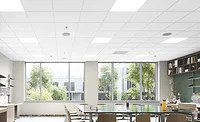
Armstrong® Templok® Ceilings

Image courtesy of Armstrong

June 12, 2025

Armstrong World Ind. and Integrated Environmental Solutions have officially launched Templok Energy Saving Ceilings into IES Virtual Environment software, a suite of integrated analysis tools used by engineers and architects around the world to optimize whole-building performance. Innovative Templok ceiling panels use Phase Change Material technology to passively regulate room temperature and can reduce a facility’s energy costs and consumption by as much as 15 percent.*

Since announcing their partnership last fall, Armstrong and IES have completed the validation process necessary to launch Templok in the IESVE Parametric Simulation feature used by architects, engineers, and sustainable design consultants to analyze a range of performance metrics including the prediction of carbon emissions, energy consumption, costs, thermal and visual comfort, and water usage. The launch of Templok is the first time PCM ceilings, specifically, as well as PCM technology, in general, have been incorporated into IESVE software. In addition, the modeling was developed specifically for Armstrong Templok solutions, which are currently available in the Americas. With this full integration, users of the software will experience a fast, streamlined, and easy-to-use method of simulating the effect of the PCM ceilings within their whole-building IESVE model.

“In Armstrong, we have a partner whose decarbonization mission aligns perfectly with ours, and a ceiling solution that—as it becomes widely adopted in the built environment—will contribute more and more to the sustainability of our planet,” said Nathan Kegel, vice president of business development, North America, IES. “This launch is a major turning point for energy modelers as well as for architects, designers, engineers, and facility managers who can now benefit from more accurate energy savings data when incorporating Templok ceilings into their projects.”

Templok validation for the IESVE software came from a combination of laboratory and simulated data. Precise measurements and extensive testing were performed in a controlled environment. In addition, a digital twin of that environment was created to leverage the rigorous simulation capabilities of the IESVE platform. In the first of what will be hundreds of modeling studies—modeling a medium-size office building in Los Angeles—Templok ceilings were shown to generate a 7.2 percent increase in annual cooling savings and a 30.2 percent increase in annual heating savings, compared to the baseline ceiling using standard mineral fiber ceiling panels. (See study details.)

“Until PCM ceiling technology innovation, no one considered ceilings as a source of energy savings—but we now know they can play a key role in lowering energy expenditure and be an attractive alternative to more costly HVAC system upgrades or replacements,” said Alex Waltemyer, Director, Energy Saving Ceilings, Armstrong World Industries. “The launch in the IESVE will introduce Templok to thousands of architects, designers, consultants, and engineers. When you consider everything from rising global warming to increases in extreme weather events, the planet needs collaborations like the one between Armstrong and IES that will expedite understanding and widespread use of solutions proven to make a positive environmental impact.”

Options, Optimization and Other Savings

IES technology and expert consultancy are leveraged by thousands of customers worldwide to optimize performance for everything from a single space to a building to an entire campus, city, or community. To help meet the diversity of potential uses, Armstrong offers Templok energy saving ceilings in three product families—Ultima Templok, Calla Templok, and Templok School Zone Fine Fissured. In addition, projects utilizing Templok energy-saving ceiling panels may qualify for up to 50 percent in tax savings under the Investment Tax Credit 48E.

The partnership between Armstrong and IES—aiming to advance decarbonization in the built environment through innovation—is a strong example of the Armstrong “Building Better Together” initiative. This effort is focused on industrywide collaboration to advance sustainable solutions in the built environment that address intensifying public health, climate, and equity challenges.

Learn more about Templok ceilings at armstrongceilings.com/energysavingceilings. Learn more about IES at iesve.com.

 * Cooling energy savings according to research estimates measured in lab tests. Results may vary.

This article was originally posted on www.wconline.com.
KEYWORDS: ceilings decarbonization design software energy codes energy efficiency taxes

Share This Story

Looking for a reprint of this article?
From high-res PDFs to custom plaques, order your copy today!


Recommended Content

JOIN TODAY
to unlock your recommendations.

Already have an account? Sign In

  • bar graph shows LEED v4/LEED v5/LEED v6 in various colors

    When Will LEED v4 / v4.1 and LEED v5 Expire?

    The latest version of the LEED rating system, LEED v5, is...
    Sustainability
    By: Daniel Overbey
  • Celebrating Women In AEC-2026

    Celebrating Women in The AEC Industry Part 1

    A round-up of women in the design, engineering and...
    Sustainability
    By: Lindsay Lewis
  • KEE membrane application on a roof

    A Beginner’s Guide to Single-Ply Roofing Membranes

    While PVC and TPO appear extremely similar, the chemistry...
    Low-Slope Roofs
    By: Peter Gross
Manage My Account
  • Sign up for the Newsletter
  • Online Registration
  • Manage My Preferences
  • Registration Customer Service

More Videos

Sponsored Content

Sponsored Content is a special paid section where industry companies provide high quality, objective, non-commercial content around topics of interest to the Building Enclosure audience. All Sponsored Content is supplied by the advertising company and any opinions expressed in this article are those of the author and not necessarily reflect the views of Building Enclosure or its parent company, BNP Media. Interested in participating in our Sponsored Content section? Contact your local rep!

close
  • 2 construction workers and a DEXcell panel
    Sponsored byDEXcell Roof Boards

    Designing Low-Slope Roofs for Resilience

  • Bell Bank headquarters in Fargo, North Dakota
    Sponsored bySto Corp.

    Drained and Back-Ventilated Rainscreens vs Pressurized-Equalized Rainscreens

  • A construction worker using DEXcell roof boards
    Sponsored byDEXcell Roof Boards

    The Hidden Strength of Low-Slope Roof Systems: Why Roof Cover Boards Matter

Popular Stories

a man wearing a mask installs insulation into a wall system

Quiet Rooms and Healthier Air: A Second Look at What Goes Inside the Wall Cavity

construction industry workers in hard hats stand around a city scape

Construction Industry Revolts Over New CSI Licensing Plan

Canalino Elementary School and Canalino Family School exterior

Daylighting Design to Support Rapidly Growing Trend in Modular Building Construction

Building Enclosure Newsletter

BE Poll

Events

June 17, 2025

Addressing Condensation in Low-Slope Roof Assemblies

Credits: 1 AIA LU/HSW; 0.1 ICC CEU; 1 IIBEC CEH; 0.1 IACET CEU

On Demand In modern roofing systems, vapor retarders and air barriers do more than just minimize air leakage—they’re essential to maximizing performance and longevity. This engaging course dives into the next generation of moisture control: permeable vapor retarders and air barriers. Discover how these cutting-edge technologies are transforming low-slope roofing assemblies by improving energy efficiency, managing moisture, and boosting wind uplift resistance.

April 9, 2026

Strategies for High-Performance Below-Grade Waterproofing

Credits: 1 AIA LU/HSW ; 1 IIBEC CEH; 0.1 IACET CEU

On-Demand Designing a high-performance building enclosure requires more than just surface-level protection; it demands a rigorous, performance-based mastery of below-grade water and gas mitigation. This discussion will provide an expert-level analysis of below-grade waterproofing within the comprehensive framework of the high-performance building enclosure.

View All Submit An Event

Products

Plaster and Drywall Assemblies Manual

Plaster and Drywall Assemblies Manual

This is a comprehensive manual that goes beyond codes and standards, providing expert guidance in design, detailing, material selection and troubleshooting for plaster and drywall.

See More Products

Related Articles

  • Armstrong Ceilings.png

    Armstrong Expands Templok Energy Saving Ceilings for Schools

    See More
  • Armstrong.png

    Armstrong, IES Partner to Accelerate Adoption of Energy Saving Ceilings

    See More
  • Armstrong Ceilings

    Architectural Components Group Now Part of Armstrong Ceilings

    See More

Related Products

See More Products
  • energy modeling.jpg

    Energy Modeling and Computations in the Building Envelope

  • net zero.jpg

    Net Zero Energy Design: A Guide for Commercial Architecture

  • ecology.jpg

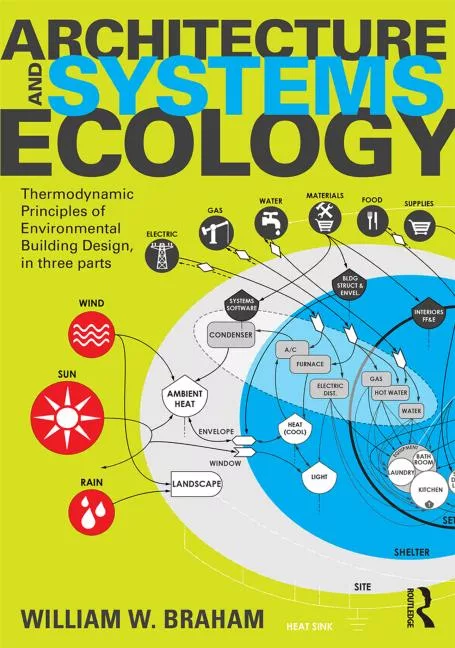
    Architecture and Systems Ecology: Thermodynamic Principles of Environmental Building Design, in three parts

See More Products
×

Enhance your expertise with unparalleled insights.

Join thousands of building professionals today. Shouldn’t you know what they know?

SUBSCRIBE TODAY!
  • RESOURCES
    • Advertise
    • Contact Us
    • Store
    • Want More
  • SIGN UP TODAY
    • Create Account
    • Newsletter
    • Customer Service
    • Manage Preferences
  • SERVICES
    • Marketing Services
    • Reprints
    • Market Research
    • List Rental
    • Survey/Respondent Access
  • STAY CONNECTED
    • LinkedIn
    • Facebook
    • Instagram
    • YouTube
    • X
  • PRIVACY
    • PRIVACY POLICY
    • TERMS & CONDITIONS
    • DO NOT SELL MY PERSONAL INFORMATION
    • PRIVACY REQUEST
    • ACCESSIBILITY

Copyright ©2026. All Rights Reserved BNP Media, Inc. and BNP Media II, LLC.

Design, CMS, Hosting & Web Development :: ePublishing